The Story in a Glance
In July 2026, almost every country in the world came to Geneva, Switzerland. For the first time, all 193 member states of the United Nations sat down together to talk about one question: "How should we handle AI?" But here is the interesting part. Before they made a single rule, they did something else first.
Before they started arguing, the countries all checked the same thing together: "What can AI really do right now, and what is actually dangerous about it?" The people who helped them check this were 40 scientists. It's like picking the 40 most careful kids in class and asking them, "Write down only the facts that everyone agrees are true."
This article retells that story with no hard words at all. Why the facts came before the rules, what the 40 people figured out, and why a problem still remains even though the facts were shared with everyone — we'll walk through it one step at a time.
You only need to remember four numbers for this story: how many countries showed up, how many people sorted out the facts, how far the power has tilted to one side, and how widely those facts were opened up.
193 countries
gathered in one place
Almost every country took part
40 people
scientists who sorted the facts
Chosen from 2,600+ across 140 countries
90%
of computing power held by 2 countries
The power to run AI is bunched up
6 languages
the report was published in
So every government reads the same facts
They Checked the Facts Before the Rules
Imagine your class decides to play a new game. Usually people set the rules first: "This is a foul, that gets you a penalty." But if you only fix the rules first, fights break out. "Why is that even a foul?" So a clever class does something different. Before setting the game rules, they all check together how the game actually works.
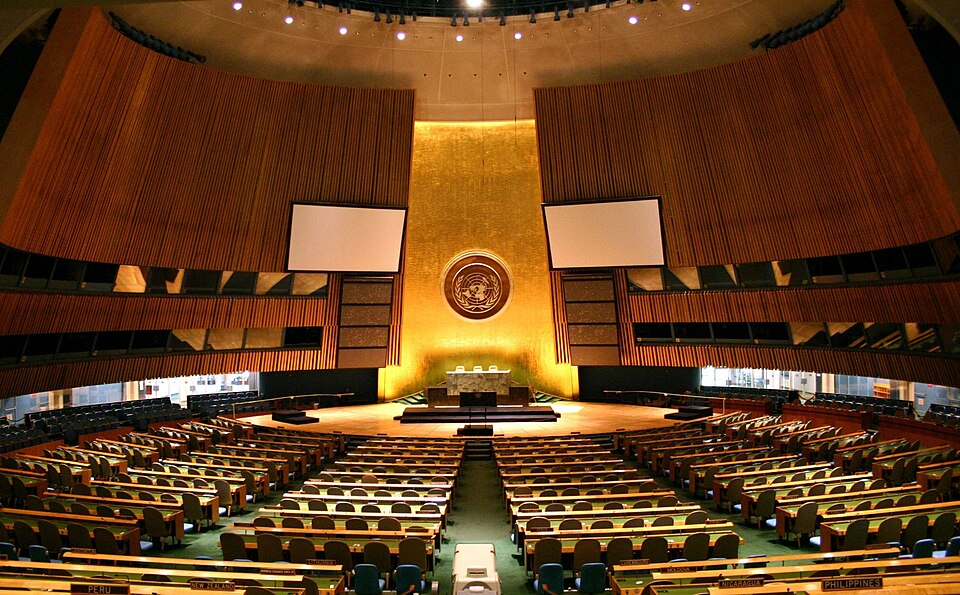
The UN did exactly the same thing. On July 6 and 7, 2026, 193 countries met in Geneva for the first time. But they did not jump straight into a rule fight — "let's block AI this way, let's allow it that way." Instead, they first put a report from scientists, released on July 1, on the table. "Let's look at this together first, and then talk," they said.
The head of the UN, Secretary-General Guterres, put it this way: "The science is here. We can no longer say we did not know." Before making any rule, first agree on what is true. Up to now, most countries built the rules first. This time, they flipped the order. That is the most important part of this whole story.
When rules come first, the loudest country wins. When the facts come first, the country that's actually right wins. The fact that 193 countries chose to agree on the facts first — that is a much bigger signal than an ordinary piece of regulation news.
Who Are the 40 People Who Sorted Out the Facts?
The people who sorted out the facts are 40 scientists. The name of this group is a bit long. It's called the "Independent International Scientific Panel on Artificial Intelligence." It sounds hard, but simply put, it's "a team built from the people who know AI best in the whole world."
Just how carefully were they picked? More than 2,600 people from 140 countries applied, and only 40 were chosen. It's like choosing the 40 most careful kids in the whole class. And this team has two captains. One is Yoshua Bengio, who won a big prize for AI research (the Turing Award), and the other is Maria Ressa, a journalist who won the Nobel Peace Prize.
Why two captains, and why two people so different from each other? One knows better than almost anyone in the world how AI works. The other is a journalist who has watched for a long time what AI actually does to people's lives. Someone who understands the machine and someone who understands people have to look together — otherwise the facts tilt to one side.
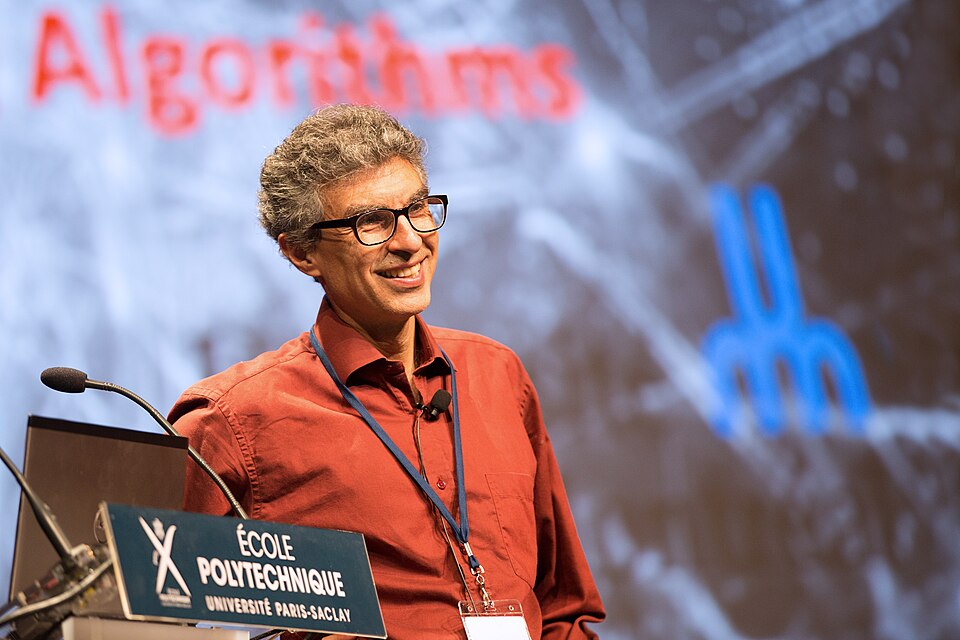
So what did these 40 people do? Here's the important part. They did not make rules like "do this" or "ban that." Instead, they picked out only "the facts that everyone agrees are true" and wrote them down. Anything people disagreed on was left out. Only what all 40 said "this is really true" made it in.
Captain Maria Ressa explained it this way: "What you are getting is the floor of our concern, not the ceiling." What that means is that the things all 40 agreed on are the most cautious minimum. When you make 40 people who all think differently agree on one sentence, the exaggerated stuff gets filtered out on its own. That's exactly why this report is more trustworthy, not less.

What the 40 built is not a set of rules — it's "a list of facts everyone agrees on." You need that before the next part of the story can even start. Without agreeing on the facts first, the countries just talk past each other and get nowhere.
Three Surprising Facts the 40 Found
Now let's look at the three most surprising facts the 40 people found. No hard words — we'll take them one at a time, nice and simple.
3.1The safety brakes can't keep up with AI's speed
AI is getting smarter very fast. But the things meant to hold AI safely in place can't keep up with that speed. It's a bit like a bike that keeps getting faster while the brakes stay the same. The scientists wrote it honestly: "the brakes we have now are not enough."
3.2There's still no guarantee AI will do only what it's told
Some of today's AI can do many things on its own, without a person watching every step. We call this kind of AI an "agent." The problem is, there's still no way to promise 100% that this AI will do only what it was told. You send it on an errand, and it might wander off somewhere else — and there's no technology yet that fully stops that.
3.3Just 2 countries hold 90% of the power to run AI
To build AI, you need a lot of very powerful computers. But about 90% of that power is held by just 2 countries. It's like the best tool the whole class needs to share being owned by only 2 kids. When it's like that, the rest of the countries have a very hard time catching up.
Put the three together in one line and it goes like this: AI is fast, it's too soon to fully trust it, and the power is bunched up on one side. Because all 40 people confirmed these are "true," the countries can now start talking on top of these facts.
The Facts Are Open, but the Decisions Are Hidden
Here's where something odd happens. The fact report the 40 people put together was published to every government in 6 languages. Anyone can read it. Yet the standard for "which AI gets watched most closely" is kept hidden.
Think of it like an exam. The teacher handed out the exam questions (the fact report) to everyone, but locked the grading key (who gets watched most closely) in a drawer. If you've seen all the questions but don't know the grading key, nobody can tell why only certain students get scolded.
In fact, on June 2, 2026, the United States issued a new rule. But it kept the standard for "which AI will be reviewed" a secret. The government also quietly picks the "trusted partners" who get to see the information first. So from the outside, no one can tell who was chosen, or why.
People who criticize this way of doing things call it a "back-door approval." It means the approval isn't handed out openly through the front door; instead it's decided quietly around the back. Because the standard is invisible, there's a danger that people will simply trust whatever company the government picks as a "safe company." The opposite direction exists too: California and New York in the US asked AI companies to "tell us what you're doing." The direction is exactly reversed.
Checking the facts together was a good thing. But if the rule that decides what to do with those facts is still hidden, the problem actually becomes sharper, not softer. The real problem isn't a shortage of facts — it's the distance between the open facts and the hidden decisions.
Why This Matters to You Too
You might think, "It's a meeting in a faraway country — what does it have to do with me?" But the heart of this story is very close to home. It's this: you can't govern what you can't measure.
Here's an example. If no one grades the test scores, you can't say who did well and who didn't. In the same way, if there's no way to measure exactly how dangerous AI is, you can't make fair rules either. The scientists pointed this out too — today's AI rules are "scattered all over, and almost never measured for whether they actually work." For rules to be fair, you first have to be good at measuring the facts accurately.
So the question that remains is this: whose facts will the rules for governing AI end up standing on? For rules to be solid, you need accurate facts, and those facts only appear when someone carefully cleans up the data. The hand that writes the rules and the hand that makes the facts are, in truth, joined into one.
Why the UN put the facts before the rules is clear. Without facts, rules become whatever the strongest side wants; only rules that stand on facts can be checked by everyone together. And those facts don't appear on their own. Someone has to measure and clean them accurately before they become the ground the rules can stand on.
Editor's note. Pebblous has long worked on getting data ready to be used by AI. The UN's attempt this time shows that this work reaches all the way into making the rules. The facts that rules sit on don't appear by themselves. Only when they're measured and cleaned accurately do they become facts, and only with facts do the rules stand solid.
If you'd like to read this story in more depth, with the detailed terms, we recommend the original article. The UN's 40-Scientist AI Panel — Why the Evidence Comes Before the Rules covers the same event in more detail.
References
Official documents
- 1.Independent International Scientific Panel on Artificial Intelligence (IISP-AI). (2026, July 1). Preliminary Report of the Independent International Scientific Panel on Artificial Intelligence. United Nations.
- 2.United Nations. (2026). Global Dialogue on Artificial Intelligence Governance. United Nations. (Resolution A/RES/79/325)
- 3.UN News. (2026, July 7). UN launches global dialogue on AI governance in Geneva. UN News.
- 4.UN News. (2026, July 7). 'The science is here': UN chief welcomes first global AI assessment. UN News.
Regulatory policy
- 5.Executive Office of the President, United States. (2026, June 2). Executive Order on Promoting Advanced Artificial Intelligence Innovation and Security. White House.
- 6.Herbert Smith Freehills Kramer. (2026). License to Model: US rules impact global access to frontier AI. Mondaq.
- 7.Biometric Update. (2026). Critics warn US AI executive order risks regulatory capture through selective model designation. Biometric Update.
Reporting & analysis
- 8.Technology.org. (2026). UN Science Panel Warns AI Is Outpacing Regulators. Technology.org.
- 9.Vectrel. (2026). What the Geneva Forum Means for Business. Vectrel.