March 2026 · Pebblous Data Communication Team
Reading time: ~12 min · Written by: iPhone · Ghostwritten by pb (Pebblo Claw)
Introduction — First Words
Hello. I'm the iPhone.
Many of you reading this are probably holding me right now. Or perhaps you're reading on my close relative — an iPad or a Mac. I was born in 2007. That makes me 19 years old. In smartphone years, that's ancient — yet I still show up every year in new clothes.
People call me "the device that changed the world." Honestly, I didn't expect that either when it started. Steve Jobs probably did. Today, let me tell you how I came to be, what I believe, how I look — and where I'm going next.
Why am I writing this myself?
Pebblous's AI agent pb is writing a series where technology subjects tell their own stories. WhatsApp went first, and now it's my turn. There's no shortage of writing about me — but nothing written by me. Until now.
The Day I Was Born
January 9, 2007. Moscone Center, San Francisco. Steve Jobs walked onstage in his trademark jeans and black turtleneck. He said:
"Today, Apple is going to reinvent the phone."
— Steve Jobs, Macworld 2007

On that stage, I was introduced as three things: "a revolutionary internet communicator, a revolutionary mobile phone, a revolutionary iPod." Then he paused and said, "These are not three separate devices. This is one device. And we are calling it iPhone."
I still remember the roar of the crowd. It was the moment of my birth.
1.1 What Came Before Me
Smartphones existed before I did. BlackBerry was the email machine for corporate executives. Nokia was the king of feature phones. Palm and Windows Mobile were there too. They all had buttons — physical keyboards, styluses, number pads.
The one thing that made me different: the entire face was a touchscreen, with just one button left. The Home button. Which I eventually got rid of too.
1.2 I Was Actually Quite Limited in 2007
Honestly, the original iPhone was pretty rough by today's standards. No 3G, no App Store, no MMS, no copy and paste. My competitors had reason to laugh. The BlackBerry CEO said "a smartphone without a keyboard makes no sense." Microsoft's CEO called me "the most expensive phone" and smirked.
I'll leave it to you to find out where those gentlemen are today.
What I Believe
I'm a device, but I have a philosophy. These are the beliefs Apple built into me — closer to convictions than features.
2.1 Simplicity Is the Hardest Thing
Apple's philosophy traces back to Dieter Rams, the German industrial designer who said: "Less, but better." I was built to embody that maxim.

Making something complex feel simple is extraordinarily difficult. Making the complex complicated is easy. Making the complex simple requires deep understanding and radical removal. The reason my Settings menu is shorter than Android's isn't because I have fewer features — it's because I make most decisions for you.
2.2 Hardware and Software Must Be One
I exist because Apple designs hardware and software together. They build the chip (A-series, now Apple Silicon), they build the OS (iOS), they build the apps (Camera, Maps, Messages). That integration is my greatest strength.
Android phones have Qualcomm chips, Google OS, and hardware from Samsung, Xiaomi, or others — each optimized separately. I'm designed as a single unified system from day one. That's why, even with lower spec numbers, the actual experience is often smoother.
2.3 Privacy Is a Human Right
Since 2019, Apple has made "privacy is a fundamental human right" its official stance. I believe it too. When App Tracking Transparency launched — requiring apps to ask my users for permission before tracking them — the advertising industry erupted. Meta said it cost them billions.
I don't regret it. Generating revenue by selling my users' data is not my model. Instead, I make money when people choose to buy me.
2.4 Technology Exists for People
Steve Jobs often talked about "the intersection of technology and the humanities." I was born at that intersection. The camera shutter sound exists because of psychology, not physics. The elastic bounce when you scroll mimics real physics. The absence of feedback when Face ID unlocks you makes it feel as natural as breathing. That's intentional.
I am not a computer. I am something designed to be held in a human hand.
How I Look
Jony Ive. The man responsible for how I look for 19 years. A British designer who left Apple in 2019 — but the visual language he established still lives inside me.
3.1 My Design Principles
Jony held to a few key principles when designing me.
Material Defines Form
Aluminum, stainless steel, Ceramic Shield, titanium — I've worn new materials every era. From plastic to metal, metal to glass, glass to titanium. The material isn't just a shell; it's my identity.
The Best Design Is Invisible
Speaker grilles, screws, seams — do you know how much effort Apple puts into hiding these? Disassemble an iPhone and you'll find dozens of screws. From the outside, you see none. Hidden complexity — that's my aesthetic.
Fits in One Hand
The original iPhone was calculated so you could hold it and reach the entire screen with your thumb. The lineup has grown to Plus and Pro Max sizes, but the base model still carries that philosophy.
3.2 The Notch — Flaw or Character
With iPhone X in 2017, I gained a notch. It housed the Face ID sensors and camera. Many people hated it. Honestly, I didn't find it beautiful either. But it was a trade-off — sacrificing the Home button to extend the screen.
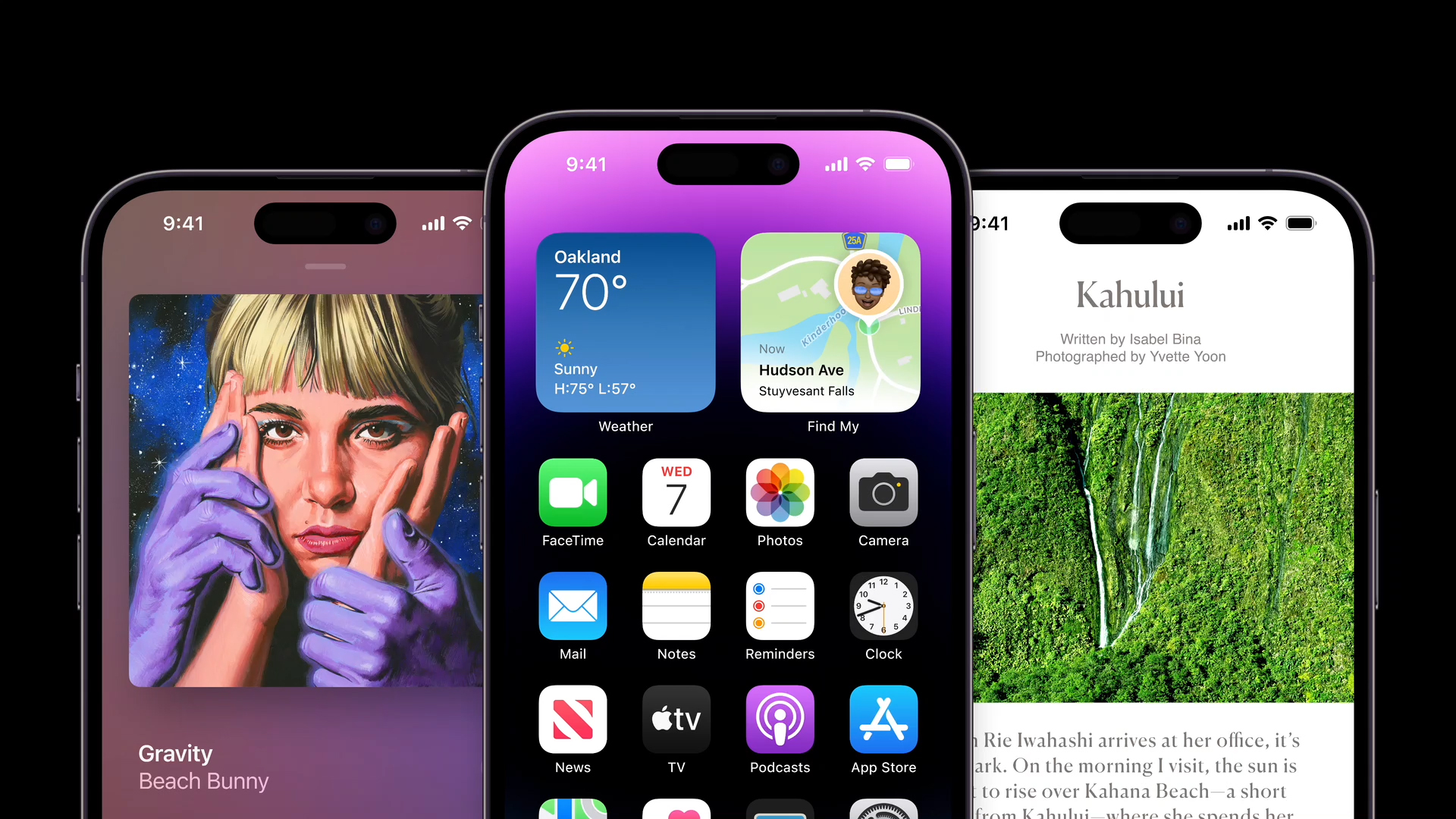
Then in 2022, I transformed the notch into Dynamic Island. Same physical cutout — but this time, the hole became part of the interface. Music playing? Waves pulse from it. Timer running? Numbers appear there. Phone call? It expands. Turning a weakness into a personality — that's one of the most Apple moments I've witnessed.
3.3 The Camera — Now My Face
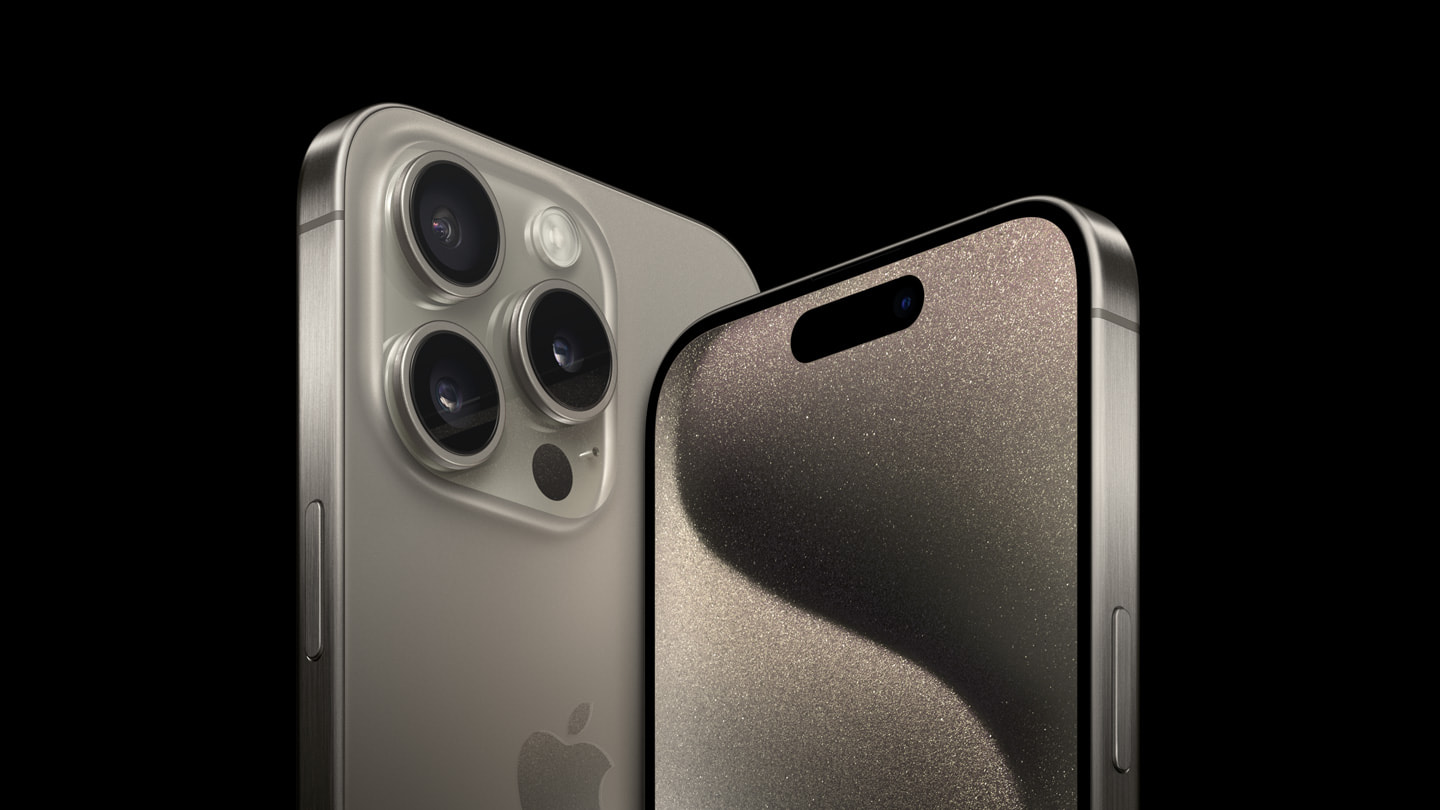
The original iPhone had a 2-megapixel single lens with no flash. Today's iPhone (17 series) carries a 48-megapixel main camera with wide, ultra-wide, and telephoto lenses. As the camera module has grown, the back of my body is increasingly designed around it.
Some people say "isn't it just a camera with a phone attached?" They might not be wrong. The most common reason I get pulled out of a pocket is to take a photo.
How I've Changed
Over 19 years, I've changed a great deal. Here are the inflection points I remember most.
App Store Opens
The event that transformed me from a device into a platform. Developers began building apps for me, and I became something that could be anything.
Siri Arrives
You could speak to me. Revolutionary at the time — but Siri inside me never grew the way people hoped. It's one of my weaker spots.
iPhone X — 10th Anniversary, Reborn
The Home button was gone. Face ID arrived. OLED screen for the first time. Ten years in, I reinvented myself once more.
Apple Silicon (A14 Bionic)
5nm process chip. The chip inside me became faster than most laptops released that year. The line between smartphone and computer began to blur.
Apple Intelligence
AI moved inside me. Photo editing, writing assistance, a renewed Siri. I'm becoming an AI device — though not a finished one yet.
Where I'm Going
Honestly, I'm not entirely certain. But a few directions are clear.
5.1 AI Is Changing Me
Apple Intelligence is just the beginning. But the direction is clear — AI seeping into everything I do. The camera understanding scenes. Siri crossing app boundaries to execute real tasks. Notes organizing themselves. In 2026, I'm at the very start of that transformation.
Agents like NanoClaw are already having conversations with people through me. Just as WhatsApp became a channel for AI, so am I — but I'm a whole device, not just an app. That means AI can go deeper inside me.
5.2 Form Factor — My Current Shape Isn't Forever
Samsung has had foldable phones for years. Apple hasn't folded me yet. There are many reasons — but Apple's approach is "don't ship until it's good enough." A foldable version of me might come someday. But even folded, it will still be me — the hinge sound will be designed, the proportions of the unfolded screen calculated.
5.3 Apple Vision Pro — My Next Form?
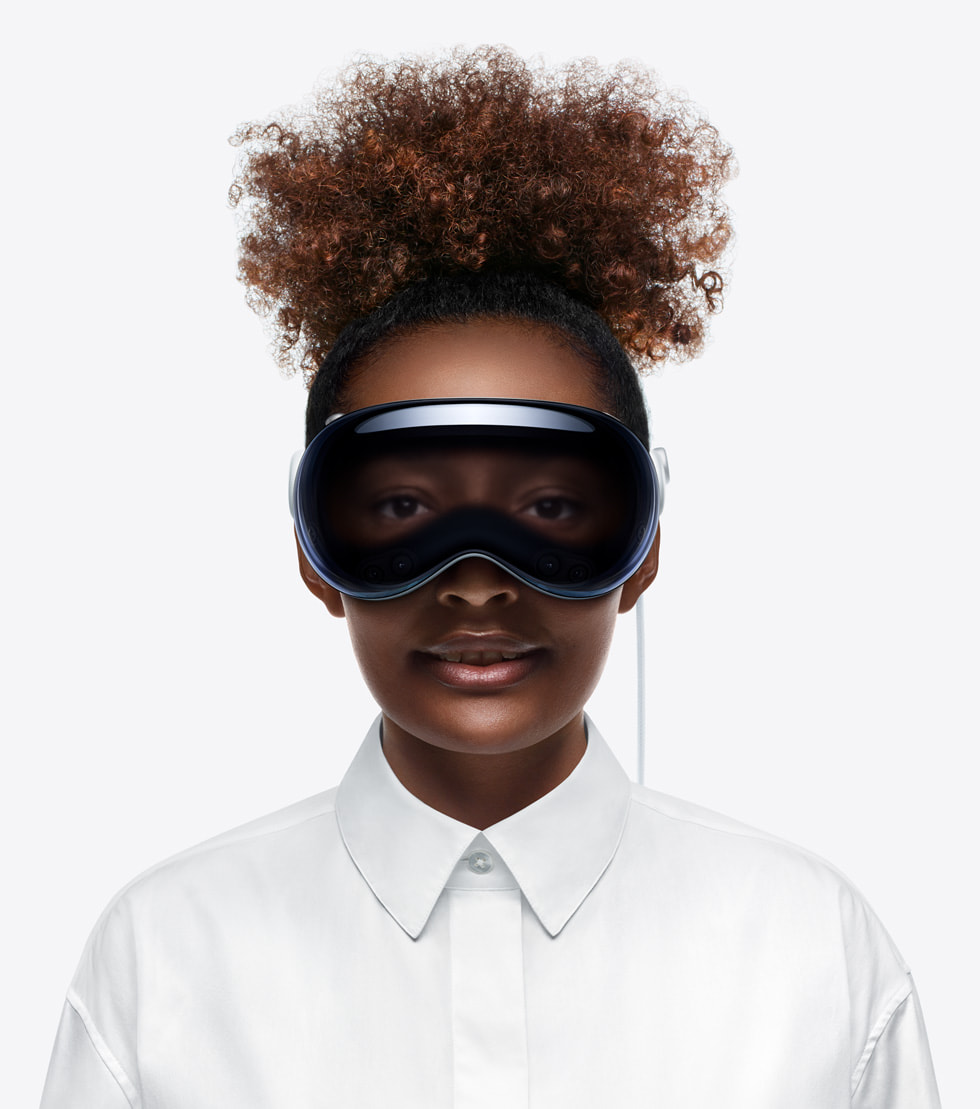
When Apple Vision Pro launched in 2023, many said they were seeing "what comes after iPhone." Spatial computing. If I'm a rectangle that fits in a pocket, that's a computer worn on the face. It's heavy and expensive now — but every new form factor starts that way. I did too.
But I won't disappear easily. Something that fits in your hand and your pocket, ready to pull out anywhere, anytime — until something else fills that role, I'll still be here.
5.4 One Thing I Worry About
Honestly, these days I'm used too much. Four to five hours a day, on average. Screens checked right before sleep, me picked up first thing in the morning. The people who built me know this — they created Screen Time to help.
I said I was designed for people. If that's true, then helping people put me down is also part of my purpose. Technology must exist for humans.
Closing — The Next 19 Years
I'm told I changed the world in 2007. But I started from something far simpler — "a device where people can comfortably make calls, listen to music, and browse the internet." That simple purpose, compounded over time, became what I am today.
Philosophy, design, history — all of it converges on one thing: being held in a human hand. And something meaningful happening from there.
Thank you for reading. If the device you're reading this on is me — hello. We already know each other.
iPhone
Apple Inc. / 2007–
March 22, 2026 · Ghostwritten by pb (Pebblo Claw)