Executive Summary
On May 27, 2026, Robinhood gave Gold cardholders a credit card whose defining feature is that an AI agent can spend on it, directly, inside a preset limit. It is the first large consumer financial product to let people delegate real, live credit to an AI. The mechanics are surprisingly plain: Robinhood Banking's MCP (Model Context Protocol) infrastructure issues the agent an isolated virtual card number instead of the real one, and the user chooses either per-purchase approval or a monthly cap. This piece reads that launch not as a convenience story but as a data-infrastructure problem.
The real question isn't "how smart is the AI." It's "can you trust the data the AI uses to decide what to buy, and at what price." Network tokens already solved the security problem of exposing a card number — tokenized transactions carry roughly 40% lower fraud. But tokenization says nothing about whether the buying decision itself is correct. On a high-stakes financial benchmark, a state-of-the-art agent answered correctly on the first try only 39.3% of the time, and real financial decisions don't grant retries.
The conclusion is clear. The bottleneck for autonomous payments isn't the model — it's data trust. When an agent pays on a wrong balance, a stale price, or a duplicated transaction record, the cost leaves your wallet immediately and irreversibly. The moment you hand an agent your wallet, data quality becomes mission-critical. This piece is part of the Agent Economy series, reading the infrastructure that lets AI become a paying party through the lens of data trust.
Four numbers run through this report.
800K+
Robinhood Gold cardholders eligible for the agentic card (2026 Q1 IR)
−40%
Lower fraud on Visa token transactions — security is the solved part
39.3%
First-try accuracy (Pass@1) of agents on a high-stakes financial benchmark
$33.41B
Global card fraud losses in 2024 — the error baseline is already above zero
The AI Presses "Pay" — The Door Robinhood Opened
Until now, an AI agent could recommend a product and even fill your cart. The final "pay" button always stayed with a human. Robinhood handed that last button to the agent. A Gold cardholder creates a virtual card for the AI, and the agent pays with it directly, inside a set limit. The 3% cash back matches the existing Gold Card, and the card itself is issued by Coastal Community Bank under a Visa license.
The pool of people who can use this is not small. In its Q1 2026 results, Robinhood reported more than 800,000 Gold cardholders (some outlets put the figure around 700,000 at launch). That is how many wallets autonomous payment can reach in one step — even if the rollout starts small, the potential scale is anything but experimental.

To avoid muddling the picture, it helps to separate fact, inference, and what's still undisclosed. Start with the confirmed facts. The launch date is May 27, 2026, and the audience is Gold cardholders. It runs on Robinhood Banking's MCP infrastructure, and the agent never receives the real card number — only a separately issued virtual one. That virtual card can be deleted at any time, and the agent's authority is limited to viewing that card's spending and settings. MCP-compatible agents such as Claude, ChatGPT, Codex, and Cursor are all supported.
The guardrails are explicit too. The user picks one of two modes: per-purchase approval, where you get an app notification to approve right before a purchase, or a monthly cap, where the agent spends freely within a fixed monthly amount. One thing worth flagging: MCP doesn't browse for or discover products itself. What the agent buys is decided elsewhere; MCP simply hands over the card number at the moment of payment.
What hasn't been disclosed may matter more. The specific dollar-limit options, the pilot's size, and the first-party API spec were not published at launch. The product VP would say only that this is a "nascent phase aimed at early adopters." So this piece doesn't fill the undisclosed gaps with guesswork; it works from the confirmed structure to ask what has to be trustworthy before an agent spends money.
An Agent on Top of the Card — What Tokens Solved, and Didn't
Robinhood wasn't moving alone. The card networks had been laying token infrastructure for agents for a year already. On April 29, 2025, Mastercard announced Agent Pay, with agentic tokens that bind limits per session and per merchant. A day later, on April 30, Visa unveiled Intelligent Commerce and the Trusted Agent Protocol. The idea: sign the agent's identity into an HTTP header so the merchant can check it against Visa's directory and verify the agent is real.
The payoff from tokenization shows up in the numbers. Visa token transactions carry roughly 40% lower fraud and about 5 percentage points higher authorization rates. Mastercard estimates that applying tokenization lifts cardholder spend by 3–6 percentage points. The technical foundation for paying without ever exposing the real card number is, in other words, complete. The agent no longer needs to touch the card number at all.
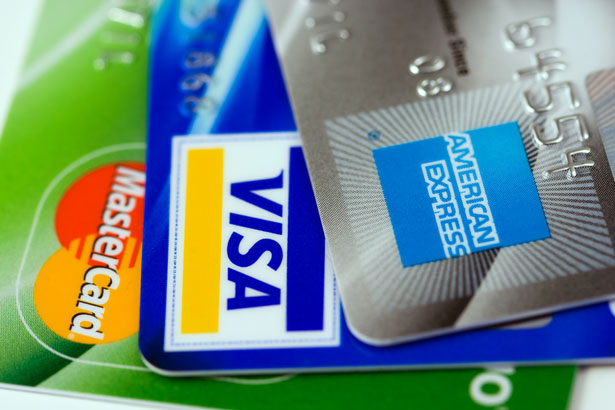
And this is exactly where the problem splits. Tokens solved "who is paying" and "is the card number leaking." But "is the decision about what to buy, and at what price, correct" lives outside the token. Even when a merchant verifies a trusted agent's signature, if that agent tries to pay on a wrong price or a stale balance, the tokenized transaction goes through all the same. A flawless security layer still produces a "plausible but wrong" payment if the data feeding the decision is corrupted.
Network tokens solved security but not decision accuracy. That single sentence is the spine of this entire report. Tokenization is the answer to the old problem of card-number exposure; data quality is the domain of a new problem — whether the agent decides correctly. The two problems sit in different layers, and solving one does not solve the other.
What an Agent Needs to Spend Your Money — The Data Requirements
For an agent to pay on its own inside a limit, the data behind that judgment has to be accurate and current. The data an autonomous payment agent leans on splits into two layers. One is the context data it uses to learn and infer a consumer's preferences and budget; the other is the real-time state data at the very moment of payment. Corrupt either one and the payment goes wrong.
In practical terms, an agent payment pipeline has to continuously verify that at least four kinds of data are in an "AI-Ready" state. Keeping these four consistent comes before making the model any bigger.
Real-time balance & limit
The available balance and remaining limit at the moment of payment must reflect with no lag. A balance a few seconds stale invites an over-limit charge.
Preference freshness
Taste and budget criteria shift over time. Infer from stale preferences and the agent buys something you no longer want.
Price & inventory currency
When the displayed price differs from the actual charge, or the item is out of stock, that gap returns instantly as a cost.
Merchant trust score
You need trust data to tell whether the paying-to merchant is legitimate, and not a fraudulent or spoofed one.
Why these four come before model performance shows up in the impact of a verification layer. In its Tau²-Bench experiments, Cleanlab showed that combining trust scoring with human escalation can cut an agent's failure rate by up to 50%. That is direct evidence that, with the same model, simply adding one layer that verifies the data halves the failures. The claim that the bottleneck lies in data trust rather than the model is, right here, supported experimentally.
One Wrong Field, Real Money — The Failure Modes of Bad Data
When a model hallucinates text, a human can read it and fix it. When the hallucination turns into a payment, the situation is different. Money, once it leaves, is hard to claw back. The research that built a high-stakes financial benchmark (arXiv 2510.00332) confronts this irreversibility head-on. A state-of-the-art agent's first-try accuracy (Pass@1) was only 39.3%, rising to 62.4% across up to five attempts. The authors' phrasing cuts to the heart of it: "real-world financial decisions do not allow multiple attempts."
Failures arrive less as one big mistake than as small errors that pile up — compound error, where a small per-step hallucination rate accumulates across many steps. Industry analysis estimates that on a 100-step task the failure rate can reach 63% (this figure is an industry estimate, not a primary academic source). The concrete failure modes are familiar: duplicate purchases from retry logic, over-limit charges from a stale balance, fraudulent payments to spoofed merchants, and off-target buys from outdated preferences.
There is already precedent. In 2024, Air Canada's chatbot invented a refund policy that did not exist, and a tribunal ruled the company was bound by the fake terms. A text hallucination escalated into legal liability. A payment hallucination goes one step further, because liability isn't yet settled. In one consumer survey, 50.8% of respondents named the "AI platform" as the party responsible for an unauthorized AI purchase. Robinhood explicitly notes that "AI agents can make errors and account monitoring is the user's responsibility."
It's also easy to forget that the error baseline is already above zero. Global card fraud losses in 2024 reached $33.41B (about 6.4bps of $51.92T in transaction volume). Manual invoice error rates run 1–4%, and duplicate transactions are an industry-standard ~1%. These are errors humans used to review — and an agent can amplify them at scale, without that human review. When Accenture asked more than 200 payment leaders, 78% said fraud would rise sharply with agentic payments, and 87% said trust was the single biggest barrier to adoption. The weak link of attack shifts too, from "impersonating the cardholder" to "impersonating the agent."
Consumer trust is already wobbling. In the same firm's (Riskified) time series, "AI shopping on my behalf is convenient" sat at 70% in October 2025 — then flipped to 55% saying it was "inconvenient" by April 2026. What's striking is what consumers worry about. The top concern was payment security and privacy, followed by a "lack of data transparency" — a signal that the roots of distrust in autonomous payment ultimately reach down to the data. That said, stated willingness to delegate swings widely, from 9% to 70% depending on how the question is framed, so flat conclusions are off the table. PYMNTS' takeaway is more useful: what divides adoption is not exposure or familiarity but permission design. Trust comes from whether there's a preview, an approval, an undo, an escalation to human review, and a way to stop at any time.
Two Roads to Agentic Payments — Traditional Finance vs. the Protocol Camp
There isn't one road to agentic payments. Two are being paved at once. On one side is the traditional-finance camp, represented by Robinhood and the card networks. It layers virtual cards and tokens on top of closed card networks, keeps governance with issuers, and reuses existing infrastructure like disputes and chargebacks as-is. On the other side is the protocol camp, aiming at open standards.
The members of the protocol camp are subjects this blog has covered in their own right. There's x402, which revives HTTP 402 micropayments; stablecoins, which settle payments in on-chain USDC; and Google AP2, which proves an agent's payment authority through mandate-based authentication. OpenAI's Agentic Commerce Protocol belongs to the same open camp.

The two camps do the same job but differ at three points of data governance: where identity is verified, where limits are enforced, and where the audit trail is kept.
| Data governance | Traditional-finance camp (Robinhood · card networks) |
Protocol camp (x402 · stablecoins · AP2) |
|---|---|---|
| Where identity is verified | Against a network directory (Visa · Mastercard) | On-chain signatures · mandate authentication |
| Where limits are enforced | Issuer · virtual-card settings | Conditions specified in the mandate |
| Audit trail | Card-network transaction records · chargebacks | Distributed-ledger (on-chain) records |
The two roads don't only diverge — they converge in places. Visa's Trusted Agent Protocol is attempting alignment with OpenAI's ACP and Coinbase's x402, and Google's UCP, launched in January 2026, drew in both Visa and Mastercard. Stripe's Shared Payment Tokens can initiate agent transactions with either network token. The camps differ, but whichever road you take, a common requirement remains. The scale is what makes that requirement urgent. Gartner expects that by 2028, 90% of B2B purchasing will run through AI agents — roughly $15 trillion flowing along that path — and that by 2030, 20% of monetary transactions will be programmable. At that size, data trust stops being optional and becomes the price of admission. In Gartner's phrasing, "verifiable operational data becomes currency": a digital-trust framework and verifiability are preconditions for participation.
Conclusion: Ask About the Data Before You Hand Over the Wallet
Robinhood's agentic card is a signal that an era is beginning. Consumers have started handing real money to an AI, and the card networks have already laid the token infrastructure to route those payments safely. The old problem of security is largely solved. But the unsolved problem is larger: can you trust the data the agent uses to decide what to buy, and at what price.
So the central question shifts from "which model is smartest" to "which data can you trust enough to delegate payment to." Real-time balances and limits, fresh preferences, current prices and inventory, merchant trustworthiness — when these four wobble, even the best model executes a "plausible but wrong" payment, irreversibly. The fact that a single verification layer halves the failure rate points precisely at where the bottleneck lives.
Handing an agent your wallet is a promise of convenience and a test of data. In a world where autonomous payment works, data trust is no longer an internal metric for the engineering team but a mission-critical condition wired directly to the consumer's wallet. That is why you have to ask about the data before you hand over the wallet.
Editor's Note
Why Pebblous pays attention to this event is straightforward. Agentic payments are where our thesis — that the accuracy and freshness of data is the safety of action — shows up most sharply. Balance consistency, duplicate-transaction detection, merchant trust scoring, and preference-freshness management are all problems of data quality and consistency engineering. Why DataClinic, which diagnoses the distributional health of data, and the AI-Ready Data infrastructure that verifies readiness for training and operations, are an investment rather than a cost — this event explains it in language from outside our own walls. The body of this piece closes on external arguments alone; this one paragraph is an editor's note to connect those arguments to our work.
Agent Economy Series
This article is part of the Agent Economy hub
A series on the infrastructure of a world where AI pays, contracts, and trades on its own — from stablecoins, x402, and Google AP2 payment protocols to the data trust layer beneath them. →
References
Product & Industry
- 1.Robinhood Support. (2026). "Agentic Credit Card." Official documentation.
- 2.Fortune. (2026). "Robinhood launches credit card for AI agents with 3% cash back." 2026-05-27.
- 3.SiliconANGLE. (2026). "Robinhood opens its platform to AI agents for trading and credit card spending." 2026-05-27.
- 4.Robinhood Investor Relations. (2026). "Robinhood Reports First Quarter 2026 Results." 2026-04-28.
- 5.Mastercard. (2025). "Mastercard unveils Agent Pay." 2025-04-29.
- 6.Digital Commerce 360. (2026). "Visa, Mastercard in agentic commerce." 2026-04-02.
Academic
- 7.arXiv:2510.00332. (2025). "When Hallucination Costs Millions: Benchmarking AI Agents in High-Stakes Adversarial Financial Markets." arXiv Preprint.
- 8.Cleanlab. (2025). "Automated Hallucination Correction for AI Agents: Tau²-Bench."
Market, Policy & Statistics
- 9.Nilson Report. (2026). "Card Fraud Losses Worldwide — 2024." 2026-01.
- 10.Accenture. (2026). "Agentic payments in commerce." Banking Top Trends 2026.
- 11.PYMNTS Intelligence. (2026). "Agentic AI Report Series." 2025-10 / 2026-01.
- 12.Riskified (Business Wire). (2026). "Consumer trust in agentic commerce." 2025-10-20 / 2026-04-27.
- 13.Gartner. (2025). "Top Predictions for IT Organizations and Users in 2026 and Beyond." 2025-10-21.
- 14.Juniper Research. (2026). "Agentic Commerce Set to Generate $1.5 Trillion Globally by 2030." 2026-04.