Executive Summary
This article reads the quarterly report Meta filed on October 22, 2026. The number that ran in the headlines that day was "$825 billion in future spending commitments," and on the same day Meta's credit default swap price hit its highest level in the year since the contract began trading actively. Yet that $825 billion figure appears nowhere in the filing as written. It is a total a reporter built by adding up three numbers that sit in separate places in the notes. Bloomberg said so inside its own story.
This article does not dispute the total. All three numbers match the filing, and the addition is correct. The problem is that the rules do not produce the total for you. The item descriptions for the three buckets both list data centers, network infrastructure and energy, and the report never says whether the two buckets overlap. In the other direction there is a channel that was left out entirely. Two unconsolidated joint ventures in which Meta holds 20% are that channel, and the maximum exposure Meta discloses for them sits outside the $825 billion. So the total may be too high, and it may also be too low.
Line up three quarters and the machinery that keeps producing different numbers from the same filing comes into focus. Three months earlier the same outlet built a total the same way, but the pieces were defined differently, and subtracting one total from the other to state an increase counts one piece twice. Step outside the filing and the pattern repeats. For anyone who works with data this is a familiar scene. A value being correct and a value being combinable are two different things, and when whoever builds a total does not also write down the scope, the as-of date, the unit and the exclusions, the same source keeps producing different grand totals. Below, that structure is opened one piece at a time.
$355.7B
Leases that have not started
Signed but not yet commenced, so they sit in the notes rather than on the balance sheet. The largest piece of the reported total
About 11x
Note total ÷ booked lease liability
The lease liability on the balance sheet is $31.2B. One is a discounted present value and the other an undiscounted total, so the units differ
$68.4B
Maximum exposure outside the total
The combined maximum exposure Meta discloses for two unconsolidated joint ventures it holds 20% of. It never entered the $825B
119.3 / 114.79
Same day, same CDS, two values
ICE put the same company's five-year contract at 119.3bp, Markit at 114.79bp. Change the provider and the number changes
On October 22 a Number That Is Not in the Filing Became the Headline
On October 22, 2026, Meta Platforms filed its quarterly report (Form 10-Q) with the US Securities and Exchange Commission alongside third-quarter results. The as-of date is September 30. One headline started circulating that day: the money Meta has committed to spend comes to $825 billion.
Open the report and search for $825 billion, though, and you will not find it. The number has never been written in the filing. What is written are three separate figures sitting in different paragraphs of Note 10.

| Item as filed | Amount | Name in the filing |
|---|---|---|
| Leases not yet commenced | $355.73B | leases that have not yet commenced |
| Non-cancelable contractual commitments | $454.52B | non-cancelable contractual commitments |
| Contingent cloud purchase obligations | $14.72B | contingent obligations to purchase … cloud capacity |
| Add the three | $824.97B | — this row is not in the filing |
Meta Q3 2026 Form 10-Q, Note 10. The three items appear in separate paragraphs, and no sentence anywhere in the report states the sum of the three.
So who made the $825 billion? The press did. And unusually, the outlet that built the total spelled out its arithmetic inside the story. The Next Web's republication of the Bloomberg wire piece still carries this sentence.
That one sentence is where this article starts. The point is not that the numbers are wrong. All three match the filing, and the sum is right to the decimal. But the total is a number a reporter made, not one the company published, and so the standard for "what went in and what stayed out" is held by the press rather than by the filing. The report shows the three buckets separately; it never says whether they may be added on one line. Section 3 takes up that question.
The market reacted the same day, whether or not the total was in the filing. Meta's share price fell from $697.52 the previous day to $648.85, down 6.98% on a close-to-close basis, and market capitalization shrank by roughly $124 billion in a day. The total was not the only reason. Raised capital expenditure guidance, a litigation accrual of about $9.9 billion tied to settlements with several US states, and a plan to issue non-voting shares all landed around the same time.
A number moved on the credit side that day too. Meta's five-year credit default swap (CDS) price rose 8.9bp to 119.3bp. A bp, or basis point, is 0.01 percentage point. A credit default swap is an insurance-like contract bought against the possibility that a company fails to repay, and a rising price means the market now prices that company's credit more dearly than before. The widely circulated phrase "record high," however, is not accurate. Here is the baseline Bloomberg's own text set.
One last thing to note. The self-describing Bloomberg sentence quoted above is not in every republication. Open the other outlets that ran the same wire story and the $825 billion figure and the three-item breakdown are all still there, but in several versions the sentence "reported the total by adding together three items" is the one thing missing. The single line disclosing how the total was built fell off during syndication. The defect this article is after starts in the filing and then happens a second time on the way through the press.
A Lease Reaches the Balance Sheet Only When It Starts
The largest piece of the $825 billion is leases. And leases carry one clear threshold that accounting has fixed in place. A lease liability and its right-of-use asset are recognized not on the day the contract is signed but on the day the lease commences. Commencement is the moment control of the leased asset passes over so it can actually be used. A data center still being graded or framed is pre-commencement even with a signed contract, and so it goes in the notes rather than on the balance sheet.
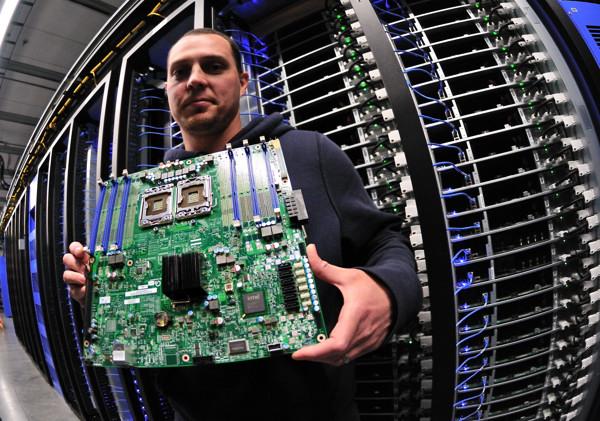
Follow the rule and the result looks strange to the eye. The operating lease liability on Meta's September 30 balance sheet is $31.17 billion, made up of $2.52 billion current and $28.65 billion non-current. The not-yet-commenced leases recorded in the notes on the same date come to $355.73 billion. That is a gap of roughly 11.4 times.
Read that multiple as "hidden money" and you go wrong in two places. First, the two numbers are in different units. The balance sheet figure discounts future lease payments to present value; the note figure is an undiscounted total. Discounting payments spread over more than a decade takes a fair amount off. Second, the two numbers are at different stages. One covers leases already commenced and the other leases not yet commenced, so they were never measuring the same thing. Credit analysts draw the same line. Moody's analysts wrote of the hyperscalers' uncommenced leases that this is not debt avoided through structuring, and described the obligations as not missing but yet to be on the balance sheet.
Reuters attached its own warning at the same spot. Reporting a combined uncommenced lease figure for five big tech firms, it told readers inside the story not to set that total next to debt.
2.1One Investment Can Be Recorded in Four Places
The commencement test alone splits money of the same nature into two places. Add to that the subsequent-events note, which records contracts signed after quarter end, and the note on joint ventures Meta holds a stake in but does not consolidate. The upshot is that the money behind a single data center can be recorded in as many as four places inside one report. The diagram below is those four places.
Two of the amounts in the diagram are numbers the text has not reached yet. The roughly $68 billion on the third row comes not from the third quarter but from the subsequent-events note in the second-quarter report. How the July coverage pulled that figure forward into its total is covered in section 4.1. The $68.4 billion on the fourth row is the maximum exposure Meta discloses for two unconsolidated joint ventures, and why that figure stays outside the $825 billion is taken up in section 3.2.
Original Pebblous diagram. Amounts come from the balance sheet and notes of Meta's Q3 2026 Form 10-Q (as of September 30); the subsequent-events amount is from Note 13 of the Q2 2026 Form 10-Q.
All four places are places the rules put these numbers. None of them is a hiding place. But gathering figures split across four places back into one is work the accounting rules do not do. That work is left to the reader, and the total is set the moment the reader chooses how many of the four to gather. The total reported in October picks the second row out of the four and adds two non-lease items to it.
Were These Numbers Safe to Add?
Building a total requires knowing two things. Do the things being added overlap each other, and is anything that should be added missing? The filing answers neither. This section is the center of the article.
3.1The Same Item Sits in Both Buckets
Start with the filing's own sentences describing what fills each bucket — the item descriptions on the lease side and on the contract side.
Set the two sentences against each other word by word and three items appear on both sides: data centers, network infrastructure and energy.
Three more items appear on one side only. Colocations are on the lease side alone; third-party cloud capacity and Reality Labs consumer hardware products are on the contract side alone. The last of those is worth holding on to. That single line is why it is hard to call the whole $825 billion AI infrastructure spending. Consumer hardware commitments sit in the same bucket as the data center, server and energy commitments, and this note does not say how large that share is.
| Item | Leases not yet commenced $355.73B |
Non-cancelable commitments $454.52B |
|---|---|---|
| Data centers | ● | ● |
| Network infrastructure | ● | ● |
| Energy | ● | ● |
| Colocations | ● | — |
| Third-party cloud capacity | — | ● |
| Reality Labs consumer hardware | — | ● |
A word-level comparison of the two item descriptions in Note 10 of Meta's Q3 2026 Form 10-Q. The top three rows are the items that appear on both sides.
The same item appearing in both descriptions does not mean the same money was counted twice. A contract to lease a data center building and a contract to supply that data center with electricity are different contracts. The problem is that the filing does not tell you which. Looking for a sentence stating that the two buckets are mutually exclusive, we searched the full text of the notes in all three quarterly reports, from Q1 to Q3, for phrases of the kind "excluding," "does not include," "mutually exclusive," "separate from," and "net of." No such sentence exists in any of the three quarters. This is not a failure to find one; it is a confirmation that there is none.
There is exactly one sentence that speaks to a relationship. The uncommenced lease description opens with "In addition to the lease liabilities that are included on our balance sheet." That sentence speaks only to the relationship between the balance sheet and the notes covered in section 2; it says nothing at all about the relationship between the leases and the contractual commitments.
So the position is this. The two buckets may overlap or they may not, and the filing does not settle which. If there is an overlap, the $825 billion is too high.
3.2The Fourth Channel Left Outside the Total
There is a direction pointing the other way too: the bottom row of the section 2 diagram, the unconsolidated joint ventures. Meta holds one data center joint venture in Louisiana and one in Texas, with a 20% stake in each. Neither enters Meta's consolidated financial statements. The filing states why.
As accounting, the judgment is beyond reproach. The consequence, though, is that the maximum exposure Meta itself discloses for these two ventures sits outside the $825 billion. Numbers are easy to mix up here, so three of them are set apart below. They look alike and they are different quantities.
| Figure in the filing | Amount | What it measures |
|---|---|---|
| Total estimated development cost of the two ventures | About $27B + $14B | The size of the entire venture project. Not Meta's share, and the filing gives no figure for Meta's portion |
| Residual value guarantee maximum exposure | $41.49B | One line inside the total on the row below |
| Total maximum exposure, unconsolidated ventures | $68.40B | The only figure usable when stating the size of what lies outside the $825B. The $6.75B of other unconsolidated VIEs is separate again |
Meta Q3 2026 Form 10-Q, Note 5. The three figures are close enough in magnitude that the eye does not separate them. The $27B and $14B are not Meta's share, so they are added to no total.
A residual value guarantee (RVG) is Meta's promise to make up the shortfall if the value of a venture's assets falls below an agreed floor. The filing records this guarantee in two ways at once. The body of Note 5 explains it as a formula rather than an amount: the guarantee payment equals the shortfall between fair value at that time and the guaranteed floor. And the maximum exposure table in the same note carries a line item of $41.49 billion. Read only the formula and write "there is no amount" and you have missed the table; read only the number and write it up as a fixed obligation and you have dropped the fact that it is contingent.
Section 3 does not conclude in one direction. Items that may overlap sit in both buckets, so the $825 billion may be too high; and a $68.4 billion exposure Meta disclosed itself sits outside the total, so it may also be too low. Which of the two directions holds cannot be settled from the filings now public. This is not a wrong number. It is a number that does not reproduce.
Line Up Three Quarters and the Definitions Move
Look at one quarter and the trouble with the total looks like an addition problem. Line up this year's three quarters and something else shows. The amounts are not the only thing that grew. The names and the boundaries of the buckets moved along with them.
| As of | Note no. | Uncommenced leases | Non-cancelable commitments | Sum of the two | Contingent cloud |
|---|---|---|---|---|---|
| 2026-03-31 | Note 8 | $182.88B | $237.67B | $420.55B | Not found in the filing |
| 2026-06-30 | Note 9 | $278.99B | $349.31B | $628.30B | Not found in the filing |
| 2026-09-30 | Note 10 | $355.73B | $454.52B | $810.25B | $14.72B |
A direct comparison of the notes in Meta's Q1–Q3 2026 Forms 10-Q. The contingent cloud purchase obligation is confirmed in the Q3 filing and was not found in the Q1 and Q2 filings. That is not the same as saying it did not exist.
Read the item descriptions alongside the amounts and three things turn out to have changed at once in the third quarter. First, "energy-related infrastructure" is new to the lease description. The Q1 and Q2 descriptions listed only data centers, colocations and certain network infrastructure. Second, in the contract description "data centers" is gone as a standalone item and has become "energy service agreements for data centers." Third, a $14.72 billion contingent cloud purchase obligation is confirmed in the Q3 filing.
Why do those three matter? Because the sum of the two items grew by $181.95 billion from Q2 to Q3, and the filing does not break out how much of that is newly signed commitments and how much is items described differently. Stories that compute quarter-on-quarter growth rates generally pass over this point. Energy-related infrastructure being written down for the first time in Q3 does not mean it was contracted for the first time in Q3. It may have been there all along and simply reclassified this time. The filing alone cannot separate the two.
The same table holds one more thing, small but awkward. Across the three quarters, the note carrying this material was numbered 8, then 9, then 10. For a person it is a trivial shift. For a machine pulling figures with "Meta 10-Q Note 10" as its anchor it is not. The same named location points at something different each quarter.
4.1July's "Almost $700B" and October's "$825B" Define the Pieces Differently
The same kind of total was reported three months earlier. On July 30, 2026, Bloomberg Law reported "almost $700 billion in future spending commitments" from Meta's second-quarter filing. This is the spot where it becomes tempting to set the two totals side by side and write "up about $125 billion in three months." Don't. The pieces the July story added are not the pieces the October story added.
Two numbers appear in the July story: $349.3 billion of non-cancelable commitments, and "$347 billion in lease commitments that have not yet commenced." But uncommenced leases in the Q2 report were $278.99 billion. Where did the other $68 billion come from? The subsequent-events note in the same report. The Q2 report said Meta had entered into approximately $68 billion of additional data center leases in July 2026, expected to commence in 2027 and 2028 with lease terms of 18 to 20 years. The story merged the balance sheet date figure with the post-balance-sheet figure in advance and reported them as the single number $347 billion.
$347B + $349.31B (non-cancelable commitments) = $696.3B ≈ "almost $700 billion"
[October coverage] $355.73B + $454.52B + $14.72B = $824.97B ≈ "$825 billion"
Subtract one total from the other and $68 billion gets counted twice — July's subsequent-event leases are already inside the $355.73B as of September 30.
On the surface both totals are "three pieces of a filing added together." But July took in subsequent-event leases and October took in contingent cloud purchases. The count of pieces is the same and the source is the same kind of report, yet the pieces are defined differently. So quarterly comparison works only item by item, as in the time series table above, and goes wrong the moment one total is subtracted from the other.
One more thing, for free. The headline of that July story says "almost $700 billion," while the URL slug in the address bar still reads "279-billion-in-future-data-center-leases." Within a single page, the headline and the address carry different figures. Which figure would lead changed while the story was being written, and only the address kept carrying the first one.
4.2The Same Thing Happens Outside the Filing
Different numbers coming out of the same object because the definition is not written down is not a peculiarity of filings. The credit default swap from section 1 is a good example. On October 22 two data providers put the same company's same five-year contract at two different levels.
| Data provider | Meta five-year CDS | Move that day |
|---|---|---|
| ICE Data Services | 119.3bp | +8.9bp |
| Markit | 114.79bp | +7.6bp |
October 22, 2026 — same day, same company, same maturity. Each provider uses different quotes and methods in its calculation, so the numbers diverge.
Meta is not the only case. Around the same period, three providers quoted CoreWeave's five-year contract anywhere from 1,038bp to 1,194.5bp on a single day, October 15. Same day, same name, and a spread of more than 150bp.
A misreading about the level is worth clearing up alongside this. Meta's 115–119bp sits in solid investment-grade territory. In the same period Oracle was around 295bp on October 19, Broadcom about 136bp around October 8–9, SoftBank 424bp on October 15, and CoreWeave above 1,000bp on October 15. Meta's credit indicator did rise, and the move was not small for a single day, but what this article is after is not the level. It is the fact that two numbers came out of the same object on the same day.
This Is Not Only Meta's Problem
Everything so far comes from reading one company's report. But Meta is not the only company disclosing money of this kind, and opening other companies' reports turns up something more awkward. The name for the same thing differs by company. The table below carries over each of five companies' most recent filings as written, so the as-of dates are scattered from June 30 to September 30, which means the amount column is not a column meant to be added down.
| Company | What it calls pre-commencement leases | Amount · as of | Purchase / contractual commitment item |
|---|---|---|---|
| Meta | leases … not yet commenced | $355.73B (9/30) |
Non-cancelable commitments $454.52B + contingent $14.72B |
| Microsoft | leases … that had not yet commenced | $329.1B (FY2026 10-K) |
Splits them: purchase commitments $194.1B and construction commitments $34.6B |
| Alphabet | leases … that have not yet commenced | $85.2B (6/30) |
Purchase and other contractual obligations — recorded as one bundle |
| Amazon | leases not yet commenced | $137.21B (6/30) |
Unconditional purchase obligations $130.07B |
| Oracle | additional lease commitments … not reflected on our consolidated balance sheet | $288B (8/31) |
Unconditional purchase and certain other obligations $34.15B |
Each company's 10-K or 10-Q. For Alphabet's purchase commitments this review could not open the full text of the note, so only the item name is carried over, without an amount. Separately, Alphabet records about $5.8B of short-term leases as of June.
All five companies disclose "commitments not on the balance sheet because they have not yet commenced." But every name is different, and so is the granularity. Microsoft records purchase and construction separately; Alphabet bundles them into one. Neither is wrong. It is just that combining these five onto one line requires someone to pair up items that carry different names. An industry total is the product of that pairing.

So the aggregates differ too. Set this year's three aggregates side by side and they look like this.
- Moody's, February 2026 — five companies, uncommenced leases totaling $662 billion. The analysis noted this equals 113% of the five companies' adjusted debt.
- Moody's, July 2026 — scope widened to six companies by adding CoreWeave. Total lease commitments of about $1.2 trillion, of which more than $820 billion has not yet commenced.
- Reuters/LSEG, August 4, 2026 — five companies, uncommenced leases totaling about $1.09 trillion. Lease liabilities those same companies recognized on their balance sheets came to about $285 billion.
Within six months, three figures appeared: $662 billion, $820 billion and $1.09 trillion. The company count differs, the as-of dates differ and the item groupings differ, so the outcome follows. But there is one more thing. The Reuters aggregate takes each company's "most recent filing" and adds them up, and that "most recent" is a different quarter for different companies. As of August 4, Meta's latest filing was the second quarter, where its uncommenced leases stood at $278.99 billion. Seen now, that is $76.7 billion below the figure three months later. The industry total is itself a mixture of values that do not share an as-of date.
This is not to say the aggregators made a mistake. Quarter-end dates differ by company and so do filing schedules, so a total aligned to one as-of date cannot be built in the first place. Only one thing can be said. If whoever picks up that total does not ask "as of when," the number looks, to the person who did not ask, as though it had a single as-of date. This article stops here. What these figures mean for an investment decision is not something it takes up.
What It Takes for the Same Total to Come Out Twice
The problems in the previous five sections all have the same shape. The numbers are right and the total does not reproduce. Put differently, someone else doing the same work from the same source does not arrive at the same grand total. So what else would have to be written down for it to reproduce? Within what this article read, five lines. Next to each line is the place in this article where that line was missing.
| Line that should be written | What it asks | Where it was missing in this article |
|---|---|---|
| Scope | How far does it reach | The filing never says whether the lease bucket and the contract bucket overlap (section 3.1) |
| As-of date | As of when | The industry total mixed figures from different quarters for different companies (section 5) |
| Unit | Discounted or not, under which definition | A present value of $31.17B and an undiscounted total of $355.73B both describe the same asset class (section 2) |
| Exclusions | What was taken out | $68.4B of maximum exposure to unconsolidated ventures sits outside the total (section 3.2) |
| Source document | Which filing it came from | The quotation case in the paragraph below |
The five lines are not a newly invented standard. They are the items that were commonly missing at every point in this article where the numbers diverged.
Start with the last line. Follow this round of coverage and you will see a sentence to the effect that the capital-raising environment is becoming progressively more difficult, carried in several places as though quoted from Meta's 10-Q. That passage is not in the Q3 10-Q. Full-text searches for similar wording turn up nothing in that Meta filing. The actual source is a preliminary information statement in which a special committee set out the background to the creation of a new class of non-voting shares. It is a document from the same company in the same period, but a different filing from the 10-Q, and a different kind of document. Put it inside quotation marks and the source changes.
6.1Changing One Line of Definition and One of Period Produces Three Numbers
Lease accounting is a specialized subject, so this article's argument risks being read as a story about accounting alone. An example showing it is not sits in the same filing. This quarter's coverage also carried the news that Meta's free cash flow had turned negative, and more than one number circulated. The most widely quoted was in the negative $2.1 billion range; some stories put it in the negative $1.1 billion range. Both came out of the same filing.
Writing out the arithmetic shows where the two numbers part. Below the two quarterly figures sits a third from the same filing, with only the period changed to the nine-month cumulative.
Operating cash flow $32.785B
− Property and equipment only, $33.942B = −$1.157B
− Property and equipment plus finance lease principal, $34.906B = −$2.121B ← the widely reported figure
[Nine months cumulative — same filing, period changed]
$96.873B − $83.055B = +$13.818B
Same quarter, same report: change one line in the definition of capital expenditure and negative $1.1 billion and negative $2.1 billion part ways. The difference is whether principal payments on finance leases count as capex. Change the period from the quarter to the nine-month cumulative and even the sign flips, to positive $13.8 billion. Without the scope and the unit written down, three numbers circulate at once from the same cash flow statement of the same company.
Two further disclosures belong here. First, the quarterly figures above are derived. Meta's 10-Q does not present a three-month cash flow statement, only the nine-month cumulative. Writing "according to the 10-Q, third-quarter capex was" would not be accurate. Second, "free cash flow" is a term that does not appear in the 10-Q. It is not an item defined by the accounting standards but the customary calculation of operating cash flow minus capital expenditure, and the definition of that capital expenditure splits as shown above.
6.2It Gets Somewhat Worse When a Machine Reads It
A person at least stops when two numbers feel wrong. Anything extracting figures from filings automatically has no occasion to stop. The three items are not structured tags; they are amounts embedded in narrative sentences, and nowhere in those sentences is there a marker saying "this number may be added to that one" or "these must not be added." Find numbers that look like the same unit in the same note, and adding them becomes the natural choice.
The note renumbering from section 4 lands squarely here: Note 8 in Q1, Note 9 in Q2, Note 10 in Q3. Build a quarterly time series anchored on "the lease commitments in Note 10" and each quarter picks up a different location. For a person it is settled by one glance at the table of contents; for a machine it becomes a quietly wrong time series.
So this section closes with a question instead of an answer. Of the numbers that circulated this quarter, how many came with the scope, the as-of date, the unit, the exclusions and the source document written alongside? The $825 billion carried none of those five lines. It still went around the world in a day.
Why Pebblous Is Watching
There is a reason Pebblous spent this long inside one US listed company's quarterly report. What section 6 found missing was not accounting; it was the record of how a number was built. That record goes missing far more often outside a 10-Q than inside one.
7.1A Value Being Correct and Values Being Combinable Are Different
Tools that check a figure on its own are everywhere, and the three numbers clear all of them. The sum is where the checking runs out: nothing in the filing says the two buckets are exclusive and nothing says what was left out, so there is no standard by which the total could be called right or wrong. That gap is why AI-Ready Data asks not only whether a value is correct but whether "these values can be used together." And the question is not an abstract one. One line of item description changed in the third quarter, the border between the lease side and the contract side moved with it, and to a reader who never saw that line the previous quarter's total and this one look as though they were cut to the same boundary.
7.2An Error Introduced at Extraction Becomes a Confident Number at Output
Section 6.2 carries straight over to the model side. Anyone scraping figures out of filings for training or for answers adds numbers that look like the same unit, with no basis for judging whether they may be added. Just as the note number moves each quarter, a shift that is trivial for a person becomes, for a machine, an incident of picking up something else. An aggregation error that enters that way leaves no trace at the output stage. The wrong number and the right one come out in the same tone of voice. Look at data quality one value at a time and a defect like this is never caught.
7.3It Happens Far More Often in Internal Reports
Public company filings are, relatively speaking, the tightly ruled end. The place this same defect occurs more often is inside the company: the same item named differently by each department, aggregates with no note on whether they overlap, a subsidiary left out of the total, a comparison mixing quarterly figures with cumulative ones. Swap the calculation block in section 6.1 for your own company's numbers and the scene is familiar to most practitioners. Once the people receiving a report start demanding the five lines — scope, as-of date, unit, exclusions, source document — the same number comes out twice. What this article shows through Meta is the cost of not having those five lines.
7.4Not the Accuracy of Values but the Relationships Between Them
"Every value is right and the total does not add up" is not a data validation problem; it is a data lineage problem. It is the layer that tracks where each number came from, what scope it was cut to, and what it overlaps. Numerical accuracy and numerical combinability are different problems, and the layer that measures the second is still largely empty. This is why Pebblous treats data quality as a matter of the relationships between values rather than of values one at a time.
In this article, Meta's amounts and the quoted filing sentences were carried over from a direct reading of the Q1–Q3 2026 Forms 10-Q, and every total and increment was recalculated and checked. The $825 billion total is a number the press built rather than one the filing states, and that fact was confirmed from the self-describing sentence in a Bloomberg wire republication. The absence of any sentence declaring the two buckets mutually exclusive is the result of searching the full text of the notes across three quarters. Alphabet's purchase commitment amount and the contingent cloud purchase item for Q1 and Q2 are left without figures because the source text could not be opened all the way. Meta's share of the two joint ventures is not given as a number in the filing, so no estimate was made. The article states in the text that the third-quarter cash flow figures were derived from the nine-month figures. Sections 1 through 6 are what was confirmed and section 7 is the part those documents do not say, so please read the two apart. Thank you for reading this far.
References
The sources differ in rank, so they are grouped. The first group is the filings submitted to the Securities and Exchange Commission, and every amount and every verbatim quotation in this article comes from there. The second group is press coverage, credit analysis and aggregates, which is where the builder of the total and the market reaction figures belong. The third group is adjacent Pebblous blog articles on the same problem.
Filings (primary)
- 1.Meta Platforms, Inc. Form 10-Q (2026-09-30) — source of the three item amounts and the Note 10 text in section 1, the $2.52B and $28.65B balance sheet lease liabilities in section 2, the verbatim item descriptions and the Note 5 non-consolidation rationale and maximum exposure in section 3, and the cash flow figures in section 6.1. sec.gov
- 2.Meta Platforms, Inc. Form 10-Q (2026-06-30) — the Q2 figures in the section 4 time series (Note 9) and the roughly $68B of July subsequent-event leases. sec.gov
- 3.Meta Platforms, Inc. Form 10-Q (2026-03-31) — the Q1 figures in the section 4 time series (Note 8) and the Q1–Q2 lease item descriptions. sec.gov
- 4.Microsoft Corporation. Form 10-K FY2026 — the $329.1B of uncommenced leases, $194.1B of purchase commitments and $34.6B of construction commitments in the section 5 table. sec.gov
- 5.Alphabet Inc. Form 10-Q (2026-06-30) — the $85.2B of uncommenced leases and about $5.8B of short-term leases in the section 5 table. ⚠️ The purchase commitment amount is omitted because the full text of the note could not be verified. sec.gov
- 6.Amazon.com, Inc. Form 10-Q (2026-06-30) — the $137.21B of uncommenced leases and $130.07B of unconditional purchase obligations in the section 5 table. sec.gov
- 7.Oracle Corporation. Form 10-Q (2026-08-31) — the $288B of uncommenced leases and $34.15B of unconditional purchase and certain other obligations in the section 5 table. The $260B in the same company's FY2026 10-K (as of May 31) carries a different as-of date and was not mixed in. sec.gov
Press, credit analysis and aggregates
- 8.Bloomberg. "Meta Reports $825 Billion in Future Spending Commitments" (2026-10-22) — the origin story for the $825 billion total. The same-day CDS readings of 119.3bp (ICE) and 114.79bp (Markit), and the baseline phrase "since the swaps started actively trading about a year ago," come from here.
- 9.The Next Web (Bloomberg wire republication, 2026-10-22) — the central quotation in section 1, "reported the total by adding together three items in the filing," and the three-item breakdown. ⚠️ Several other republications of the same wire story are missing this self-describing sentence. thenextweb.com
- 10.Bloomberg Law. "Meta Reports Almost $700 Billion in Future Spending Commitments" (2026-07-30) — the July total in section 4.1, the verbatim "$347 billion in lease commitments that have not yet commenced," and the observation that the headline and the URL slug point at different numbers.
- 11.Reuters/LSEG, Patturaja Murugaboopathy (2026-08-04) — the five-company uncommenced lease total of about $1.09 trillion and recognized lease liabilities of about $285 billion in section 5, the verbatim "cannot simply be added to debt" warning in section 2, and the fact that the aggregate's as-of dates differ by company.
- 12.Moody's analysis (2026-02, David Gonzales and Alastair Drake; via Fortune) — the $662 billion of five-company uncommenced leases and the 113% of adjusted debt, plus the verbatim phrasing in section 2 that this is not debt avoided through structuring and that the obligations are yet to be on the balance sheet. The July 2026 update (six companies, about $1.2 trillion in total, more than $820 billion uncommenced) is a secondary cross-check.
- 13.US News (via Bloomberg, 2026-10-22) — the 119.3bp CDS reading and the day's move in section 1. money.usnews.com
- 14.October 22 market reaction coverage (CNBC, Yahoo Finance, GuruFocus and others) — the $648.85 close, the $697.52 prior day, the roughly $124 billion drop in market capitalization in section 1, and the peer CDS levels in section 4.2 (Oracle, Broadcom, SoftBank, CoreWeave). The decline percentage varies by outlet depending on the intraday snapshot, so the article uses the close-to-close figure throughout.