Executive Summary
Pouring a scraped dump and a broker-purchased licensed dataset into the same training bucket, with no labels, is still common practice. The problem is not that the data is wrong. It is that once the two sources are blended, they can no longer be pulled apart — and that fact alone is grounds for failing a 2026 data audit. This article looks at why the definition of "clean data" has shifted from being error-free to being provable at its source.
The pressure arrives from three directions at once. The EU AI Act's data-governance and traceability provisions begin applying in force on August 2, 2026, yet in one survey only 35.7% of companies said they were ready. The center of gravity in litigation has moved too — away from "what you trained on" and toward "can you prove where and how you obtained the data."
The fix is not grand. Store snapshots split by source, lock each with a version hash, and once a year physically test whether a deletion request propagates all the way through. Skip these three things now, and the cost comes back with interest — as lawsuits, fines, and retraining.
The scale of the pressure behind this shift narrows to four numbers: the day the regulation actually takes effect, the share of companies that say they are ready for it, how far training-data lineage converges onto a handful of origins, and the fine you pay when it goes wrong.
2026.08.02
EU AI Act transparency in force
Articles 10 & 12 — training-data governance & traceability duties
35.7%
Companies that said they were ready
Deloitte survey of 500 managers — the rest were unprepared or hadn't started
99.7%
Derived from just 20 origins
1.45M RLVR training instances (ATLAS) — lose lineage and you lose contamination detection
7%
Max fine as a share of revenue
EU AI Act — or €35M, whichever is greater
The Moment They Blend Into One Bucket
A data team's day usually runs like this. On one side, a crawler piles up text dumps scraped from the open web. On the other, panel data arrives — properly purchased under contract with a data broker. Ahead of a fine-tuning run, the two are poured into the same object-storage bucket, shuffled, and fed to training. No segment label marks which row came from where. Until now, nothing about this has caused a problem.
GSDSI's guidance on data-licensing practice sums up this habit in a single line: mixing scraped dumps and broker licenses into one training bucket without segment labels is a 2026 audit failure. Note the condition for failure. You are not flagged because the data contains copyright infringement or leaks personal information. You fail the audit on the strength of one fact alone — that the two sources can no longer be separated afterward.
There is a paradox here. Even perfectly legal scraped data and perfectly legitimate licensed data lose something the instant they blend without labels: the ability to prove "this training set contains no data of dubious legality." What an auditor asks is not "is your data clean," but "can you show which row came from where." If the answer is "it's mixed, so we don't know," the audit ends right there.
Why Now — The 2026 Pressure
There is a reason source separation suddenly became an operational requirement. Regulation, litigation, and academic evidence all landed at once in 2026.
2.1Regulation — the EU AI Act made documentation mandatory
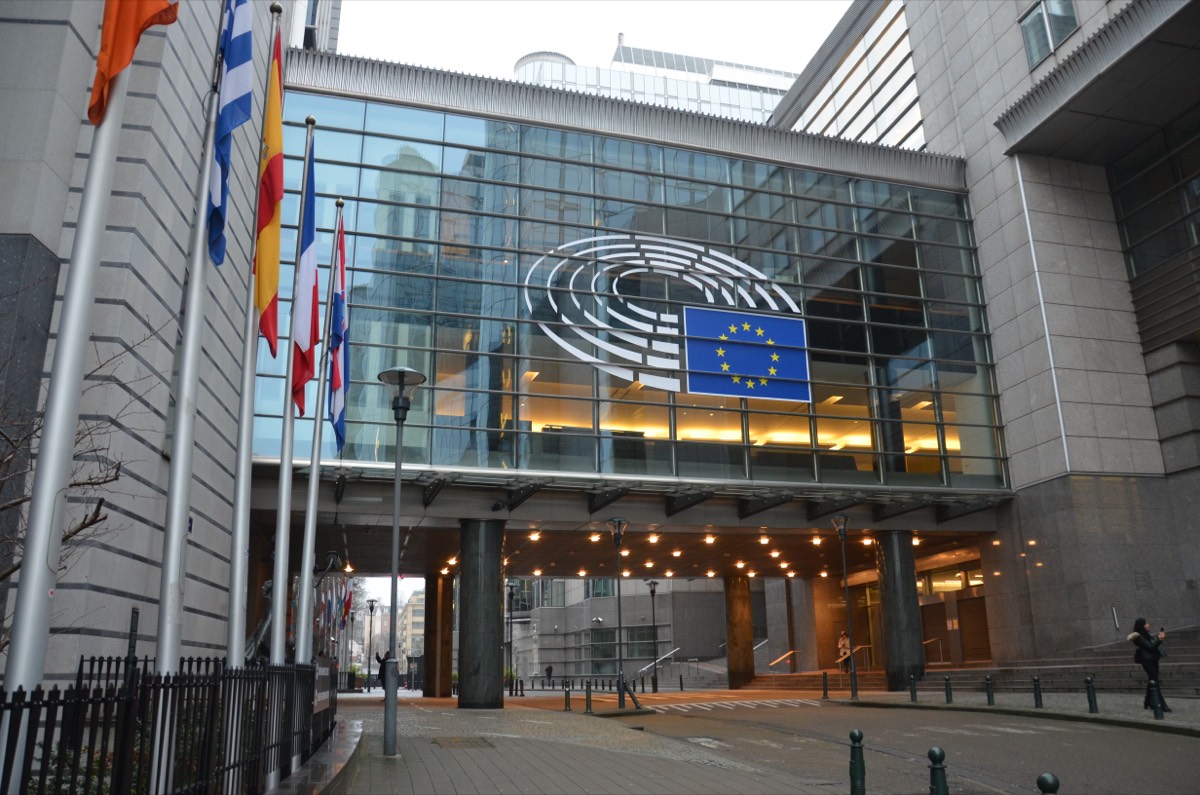
The EU AI Act begins applying its transparency provisions in force on August 2, 2026. Article 10 requires that the training, validation, and testing datasets of high-risk AI systems be documented for their origin, scope, and key characteristics. Article 12 requires traceability through logging, and providers of general-purpose AI models must publish a summary of their training-data types using a standard template. The fine for a violation reaches up to 7% of global annual revenue, or €35 million. Yet in a Deloitte survey of 500 corporate managers, only 35.7% said they were "sufficiently prepared."
2.2Litigation — the fight moved from "training" to "proof of procurement"
The US litigation landscape shows where the defensive line has shifted. Reddit's suit against Anthropic pleads not copyright but breach of contract and unjust enrichment — state-law claims. Getty Images alleges that roughly 12 million images were copied without authorization. Clearview AI settled a case tied to violations of the Biometric Information Privacy Act (BIPA) with an equity stake in the company. What these cases share is that liability turns not on the illegality of the act of training itself, but on the point where a company cannot prove where and how it obtained the data.
2.3Academic evidence — lose lineage and you lose contamination detection
The ATLAS study, which traced data lineage, shows why this is also a technical problem. Of 1.45 million reinforcement-learning (RLVR) training instances, over 99.7% trace back to just 20 origins. In other words, most datasets share a small pool of common ancestors. If you cannot trace a source, you cannot tell which data contaminated a benchmark, nor decide whether new data should be added or removed. Lineage is a data-quality tool before it is a regulatory document.
Two Different Grammars of Proof
The operational reason scraped data and licensed data should not share one table is simple. The two sources prove their origin with entirely different grammars to begin with. The kinds of paperwork each needs are different.
Licensed data bought from a broker is proven through a contractual chain: the master service agreement (MSA) schedule, the source-vendor list, lawful title grounded in consent or public records, panel SDK identifiers, and a versioned dictionary. Scraped data, by contrast, is proven through a collection chain: logs of which URL was crawled and when, the history of how robots.txt was interpreted, records of terms-of-service review, and the takedown queue.
The two carry entirely different field structures, because the columns built to hold contractual-chain evidence were never meant to hold collection-chain evidence in the first place. The moment you pour both sources into the same table, neither proof stays intact. An MSA schedule cannot stand in for a scraping log, and a robots.txt interpretation history cannot stand in for a broker contract.
On top of this, flags marking restricted sources must be treated as hard-fail conditions. When categories like FCRA (credit), GLBA (finance), DPPA (drivers), FERPA (education), COPPA (minors), or biometric data appear in a fine-tuning configuration, the pipeline must halt outright unless a legal exception ID is present. These flags work only while sources are separated and their labels are still alive. Blend them, and the flags themselves disappear.
A Debt You Pay Back Later
Data that was blended without its source recorded charges you nothing right away. The cost returns later — and with interest. Concretely, the bill arrives in three places.
First, deletion requests do not propagate. When a right-to-erasure request under GDPR Article 17 comes in, pinpointing which snapshot and which row held that individual's data requires the source and version to still be alive. If it is all blended, the only answer you can give is "it was in there somewhere." Second, model rollback cannot be proven. To establish which broker file trained a problematic checkpoint, you need a SHA-256 hash at the snapshot level. Without the hash, you cannot trace back "these weights came from that data."
Third, contamination detection and reproduction collapse. As the ATLAS result above shows, in a structure where a few origins spawn most of a dataset, a broken lineage means you cannot trace after the fact which origin contaminated a benchmark. Reproducing the experiment, or correcting it, becomes impossible.
Come back to the hook: data whose source was never recorded is a debt you pay back later. Refuse to pay the separation cost now — attaching segment labels and version hashes — and the principal returns with interest, in the form of lawsuits, fines, and full retraining. Data lineage is not a formality for the audit. It is insurance that reduces a future bill in advance.
Quality Now Includes Lineage
To put it plainly, the definition of "clean data" is changing — from being error-free to being provable at its source. Data quality now includes lineage. Even a tidy, typo-free dataset falls short of the 2026 bar if you cannot trace where it came from.
The minimum practices a data team must have narrow to three.
- Source-separated snapshots. Split scraped sources and licensed sources (and further, by broker or SKU) with segment labels and keep them as snapshots. Attach the label before you mix, not after.
- Version hashes. Assign a SHA-256 hash to each snapshot and store it in your MLOps repository alongside the model weights and training configuration. It is the key to tracing which checkpoint came from which data.
- An annual deletion drill. Plant a single synthetic seed row and test end to end whether a deletion request propagates all the way through the training pipeline. This is a rehearsal, not a drill for training.
None of the three requires new technology. What they require is a single habit: attaching the label before you mix.
Editor's Note. Pebblous has long argued for defining data quality not by error rate alone but by provability of source. This article's conclusion is simple: data whose source was never recorded is a debt you pay back later. That is the same view, carried into the 2026 language of audits and regulation.
References
Academic
- 1.Huang, H.-Y., Liu, W., Tang, C., Lee, S., Yang, K., Chen, Y., Yang, S., & Wu, Y. (2026). "RLVR Datasets and Where to Find Them: Tracing Data Lineage for Better Training Data." arXiv:2605.26971.
Industry & Press
- 2.GSDSI. (2026). "Data Provenance & Lineage for AI Training Licenses." GSDSI Resources.
- 3.Deloitte. (2026). EU AI Act readiness survey (500 corporate managers) — 35.7% "sufficiently prepared."
- 4.Reddit, Inc. v. Anthropic PBC, Cal. Super. Ct. (2025). State-law claims for breach of contract and unjust enrichment.
- 5.Getty Images v. Stability AI (parallel US/UK litigation). Alleges ~12 million images copied without authorization.
Official Documents
- 6.European Union. (2024). Artificial Intelligence Act, Articles 10 & 12, Annex IV — transparency provisions in force 2026-08-02.