Executive Summary
On June 11, 2026, Prometheus — the Physical AI startup where Jeff Bezos serves as co-CEO — disclosed that it had raised $12 billion in a Series B. The valuation: $41 billion. That is the price investors put on a seven-month-old company with 150 employees. So what exactly is that $41 billion price tag attached to?
The moat the company points to isn't the model. Bezos said it plainly: "We have to build our own datasets. The training data is completely different from the LLM stuff you're all used to." The physical experiment data that comes out of turbine test cells and wafer fabs doesn't exist on the internet — which is exactly why neither OpenAI nor Google can scrape it. What investors bet $41 billion on is that inaccessibility itself.
As models commoditize fast, what separates value is shifting — away from who has the better model and toward who has the data no one else can get. Prometheus is the most expensive receipt yet attached to that proposition.
Key Figures
Four numbers capture this company's scale and ambition most concisely. The valuation jumped sixfold in five months, and the market it's chasing is dozens of times the size of the digital AI market. And to get its hands on that market's data directly, capital on a scale beyond any model company is moving separately.
Sources: TechCrunch · GeekWire
$12B
Series B raised
Valuation up 6x in five months
$41B
Valuation
Over $18B raised in total
$70T
Physical economy TAM
~70x the sub-$1T digital AI market
$100B
Holding company in the works
Buying industrial firms to own their data
Prometheus Isn't Building Robots
Prometheus was founded in November 2025 and surfaced in June 2026. Jeff Bezos and Vik Bajaj serve as co-CEOs. Bajaj is a scientist who co-founded Verily, Google's life-sciences arm, and served as chief scientific officer at the early cancer-detection company GRAIL. Bezos brings the business and the capital; Bajaj brings the scientific foundation. The company has 150 employees, with offices in San Francisco, London, and Zurich.

What the company says it will build is an "artificial general engineer." That means software that automates the process of designing and manufacturing complex physical systems — jet engines, semiconductor chips, pharmaceutical compounds. The goal is to run the so-called invention loop — from idea to design to prototype to manufacture — ten times faster. The targets range from chips and smartphones to skyscrapers, bridges, and new drugs.

It's worth being clear that this is not a robotics or factory-automation play. The stage Prometheus is aiming at isn't the floor where things get assembled, but the design and engineering that decide how things get made. Elon Musk called it a "copycat," but the seat the company is reaching for is closer to the brain of the physical world.
Why $41B — The Price Tag on a Data Moat
The basis for a seven-month-old company earning a $41 billion valuation isn't model performance. What Bezos pointed to directly is data. "We have to build our own datasets. The training data is completely different from the LLM stuff you're all used to." The company's entire strategy sits inside that one sentence.
Today's large language models learn by scraping the internet. Reddit, Wikipedia, news, code repositories — text anyone can reach is the raw material. That is precisely why this data can't be a moat. If OpenAI can scrape it, so can Google, and so can Anthropic. Half the reason model performance is converging is that the training material comes from the same well.
Physical experiment data isn't in that well. The stress and temperature readings from running a jet-engine turbine to its limits in a test cell, the manufacturing tolerances that accumulate at each process step in a semiconductor wafer fab, the engineering specs recording how a material deforms and under what conditions — this data never gets posted to the internet. It can't be synthesized into existence either. It exists only where real machines have actually been run.

2.1What Can Be Scraped and What Can't
Even when both are called "data," the two kinds are completely different in nature. One is accessible to anyone and therefore confers no competitive advantage; the other is physically walled off, so access itself becomes the line of defense. What Prometheus bet on is the latter.
Data anyone can scrape
- • Web text — Reddit, Wikipedia, news, code
- • Public images and video — everything posted online
- • Result: model performance converges
Data no one can scrape
- • Stress and temperature logs from turbine test cells
- • Fab manufacturing tolerances, materials-science data
- • Result: only those who hold it can build the model
The fact that the valuation jumped sixfold in five months shows the money has followed this logic. What firms like JPMorgan, Goldman Sachs, and BlackRock bet on isn't a smarter model but the prospect of holding data no one else can. The size of the market backs the bet too. Global manufacturing alone is $16 trillion, and adding aerospace, construction, and energy brings the whole physical economy to $70 trillion — roughly 70 times the sub-$1 trillion digital AI market. The more the data is walled off, the larger the market available to whoever gets their hands on it.
The physical world creates a moat that code alone cannot. Model architectures get published in papers and weights get cloned through distillation, but the data obtained by actually running a turbine accumulates only for whoever owns that turbine. The $41 billion is a price not on the model but on this inaccessibility.
Why Buy the Factories
If data is the moat, the next question is simple: how do you get your hands on it? Bezos's answer is to buy the factories that produce the data. According to FT and WSJ reporting, he is raising roughly $100 billion for a separate holding company to acquire manufacturing, engineering, and design firms. Bezos himself told CNBC he "might buy some of the companies that can benefit from our technology."
The structure is identical to Amazon's flywheel. Acquire an industrial company and the equipment it runs every day produces operational data. Train the Prometheus model on that data and the model gets better; a better model raises the company's competitiveness, which produces more data. Just as Amazon directly owned its third-party sellers' transaction data to grow its platform advantage, this time the aim is to directly own the physical world's manufacturing data. The target sectors are chip manufacturing, aerospace, and defense, and the company is reportedly in talks with sovereign wealth funds in the Middle East and Singapore.
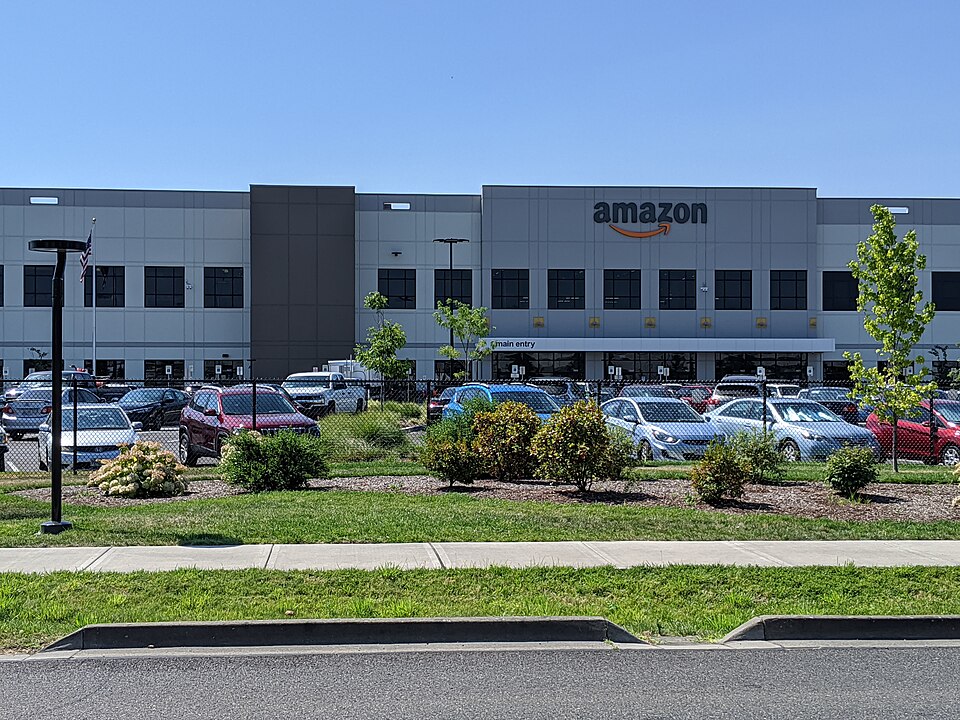
Here data is no longer just fuel for a model. Capital moves to buy the assets that produce data, and those assets in turn produce more data. It's a cycle where data becomes capital and capital buys data. Anyone can build a model, but to ride this cycle you have to own the physical assets that give birth to the data.
Editor's Note. There's a proposition Pebblous has long argued: the more models commoditize, the more value is separated not by the model but by the data. Prometheus has attached a $41 billion receipt to that proposition. The fact that big capital bet on "data no one else can get" rather than on a model demonstrates, at a $70 trillion scale, the claim that in Physical AI data is capital. Why the work of handling data's provenance, quality, and accessibility is a core capability — this event shows it in the most expensive way possible.
References
R.1Industry & Press
- 1.TechCrunch. (2026). "Jeff Bezos's Prometheus raises $12B to build an 'artificial general engineer' for the physical world." — $12B Series B, $41B valuation, the "artificial general engineer" concept.
- 2.Axios. (2026). "Bezos-backed Prometheus targets industrial AI." — $41B valuation, industrial-AI positioning.
- 3.GeekWire. (2026). "Bezos AI startup Prometheus raises $12B at $41B valuation, and the CEOs explain what they're doing." — Bezos and Vik Bajaj co-CEO interview, the dataset remarks.
Thanks for reading. In an era where models level out, we believe the answer to where real competitive advantage comes from is converging more and more on data. If you have thoughts or counterarguments on the question of how to build and defend data no one else can get, we'd love to hear them.
Pebblous Data Communication Team
June 20, 2026