Executive Summary
Nvidia is buying Naver shares and will hold more of the company than all but two other owners. Under the schedule Naver filed on October 30, the deal hands over a 4.54% stake in return for $1 billion through a third-party allocation of new shares. The money arrives on November 6, and the newly issued shares list on November 27. That seat sits directly behind the National Pension Service at 9.49% and BlackRock at 7.31%, and it pushes Lee Hae-jin, the board chair who had occupied it, from 4.03% down to 3.84%.
The condition draws the eye more than the amount does. The share subscription agreement signed on July 24 carried a condition precedent: separately from this investment, Naver first had to secure at least $9 billion worth of computing infrastructure. Naver cleared that condition on October 27 by signing with Brookfield, and only then was the payment date fixed. The company selling the chips is becoming a shareholder in the company buying them, and the agreement told the buyer to go raise the money for chips first.
Sections 1 through 3 follow what can be confirmed in Naver's filings, the two companies' announcements, and the reporting that carried them. The passage reading why Nvidia wants equity rather than chip sales alone cites a brokerage analysis, with the source attached in place. The power, the land, and the operator are domestic, while the capital, the chips, and the design come from outside. Section 4 asks what the phrase sovereign AI actually secures in that structure, and that section is this article's reading.
Key Numbers
Four numbers carry this deal. The first three are values written into the filings. The last is a rating agency's projection.
Sources: ZDNet Korea · Electronic Times · Dealsite (October 27–30, 2026)
4.54%
Stake in Naver going to Nvidia
Behind the National Pension Service at 9.49% and BlackRock at 7.31%. The new shares cannot be sold for a year
$9B
Compute to be secured before the investment
Assetco, an entity Brookfield funds in full, buys the GPUs and the data center
18.74T won
Payment guarantee Naver has given
Equal to 64.73% of its equity. The guarantee runs to December 31, 2034
About 2T won
Annual depreciation to be added from after 2028
Korea Investors Service projection. Naver's consolidated depreciation last year was 680 billion won
Nvidia Becomes Naver's Third-Largest Shareholder
The filing Naver made on October 30 fixed the schedule. The issue price was set at 204,500 won a share, and the filing puts the new shares going to Nvidia at 7,241,564. That share count is still provisional. The payment date is November 6, and the new shares are scheduled to list on November 27. The dates originally written in were October 30 for payment and November 20 for listing, and each slipped by a week. Those earlier dates were outside deadlines written into the contract to allow for the time it would take to satisfy the condition precedent.
Where the amount gets written in won, the reporting splits. Some articles put it at 1.34 trillion won, others at 1.48 trillion. Neither is wrong. Only the dollar figure of $1 billion is fixed, and each article converted at a different moment. The final share count and the won proceeds will be set using the won-dollar market average exchange rate on November 3.
Once payment clears, the top of the register changes. The National Pension Service stays the largest holder at 9.49%, BlackRock is second at 7.31%, and Nvidia stands behind them at 4.54%. Founder and board chair Lee Hae-jin sees his holding thinned by the new issuance, from 4.03% to 3.84%. The shares Nvidia receives are registered electronically with the Korea Securities Depository under a mandatory holding condition, and for one year they can be neither withdrawn nor sold. The filing states that the entire sum raised goes to new businesses related to the AI factory.
Seen from Nvidia's side, the amount itself is not large. Cho Jae-yoon, an analyst at Daishin Securities, wrote in an analysis published right after the July announcement that $1 billion comes to 1% of Nvidia's first-quarter revenue of $81.6 billion, leaving the financial impact limited. The meaning of the deal, he argued, lies in where the capital went rather than how much of it went. Naver is Korea's largest internet platform and an AI infrastructure customer running HyperCLOVA X, its own large language model. Cho read the move to hold equity directly, instead of stopping at chip sales, as a way of tying Korean and Asian sovereign-AI demand into Nvidia's ecosystem. The same analysis noted that 92% revenue concentration in data centers and dependence on hyperscalers have long been counted among Nvidia's weak points.
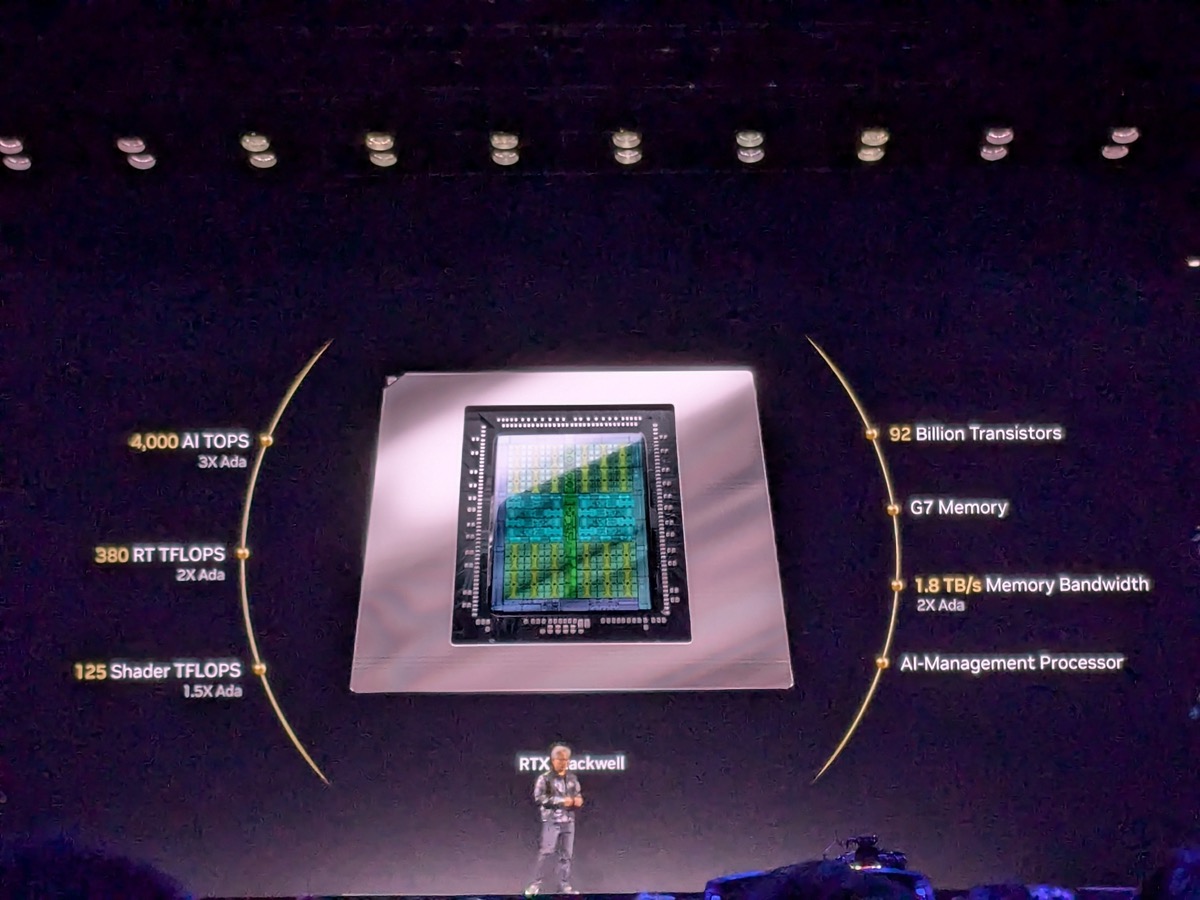
On Naver's side the dilution reads as a price paid knowingly. Lee said at the November 2025 earnings briefing that the business comes first and that a drop in his ownership is the lesser question. After this filing Naver said it does not expect to run short of capital for five to six years or more of running the business on the funds raised now, and added that if more money is needed after that, it will look for ways to raise it in line with the business situation at the time.
The Condition That Came Before the Money
When the share subscription agreement was signed on July 24, Nvidia attached one condition ahead of payment. Naver had to secure at least $9 billion worth of computing infrastructure, separately from this $1 billion. Naver met it on October 27 by signing with Brookfield. In effect the investor told the company receiving the money to place the order first for what that money would buy, and the gap between the two figures deserves a look of its own. The equity money coming in is $1 billion. The condition standing in front of it is nine times that.
The contract that satisfied the condition is built this way. Brookfield funds in full a special purpose vehicle called Assetco, and that entity spends up to $9 billion buying GPUs and a data center. Naver Cloud takes computing resources from Assetco as a service and sells them to customers. Naver and Naver Cloud lead the business, and Nvidia handles the technology with GPU supply and platforms such as DSX. The side that put up the money, the side that holds the assets, and the side that runs the business are all different.
Accounting counts it differently. Brookfield holds all of Assetco's equity, but under Korean IFRS, Naver is recognized as holding control, so the entity enters Naver's consolidated accounts as a subsidiary. Legal ownership and accounting control come apart. The GPU assets, and the depreciation that writes those assets down year by year, therefore land on Naver's consolidated financial statements. Korea Investors Service expects Naver's annual depreciation to rise by about 2 trillion won from after 2028, when the GPU investment finishes being deployed. Naver's consolidated depreciation last year was 680 billion won.
The other obligations Naver has taken on are in the filings as numbers too. Naver has guaranteed 18.74 trillion won of Naver Cloud's usage-fee payment obligations. The amount equals 64.73% of its equity, and the term runs from October 27, 2026 to December 31, 2034. The figure is the nominal total of compute service payments due through the end of 2034, assuming Brookfield's $9 billion investment ceiling is drawn in full. The actual amount will vary with how much gets deployed, and Brookfield's invested principal, its return, and the GPUs' residual value fall outside the guarantee. Naver filed on the same day a related transaction under which it will receive a guarantee fee of 670.725 billion won from Naver Cloud.
What Naver has put into this structure is not cash but credit. Brookfield provides the money to buy the GPUs and an entity Brookfield established holds the assets, and yet if Naver Cloud cannot pay for the compute that entity supplies, Naver pays instead. The shape where a financial firm holds the assets while the user pays long-term fees is one we have seen before in Apollo's GPU lease to SpaceX.
The Factory in Sejong Opens at 55 Megawatts
The money is headed for Gak Sejong, Naver's data center in the city of Sejong. The plan is written in four steps. Operation starts at 55 megawatts in the first half of 2027, reaches a cumulative 100 megawatts by the end of that year and a cumulative 200 megawatts in 2028, and takes 1 gigawatt as its long-term target. Short summaries often drop the 100-megawatt step in the middle, and it takes all four to see capacity very nearly double inside the single year of 2027.
Of the four steps, only the first three carry a year. The last box holds a capacity and no date.
That last box sits closer to an intention than a schedule. One gigawatt is roughly four times the 270 megawatts Gak Sejong can draw at its design limit, a level that would hold hundreds of thousands of Nvidia's latest GPUs, but Naver Cloud describes the approach as reaching gigawatt-class infrastructure across several sites rather than through a single campus cluster. The full set of locations past 200 megawatts, the completion date, and the total investment are unsettled. The stretch Brookfield's money underwrites runs from 55 to 200 megawatts, and the GPUs going into this site are put at roughly 100,000.
A chip supplier moving inside the capital structure of its own customer is a shape that has shown up several times this year. Three days ago, when Meta raised equity to fund AI facilities, Nvidia and AMD stepped up to buy those shares. Two things set this deal apart from those. One is that the stage is Korea. The other is that this factory carries the name sovereign AI.
Why Pebblous Is Watching This Deal
Sovereign AI is the idea that a country should build its AI capability on its own data and its own infrastructure. Count what lands in Korea under this deal and you get the land, the power, and the buildings, along with the operator that will run them. Gak Sejong is in Sejong, Naver Cloud runs it, and the domestic models that will turn on it are built by a domestic company. That much is plain.
What arrives from outside can be counted as well. The $9 billion to buy GPUs comes from Brookfield, and the assets bought with it sit in the name of an entity Brookfield established. The chips and the factory design system come from Nvidia, and Nvidia is now a Naver shareholder too. What Naver has put up is the site, the operating capability, and an 18.74 trillion won guarantee that stays in force until 2034. Not one of these items is hidden; all of them are written into filings and announcements.
Whether this deal hands over control of the company is a question Naver has already answered. Its position, given right after the filing, is that the decision-making structure does not change even with the immediate dilution, and the 4.54% stake together with the one-year holding condition leaves no reason to doubt that answer. This article is not asking at that layer. Who sits on the board and what rules govern the data turning on top of that factory were different questions to begin with.
What the public documents write down and what they leave out divide cleanly. On the written side sit amounts, ownership percentages, capacity, and terms: $9 billion, 4.54%, 55 megawatts, December 31, 2034. On the unwritten side sits the data that will turn on top of that factory. Which data goes in, where the rights to whatever is trained on it come to rest, and how much gets opened to whom when a foreign customer's computation arrives can be confirmed in none of the documents released this time. That does not mean the parties left those terms undecided. It means they cannot be seen from outside yet.
This is the same distinction that data quality work runs into every day. Which server the data sits on is easy to answer, and who may use that data on what basis is usually written down nowhere. An organization that has answered only the first question believes it is managing its data, and what stalls model building is almost always the second. The word sovereignty splits along that same line. The location of the equipment can be confirmed on a map, and the location of authority can be confirmed only in a document.
So the thing to watch next is not the size of the factory but the rules for running it. Whether 55 megawatts actually switches on in the first half of 2027, and where the gigawatt eventually stands, will reach us through the news. The document that comes after those, the one setting out whose data this factory accepts on what terms and to whom it returns the results, is what decides whether the name sovereign AI is worth anything. How much we actually hold can only be counted once that document exists.
Thank you for reading this far. The payment and listing dates, the issue price and share count, the ownership percentages, and the guarantee amount were checked against reporting that carried the filings Naver made on October 27 and 30. Assetco's funding structure and accounting treatment, along with the capacity expansion steps, come from the October 27 contract announcement and Naver's own explanation, and the depreciation projection is Korea Investors Service's. The passage reading Nvidia's motive as a way of tying up sovereign-AI demand is Daishin Securities' analysis, and the statement that the decision-making structure does not change is Naver's position. The observation that no operating rules for data appear in the public documents, and the reading of sovereign AI as a question of authority in Section 4, are this article's own. If a data rights clause has ever blocked you while you were using domestic infrastructure, we would be glad to hear about it.
Pebblous Data Communication Team
October 31, 2026
References
Primary Sources — Filings & Reporting
- 1.AI Times. (2026). "Nvidia Becomes Naver's Third-Largest Shareholder — 1.3 Trillion Won Payment Due Next Month on the 6th." October 30. (Korean)
- 2.ZDNet Korea. (2026). "Naver Welcomes Nvidia as Third-Largest Shareholder, AI Factory Business Gains Momentum." October 30. (Korean)
- 3.Electronic Times (전자신문). (2026). "Naver Signs $9 Billion AI Infrastructure Deal With Brookfield, Pushes AI Factory Forward." October 27. (Korean)
- 4.Byun, H. (2026). "Korea Ratings: Naver's AI Factory Risk Is Limited, Financial Burden Set to Ease." Dealsite, October 30. (Korean)
- 5.The Hankook Ilbo. (2026). "Nvidia Becomes Naver's Third-Largest Shareholder — 1.3 Trillion Won Due Next Month on the 6th." October 30. (Korean)
- 6.Kukinews. (2026). "Nvidia Becomes Naver's Third-Largest Shareholder — 1.48 Trillion Won Investment to Settle November 6." October 30. (Korean)
- 7.Kim, G. (2026). "Nvidia Becomes Naver's Third-Largest Shareholder, AI Factory Alliance Moves Into Full Swing." Bloter, October 30. (Korean)
Analyst & Industry Commentary
- 8.Money Today. (2026). "Nvidia Becomes a Naver Shareholder — Daishin: "Locking In Sovereign AI Demand Within Its Ecosystem"." July 27. (Korean)
- 9.HuffPost Korea. (2026). "Nvidia's Naver Stake Confirmed as Third-Largest Shareholder; Korea Ratings Says Risk Is Lower but Customer Pipeline Needs Watching." October 30. (Korean)
- 10.Bae, S. (2026). "Naver Welcomes Nvidia as Third-Largest Shareholder, Accepting Dilution of Founder Lee Hae-jin's Stake." TechM, October 30. (Korean)