Executive Summary
Noetive, a startup in San Francisco, came out of stealth on September 16 and announced its first round of funding on the same day. The amount is $41 million, and Eclipse led it. The product named in the announcement is a self-improving AI for factories and logistics sites, and one more thing sits beside it. It is a sensing pod the company describes as its own design, a multi-modal measuring device. This article looks at why a company that makes software carries that device in with it.
The founding premise comes down to a single sentence. The AI on the market today was aimed at information work on the internet, and the physical economy sits outside that design. The chief executive of Steuben Foods, an early design partner that makes food and drink, reports finishing in minutes each day what used to be a monthly job that ran a week. That single case is the whole of the published evidence, and no figure shows how cost or revenue moved.
Sections 1 through 3 stay with what the published material sets out: the reasons a software company shouldered a device as well, and the order in which this company took shape inside an investment firm before it was sent out. Section 4 reads that structure through the question of what form data gets left in, and that reading belongs to this article.
Key Figures
Source: Noetive press release (2026-09-16). Only the last card comes from elsewhere.
$41 million
Size of the first round
Eclipse led it and eight more firms joined, Craft Ventures among them. The company was founded in 2026
$30 trillion
Physical economy the company targets
Manufacturing, logistics, energy, data centers and construction taken together. The company and its investor put the figure forward and the basis has not been shown
Monthly → daily
Steuben Foods' planning cycle
The customer's chief executive describes a monthly task that took a week now running every day in minutes. No cost or revenue figure accompanies it
$1.3 billion
Eclipse's physical AI capital
Raised across two funds in April 2026. The figure is absent from Noetive's announcement and comes from separate reporting
One Set of Software, One Set of Sensors
Noetive is a San Francisco company founded in 2026. It showed itself publicly for the first time in a press release on September 16, announcing a first round of $41 million on the same day. Eclipse led the round, and Craft Ventures, The Westly Group, Swish Ventures, Factory, Incite Ventures, Gigascale Capital, Operator Partners and Liquid 2 Ventures took part. Among the individuals who put their names in are Meta chief technology officer Andrew Bosworth; Ahmad Al-Dahle, chief technology officer of Airbnb, who ran the generative AI group at Meta; Nest co-founder Matt Rogers; and former Meta chief technology officer Mike Schroepfer.
Amir Frenkel, the chief executive, spent nearly a decade as a vice president at Meta. Reporting on Meta's reorganizations has it that in 2025 Frenkel was vice president of generative AI and co-led the foundation model organization, and the other lead was Ahmad Al-Dahle, whose name appears just above. Once that organization was dissolved, Frenkel moved to the infrastructure group that runs the GPUs and data centers behind AI research. The post as vice president of XR technology engineering and product at Reality Labs came earlier than either, and there was work at Alphabet and Amazon as well. Co-founder Dan Barak was a vice president of product at Netlify. The researchers and engineers came from Meta, Google and Amazon and from Fortune 500 businesses, the company writes. For a company that talks about factories, the places its founders have passed through are not industrial sites but models and the equipment that runs them.
The company calls its product the intelligence of record for the physical economy. It takes system of record, the term used for accounting systems, and moves it onto the shop floor, and the announcement offers no account of the coinage. There are two parts. One is a self-improving AI called the Brain. It rides on top of the software a customer already runs, learns how the business actually operates, and keeps people, machinery and the digital systems in step with one another. The other is Eyes & Ears, the multi-modal sensing pod the company says it designed itself.
What the sensing pod holds has not been made public. Cameras, lidar, acoustic sensors, how many go into one unit: neither the press release nor the coverage says. An advanced multi-modal sensing pod is the whole of the description. This blank is better left as it stands. If we guess at what the company has not disclosed, the guess will clash with the specification that eventually appears.
What the device is meant to see is described. Where material is sitting, how fast a machine is turning, what conditions on the site are right now. One report called this information that never reaches the enterprise database. The position of a pallet stacked in a corner of the warehouse, the hour when a machine ran slower than usual, the unusual humidity in the workshop today: unless someone types them in by hand, none of it stays in any system. The three examples that report gave have the same shape. Material sitting in the wrong place, machinery moving more slowly than planned, a construction site that has diverged from its drawings. None of the three asks what state something is in. They ask about the distance between what was supposed to happen and what actually did.
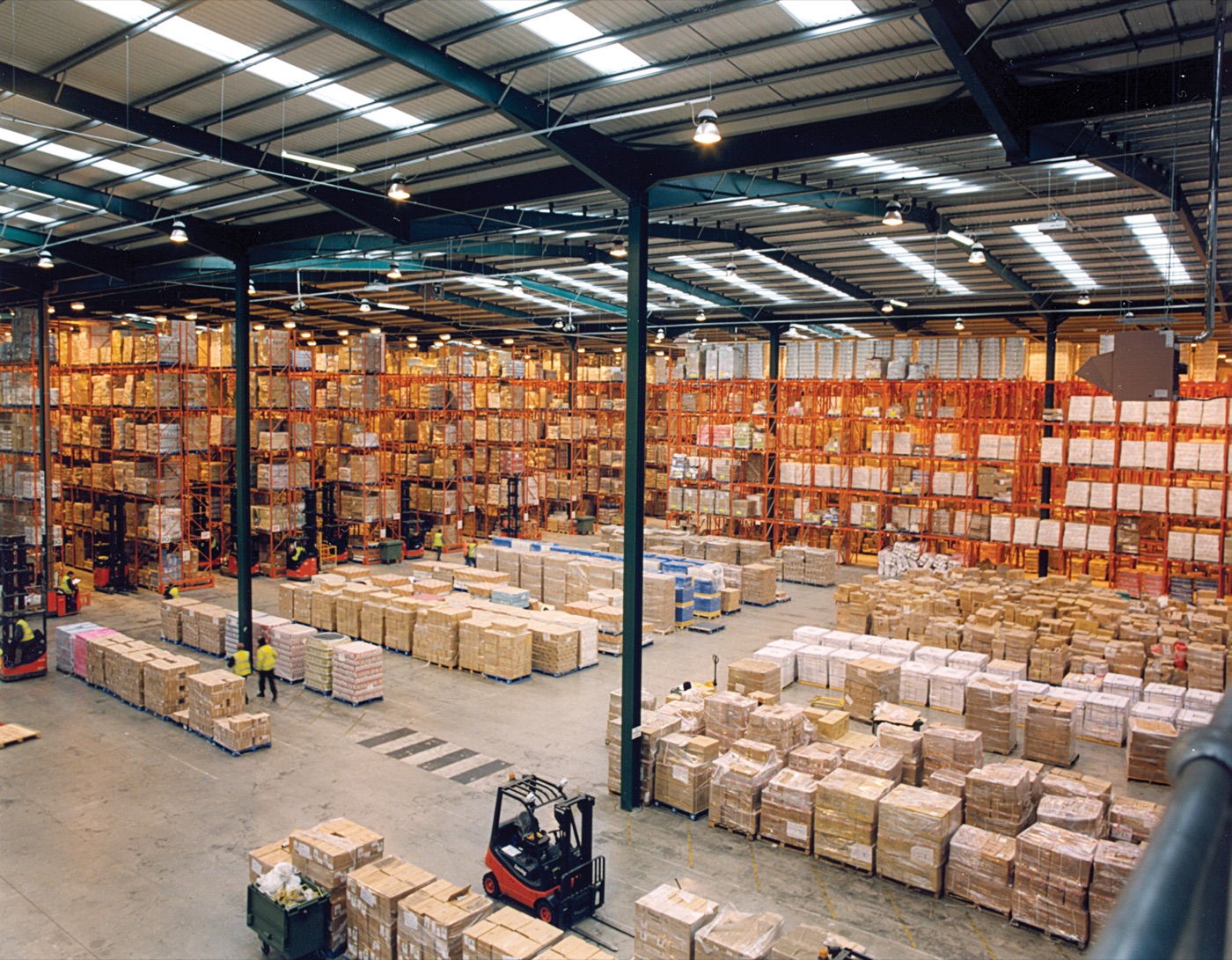
Frenkel set out the founding premise in the announcement. Current AI solutions were designed for information work living on the internet. Opening up the potential of the physical economy takes an intelligence that learns alongside the people who run physical businesses, the announcement goes on, so that people, machines and digital systems mesh and every decision makes the whole operation smarter. The problem the company describes is one of separation rather than absence. Materials, machinery, transport, inventory, labor, supplier networks and site conditions each sit locked in a different system, while the decisions that matter have to see all of them at once.
One result has been published so far. Steuben Foods, a food and beverage manufacturer, appears as an early design partner, and its chief executive, Menachem Katz, said that work which once happened monthly and took a week of planning now happens daily and takes minutes, letting the company respond to new orders and changing market conditions in real time. What changed here is the planning cycle and the time it consumes. How far the defect rate, the utilization rate or the cost moved is absent from that statement and from every other document.
Making the Sensors In-House
Putting hardware into the package works against a software company on nearly every count. Design, certification and manufacturing all cost money, and adding one customer means building a device, shipping it and installing it, so the pace of expansion cannot keep up with software. Inventory appears, someone has to travel when a unit fails, and stock that sits unsold turns into cost on its own. The company gives up the near-zero cost of copying that a pure software business enjoys.
The condition that explains the choice sits on the customer's side. Factories and warehouses differ from company to company in the equipment they run, in the year that equipment was bought, and in the format of the signals it emits. Put two plants in the same industry side by side and the data has rarely piled up in the same shape. A company that arrives with software alone rebuilds the integration from scratch at every customer, and the data it gets stays as varied as the customers. Lessons from one site are hard to carry to the next.
One trade outlet framed the core task in front of Noetive as turning bespoke access to individual factory floors into a repeatable deployment, and saw the sensing pod as exactly that common base. Customer systems may be fragmented, but put the same hardware in and the readings come out to the same specification. That reading comes from the outlet and not from anything the company published. Still, it fits better than any other explanation of why a company aims at manufacturing and logistics at once while insisting on hardware of its own design.
This setup is not one company's private difficulty. A diagnosis turns up wherever physical AI gets discussed. Language models learned by scraping web documents and image models learned from photographs already posted to the internet, but behavioral data from the physical world has no web to scrape. A single motion that shifts material, a single vibration just before a machine stops: someone has to perform it and record it on the spot before it becomes data. No amount of funding shrinks this part, because the constraint is the act of collection rather than money.
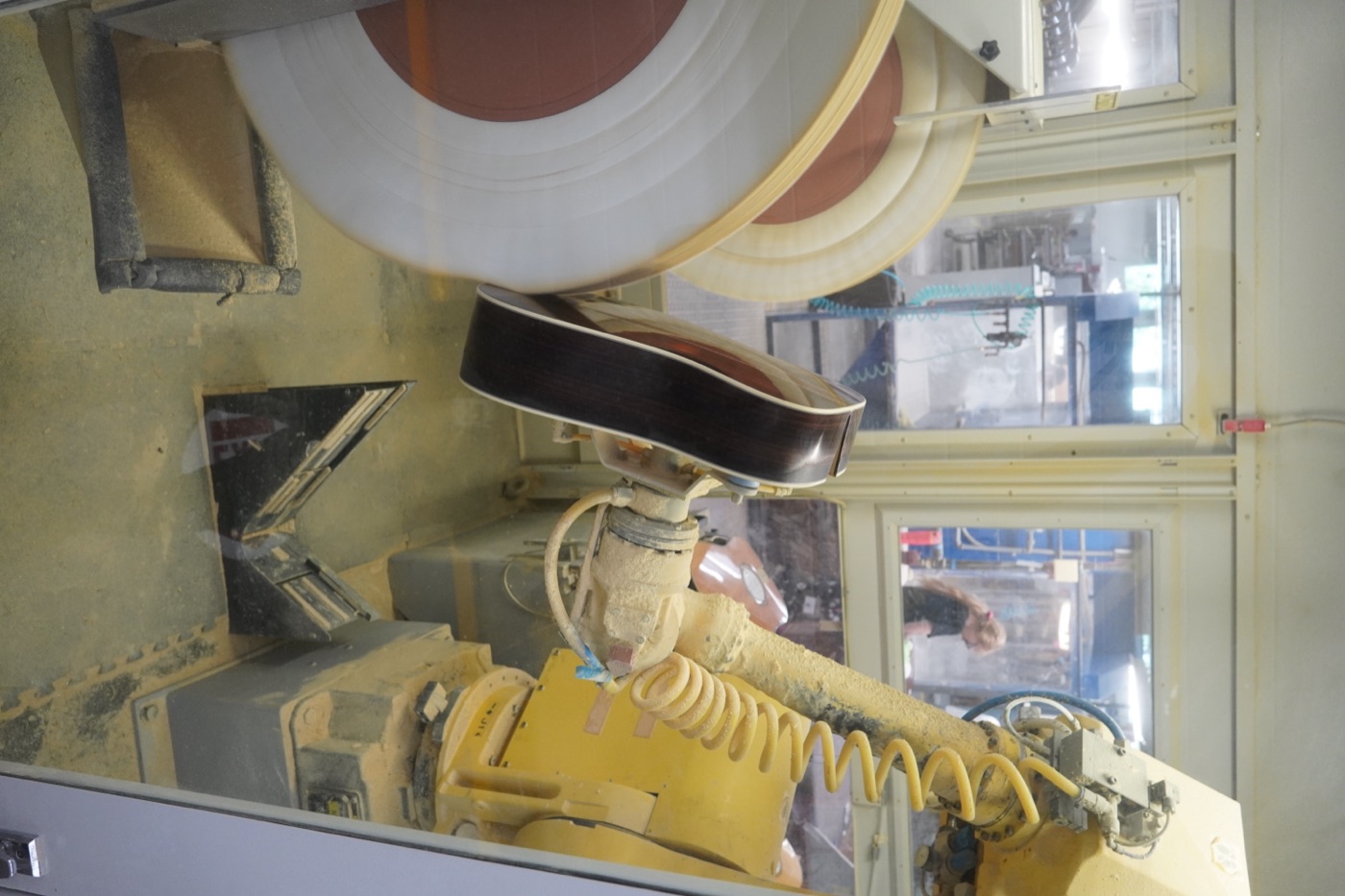
Others have answered the same shortage differently. In China, robot data collection and training facilities backed by central and local government numbered more than 90 in operation, planned or under construction as of the end of April 2026, with more than 64 of them already running across 23 provincial-level administrative divisions, according to a count by the market research firm Interact Analysis. The 10,000-square-meter facility in Shijingshan that the Beijing municipal government presented in October 2025 stages 16 scenarios under four categories, manufacturing, smart home, elderly care and 5G integration, and turns out more than six million pieces of high-quality data a year. It records set tasks over and over in a place built for the purpose of collecting them.
Noetive went the other way. Rather than build a place for collection, it puts instruments inside someone else's factory while that factory keeps running. The two are not aimed at the same thing. The Chinese facilities mostly exist to teach humanoid robots how to move, and Noetive works on factory operations themselves. The two paths still overlap somewhere. Before money goes into making models bigger, it is going into measuring what actually happens on the floor.
Building a good model and preparing something for it to learn from are different problems. The first thing Noetive did with $41 million was design a measuring device rather than research a model, and that shows the company's judgment plainly. On this judgment, the AI headed for the factory does not need a better architecture. It needs a shop floor left in a form it can learn from.
The judgment remains unproven. The published material cannot tell us whether readings from attached sensors really do make the model more usable with each deployment, or how quickly the self-improvement the company describes actually happens. Whether a model's decisions run safely in a space where people, machines and inventory move together is homework an agent inside a browser never faces. All that can be confirmed today is that $41 million has attached itself to this claim. The company's own account of what the money is for points the same way. It names frontier research into self-improving AI for the physical economy, and proving that AI in the field, ahead of any widening of the product.
The Investor Designed the Company
One phrase sits in the subheadline of the press release. Backed and built by Eclipse. That reads differently from leading a funding round. The announcement says Eclipse served not solely as an investor but worked with Frenkel from the earliest stages of company creation to shape the vision, assemble the founding team, and take the thesis from idea to company.
Laid out in sequence, the structure gets clearer. In April 2026, Eclipse raised $1.3 billion across two funds and said it would concentrate on physical AI. Assets under management reached roughly $10 billion, and this was the largest amount the firm had ever raised. That same month Bloomberg reported that Eclipse had brought Frenkel over from Meta as its first chief AI officer. Noetive arrived five months later. On joining Eclipse, Frenkel said the chance to fundamentally change physical industries was the draw. The post announcing the move carries one more sentence: Frenkel is a builder at heart and would be doing exactly that, building a new company from the ground up in partnership with Eclipse. A plan published in April took the name Noetive in September.
Eclipse is a firm Lior Susan founded in 2015. Its founding thesis placed the important companies of the next decade outside the screen, in manufacturing, robotics, energy and critical infrastructure. In the announcement Susan said company building has always been core to how Eclipse operates, and added that AI has transformed the digital world while the $30 trillion physical economy has largely been left behind. When it announced the $1.3 billion, the firm had already said it would spend part of the money incubating companies directly. Noetive is the first visible result of that plan.
A remark Susan made elsewhere compresses the worldview. You cannot manufacture wafers with vibe code, because you need machines and silicon, and they need clean rooms, and a bunch of other things. The claim is that software alone leaves certain places out of reach, and it points at the same spot as Noetive's decision to design its own sensors.
This structure tells us one thing in advance. Noetive did not take hardware on later, after watching how the market responded. The thesis was fixed in place before the company existed. So the case reads as the execution of an investment thesis rather than a change of product strategy. The limit is just as clear. A company whose founding team and investor start out sharing one thesis has few people positioned from the beginning to argue against it from outside.
Why Pebblous Is Watching This Round
There is one distinction we use often when we talk about AI-Ready Data. Saying that data exists and saying that data has been left in a form something can learn from are two different statements. Factories are not short of records. Production output is tallied, equipment histories are maintained, quality inspection results accumulate. But those records take the shape a person needs in order to read and judge. When something happened, under what conditions, and what it was do not run along a single line; the same item goes by a different name at each plant; and the context that decides the matter stays unrecorded, in the head of whoever was on the floor.
Building the sensor itself means filling that gap with hardware. Making what went unrecorded recordable, and making what differed from company to company come out to one specification. The company did not put it that way; the reading is ours.
Move the question to a Korean site and its shape holds. Of everything that happened in our factories and warehouses today, how much stayed as a record, and will that record be in a form an AI can read next year? How much was visible only to human eyes and then gone? New sensors are not the only way to an answer. Recording when and in what context the existing data was made already changes a great deal. Four checks give a rough position.
- Does the data coming off the floor right now carry when it was made, on which machine, and under what conditions? A value with no context cannot be brought back later.
- Does the same item go by the same name at every plant and on every line? Once the names diverge, one model cannot learn from both sites.
- Of the work a skilled operator handles by judgment, what leaves a record? This is usually where the most valuable data disappears.
- Do you hold a list of the places you know have no record? Knowing where the blanks are is a different state from not knowing.
The next few years will answer whether Noetive's claim is right. Someone has to show that the data the sensors collect really does reduce the need to learn each site over again, and that deployment speeds up enough to cover the price of carrying hardware. We noticed the position of the question more than the answer. Asked to prepare for the next stage of physical AI, most people start from which model to use. This company reached first for what gets left behind as data.
Thank you for reading this far. The facts this article cites can be checked by anyone in the Noetive press release and the SiliconANGLE report. We would be glad to hear what form a day's work is being recorded in at your own site, and whether that record can be used again.
References
Primary Sources · Official Announcements
- 1.Noetive. (2026). "Noetive Emerges From Stealth With $41 Million Seed to Build the Intelligence of Record for the Physical Economy." PR Newswire, 2026-09-16.
- 2.Frenkel, A. (2026). "Day One: Why I'm Joining Eclipse." Eclipse, 2026-04-28.
- 3.Beijing Municipal Government. (2025). "Over 10,000 Square Meters: China's Largest Humanoid Robot Training Center Opens in Beijing." english.beijing.gov.cn, 2025-10-09.
Trade Coverage
- 4.Riley, D. (2026). "Noetive launches with $41M to bring self-improving AI to factories and logistics." SiliconANGLE, 2026-09-16.
- 5.RuntimeWire Staff. (2026). "Amir Frenkel's Noetive raises $41M to build world models for factories." RuntimeWire, 2026-09-16.
- 6.Nye, M. (2026). "Eclipse Ventures Co-Founder Lior Susan's Insights Into a $1.3B Bet on Physical AI." TechCrunch (StrictlyVC Download podcast), 2026-05-26.
- 7.Temkin, M. (2026). "For Eclipse, the $2.5B Cerebras win is just the start of realizing its physical-world thesis." TechCrunch, 2026-05-17.
- 8.PYMNTS. (2025). "Meta Reorganizes GenAI Team to Accelerate Product Rollouts." PYMNTS, 2025-05-28.
- 9.Glover, E. (2025). "Meta Is Shaking Up Its AI Division Again. Now What?." Built In, 2025-08-27.
Data & Market Research
- 10.Interact Analysis. (2026). "An Overview of Over 90 Humanoid Robot Data Collection Centers in China." note, 2026-05-27.