Executive Summary
Microsoft has asked about 60,000 of its employees to decide for themselves whether to leave. Individual emails went out to eligible staff on October 26, and the company calls the program a Voluntary Exit Offer. Unlike a layoff, where the company decides, the employee decides whether to take it. Answers are due in early December, and departures close out by the end of the year.
What makes this announcement unusual is the terms rather than the size. Microsoft disclosed which countries the offer went to, the rank it stops at, and which organizations it skipped. The rank ceiling, level 70, sits close to the top of the internal technical ladder, so it screens out very few people, and the thing that actually sorted employees was which organization they belong to. Copilot and CoreAI, the teams building AI products, are eligible. Data centers, which run AI, and sales and security, which hold the revenue and the defensive line, are not.
Sections 1 through 5 follow what can be checked in the October 26 reporting, in the internal memo language, and in the spending figures the company has disclosed. Two things are this article's own reading: the argument in section 3 that the boundary tracks "is this commitment hard to unwind right now" more closely than "can AI do this job," and the view in section 6 that the published eligibility terms amount to a decision rule the organization wrote down.
Key Figures
Four numbers hold the size and the shape of the offer. The first card is how many people received it, the second is the ceiling on what anyone who accepts gets paid, and the third is what went into facilities during the fiscal year that just closed. The last card is where this move falls among the workforce actions disclosed this year. Together they record the size of the offer and the size of the spending that ran alongside it.
Source: CNBC · TechCrunch (both as reported on 2026-10-26)
~60,000
Employees who got the offer
About 27% of the 223,000 on staff as of June 30
Up to 39 weeks
Cap on base-pay severance
Starts at 60 days and rises with tenure
~$145B
Capital spending, prior fiscal year
Fiscal year ended June 2026, on the guidance issued at its start
Fourth
Workforce move disclosed this year
April, July and September came before October
The Terms That Landed in 60,000 Inboxes
On Monday, October 26, an email carrying individual terms arrived in the inboxes of a slice of Microsoft's workforce. The company's name for it is the Voluntary Exit Offer. Where a layoff is the company telling you to go, this one leaves the decision with the person who receives it. Nothing in the announcement says that declining carries a penalty.
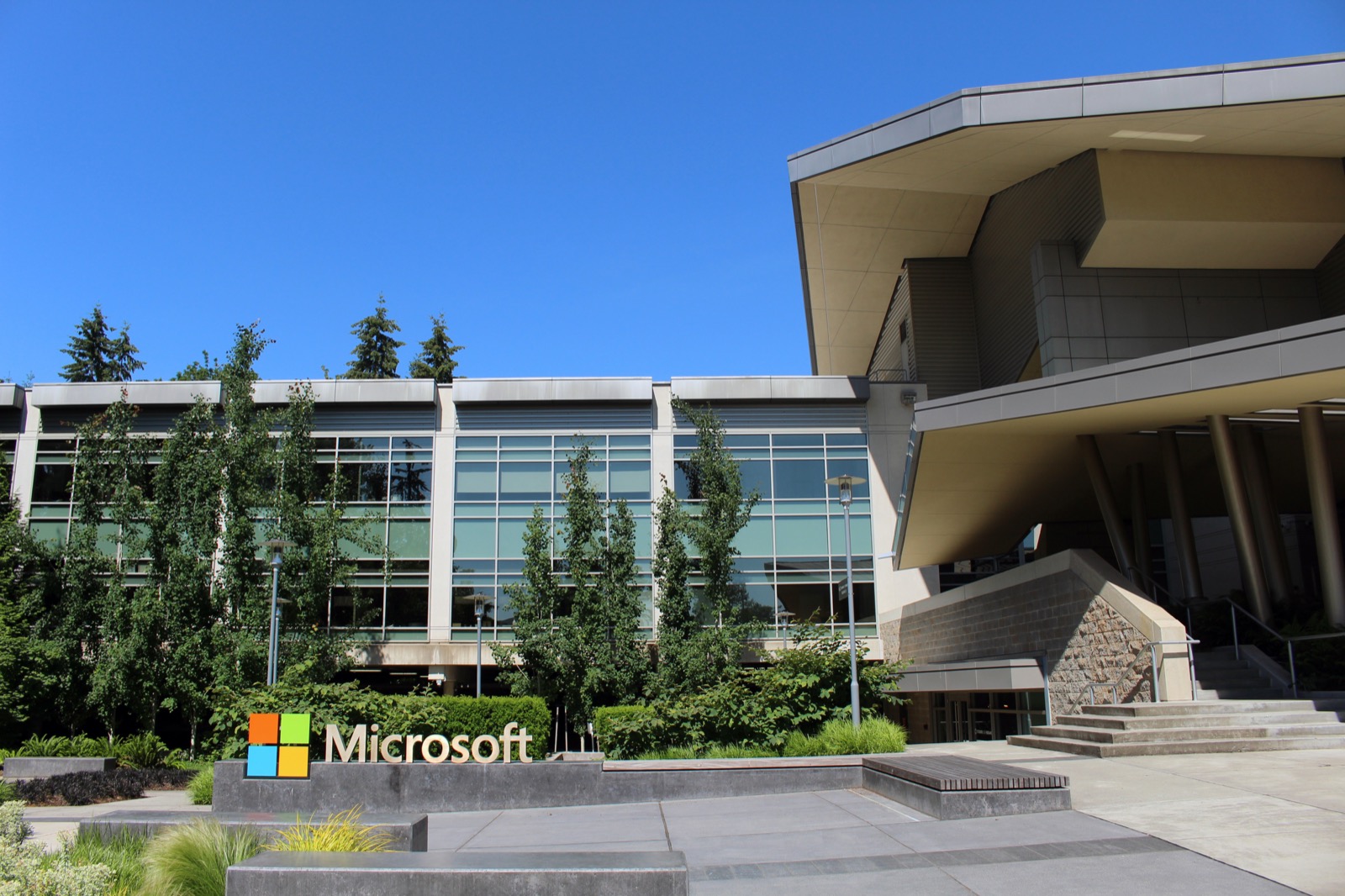
The offer went to four countries: the United States, Canada, India and the United Kingdom. About 60,000 people are eligible, roughly 27% of the 223,000 employees on the books as of June 30. More than one person in four received the same email. The eligibility line is internal level 70 and below, which some reports rendered as vice president level and below.
The clock is short. Acceptances are due by early December, and anyone who accepts leaves before the year is out. Severance is reported to follow the standard package. The formula applied across Microsoft's other rounds this year starts at a floor of 60 days of base pay, rises with tenure, and stops at 39 weeks. On top of that come a period of continued stock vesting, temporary health coverage and career transition support. The specific formula for this offer was not published separately, so the money is confirmed only as far as the formula common to this year's rounds.
What the terms leave out matters as much. There is no minimum age and no minimum tenure, and the last performance review has no bearing on eligibility. That is a different design from the April program, which required that age and years of service add up to 70 or more. This one puts the same choice in front of everyone who clears the line. The terms carry no trace of a mechanism built to sort out low performers.
Level 70 and Below Is Not the Bottom
Read as a number alone, "level 70 and below" sounds like thinning from the bottom. That impression flips once you know how the internal ladder works. Microsoft's technical track starts in the high 50s and climbs into the 80s, and level 70 falls in the Distinguished Engineer band, among the highest technical ranks in the company. Above it sit a handful of positions, Technical Fellow among them.
So the condition does not cut off the lower rungs. It encloses nearly the whole ladder. A new engineer, a principal engineer and a director-level manager all fall inside the same line. GeekWire described the offer as reaching about a quarter of the workforce, "including some execs."
In these terms, rank is closer to setting the payout than to separating people. The diagram below lays this year's common formula over the level bands. The ceiling on eligibility is drawn near the top of the ladder, and the rate at which tenure converts into weeks differs by band underneath it.
A condition that holds nearly everyone draws no line at all. So who received the offer was settled somewhere else.
The Line Runs Between Teams, Not Ranks
Several outlets, citing people inside the company, reported which organizations were in and which were out. Bloomberg quoted a company spokesperson confirming that data center staff, sales and parts of marketing are not covered. Collected, the picture looks like this.
One caveat before the table. Microsoft did not release an organization-by-organization roster as an official document. The table gathers only the organizations named in the October 26 reporting, so it says nothing about where an organization absent from it falls. Even so, the names that did surface on both sides are enough to show the shape of the boundary.
| Status | Organization | What it does |
|---|---|---|
| Offer went out | Copilot, CoreAI | Builds the AI products and the underlying models |
| Offer went out | Windows and Devices, Xbox | Carries the established product lines |
| Offer went out | Finance, HR | Supports the company internally |
| Left out | Data centers | Builds and runs the facilities AI depends on |
| Left out | Sales, parts of marketing | Holds the path revenue arrives on |
| Left out | Security, Discovery and Quantum | Holds the defensive line and the long-horizon research |
| Left out | Parts of commercial business | Handles contracts with enterprise customers |
Set the top of the table against the bottom and one common explanation fits poorly. If headcount were coming down because of AI, the first to go would be the work AI can take over, not the work of building AI. What happened is that Copilot and CoreAI are eligible and the data centers are not.
What the excluded organizations share is less the nature of the job than how hard the commitment is to unwind. Data centers already have money in the ground and construction underway, sales carries next quarter's revenue, and security hands back any staffing cut as an incident. These are the seats where pulling someone out today creates a cost today. That reading is what this article draws from the published roster. The company gave no reason of its own.
The eligible side of the roster says one more thing. Copilot and CoreAI are where the company is investing most heavily, and their headcount is still not fixed in place. A field growing and the jobs in that field holding are two different stories.
The Company's Account and the Spending Figures Are Different Layers
The company's account is plain. The internal memo from Chief People Officer Amy Coleman describes the offer as "creating greater flexibility and, where possible, more ways for employees to shape their next chapter." The memo ties it to the April program, saying "This builds on what we learned earlier this year through the Voluntary Retirement Program," and adds that "There is no one-size-fits-all approach for every team or every employee."
A spokesperson pointed the same way, calling this one of several ways of meeting changing business needs rather than a sign that fewer people are needed. Financial strain was not offered as a reason either.
On the spending side several figures circulate, depending on the basis. Capital spending for the fiscal year that ended in June 2026 was about $145 billion on the guidance issued at the start of that year, and the full-year tally including finance leases is recorded higher. Chief Financial Officer Amy Hood has cited roughly $175 billion of AI infrastructure spending for calendar 2026. A figure as high as $190 billion was discussed at one point and was later reported as adjusted once an accounting change extended the depreciation schedule on data center equipment. That change spreads the same money over a longer period; it did not come from spending less.
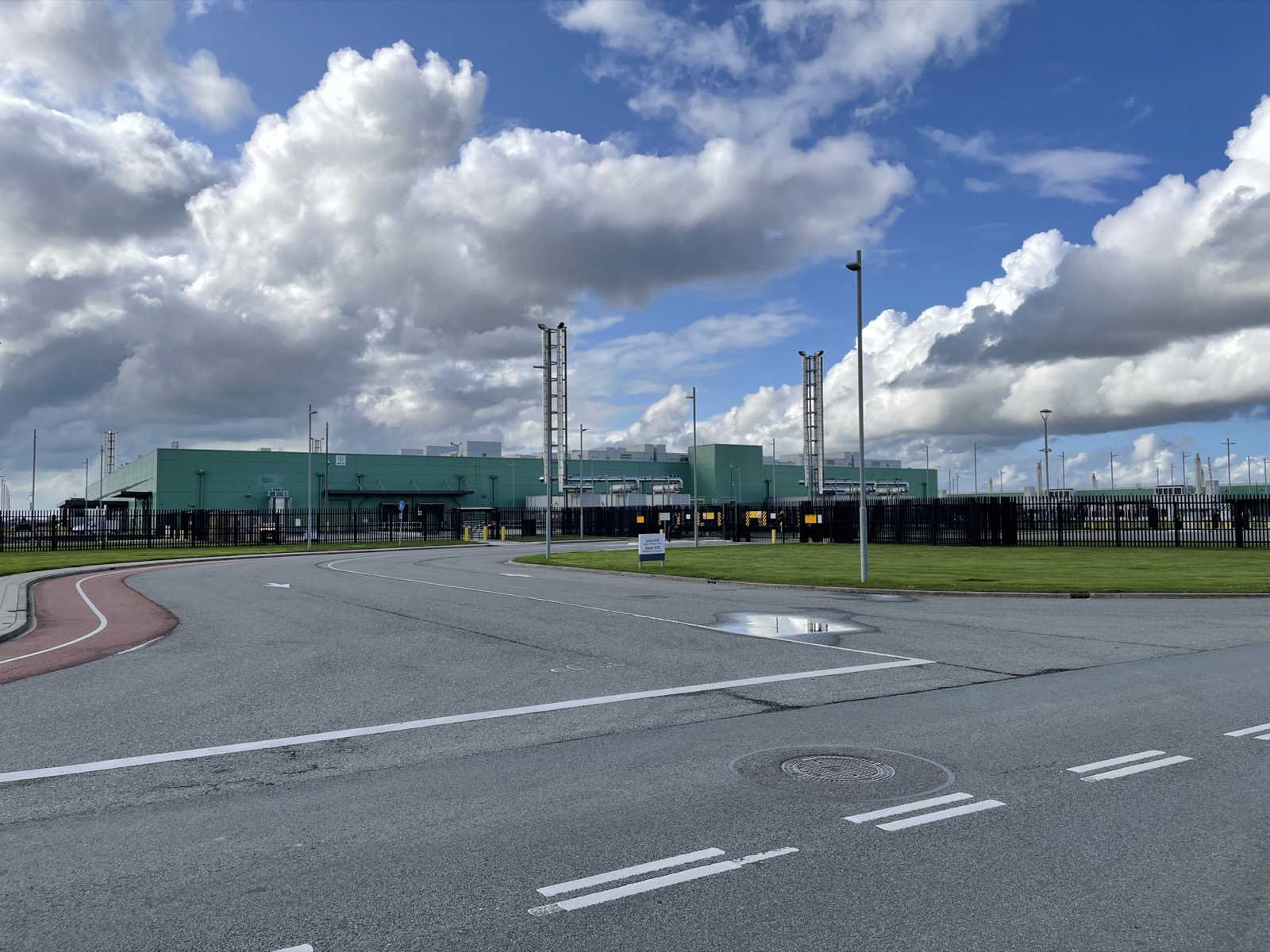
Whichever basis you pick, the order of magnitude holds. While 60,000 people are being asked to decide whether to leave, spending on facilities runs at the hundred-billion-dollar scale each year. The market did not read the combination badly. Microsoft stock rose about 1% on the day of the announcement and was up roughly 9% for the year as of October 26.
It is more accurate to keep the two layers apart here. That headcount is not coming down because of AI is the company's account. The eligibility terms and the scale of the year's spending are disclosed facts. This article does not weld the account to the numbers and read a cause out of the joint. What it does leave with the reader is the task of judging the two side by side.
The Fourth Workforce Move of the Year
Treat this offer as a standalone event and only its size registers. In the order they were disclosed, this year's workforce actions show something else.
| When | Action | Size | Eligibility |
|---|---|---|---|
| April | Voluntary Retirement Program | About 8,750 eligible, about 30% (roughly 2,600) accepted | US only, level 67 and below, age plus tenure of 70 or more |
| July 6 | Layoff | About 4,800 people, 2.1% of the workforce | Concentrated in Xbox and the commercial organization |
| September 22 | Further layoff | Small scale | Centered on commercial and Xbox |
| October 26 | Voluntary Exit Offer | About 60,000 eligible, 27% of the workforce | Four countries, level 70 and below, no age, tenure or performance requirement |
Put April next to October and the direction the terms moved becomes visible. One country became four, the rank ceiling rose from 67 to 70, and the age-and-tenure threshold disappeared. The eligible population grew from 8,750 to 60,000, close to sevenfold. In half a year, a program under much the same name became a far wider net.
The April program already has its result on the record. Of roughly 8,750 eligible employees, about 30%, a little over 2,600 people, accepted, and the company booked about $900 million in cost for it. This offer has an acceptance deadline in early December, so neither the number of takers nor the cost can be written down yet. Multiplying April's acceptance rate by 60,000 is easy arithmetic, but the countries, the ranks and the age requirement all changed, and nothing supports the assumption that the same rate comes back.
One organization name appears twice in the table above. Both the July and September layoffs fell on the commercial organization. Parts of that same commercial organization are reported to be outside this offer. Within four months, the same organization met two different instruments. If the kind of action is decided organization by organization, then which organization you sit in comes before which level you hold, and section 3's observation repeats itself in this table.
With the July layoffs, Coleman wrote that "AI is changing how work gets done," while drawing a line against the idea that AI fills the seats being cut. With the September action, the company said in advance that the restructuring was not finished. The company's account stayed much the same from move to move, and the moves came four times in half a year.
Why Pebblous Is Watching These Rules
Big tech workforce actions arrive almost monthly, and most of them reach us as a size and a reason. What sets this one apart is that the company published its eligibility as conditions. Country, rank ceiling, excluded organizations. Three axes written as fields rather than as sentences. Conditions written as fields become something you can check.
Anyone who has worked on data quality will recognize the structure. When three criteria are written down and one of them passes nearly everyone, that criterion is a label and the real decision happens in the others. Level 70 in section 2 was sitting in exactly that position. A field existing is no guarantee that the field does any work.
If you handle the criteria your organization uses to sort people or resources, three things are worth confirming. None of them asks whether a criterion is right. They ask whether it does any work. Whether it is right is hard to judge from outside, but whether it works shows up as soon as you count how many passed and how many were caught.
- Is the criterion written as a condition rather than as prose. A criterion that survives only as a description means something slightly different each time it is applied
- Have you counted which of the written criteria actually separates people. A condition with a pass rate above 95% is a formality, not a criterion
- If there is a separate exclusion list, is the thing it protects written down anywhere. Leave it unwritten and nobody will be able to reconstruct the reason later
Microsoft's exclusion list carries no such reason. Why data centers, sales and security ended up in the same column can only be guessed at from outside, and section 3 of this article is one of those guesses. What the company looks at when it decides which column your job belongs in, and where the evidence for that decision is written down, this announcement never revealed. The conditions are public; the reasons for choosing them are not.
Thank you for reading this far. The eligible population, the countries, the rank ceiling and the deadline in this article were checked in the October 26 CNBC and TechCrunch reports, and the organization-level roster and the internal memo language were checked in The Verge, Bloomberg and GeekWire reporting from the same day. The severance formula is carried over from this year's other rounds and is not confirmed as a term specific to this offer. If you have looked into whether the criteria your organization uses to divide people are written down anywhere, we would be glad to hear about it.
Pebblous Data Communication Team
October 27, 2026
References
Primary reporting
- 1.CNBC. (2026). "Microsoft offers voluntary buyouts to 60,000 employees as AI leads to efficiency push." October 26, 2026.
- 2.TechCrunch. (2026). "Microsoft offers buyouts to around 60,000 employees, reports say." October 26, 2026.
Cross-verifying reporting
- 3.GeekWire. (2026). "Microsoft makes new 'voluntary exit' offer to about a quarter of its workforce, including some execs." October 26, 2026.
- 4.CBS News. (2026). "Microsoft offers buyouts to 60,000 workers as it pours money into AI." October 26, 2026.
- 5.Bloomberg. (2026). "Microsoft offers voluntary exit packages to 60,000 staff." BNN Bloomberg, October 26, 2026.