Executive Summary
Deciding what work to keep in human hands means first knowing what AI has already taken from that work, and how much. On August 26, 2026, Bill Gates published a long essay on Gates Notes about AI and work. Two proposals sit inside it. One is Human Reserved, a domain of jobs society leaves to people even when AI could do them. The other is a tax on AI tokens and robots. Both point somewhere clear, and neither says what would have to be counted to get there.
Gates wrote that the idea of Human Reserved raises a host of questions he does not have answers to, and he listed four. Who gets to decide what we reserve for humans. What criteria should we use. How do you keep companies from cheating and using robots anyway. What happens to international trade when one country lets robots make something and another country does not. A token tax bill filed in the U.S. House three weeks earlier answers none of the four. It indexes the rate to an unemployment measure instead, and it asks whether a model reduced anyone's workforce only when a company uses the model inside its own business.
That structure stops at the same place as the California and Connecticut rules Pebblous covered in July. There, the duty to report was settled and only the test for what counts as a reportable event was left blank. This time the blank has moved from the stated reason for a layoff to the tax base and the list of protected occupations.
40%
The ceiling Gates imagined
Share of jobs he could picture reserving for people, and no higher than that
50%
The token tax level Gates named
An illustrative rate he gave to MIT Technology Review
2%
The bill's base token tax rate
The floor that applies in a year when U-4 unemployment is 5% or below
19%
Youth employment shortfall in exposed work
Stanford estimate for ages 22 to 25, widened from 15% a year earlier
The Two Lines Gates Drew
The first line runs through the work itself. Gates believes that as AI and robots improve, we will set aside certain things for only people to do, and he wrote that he has started calling that domain Human Reserved. He explained the name as well. He likes the phrase because it makes him think of nature reserves, places where we could put buildings and roads but choose not to because the loss would be too great.
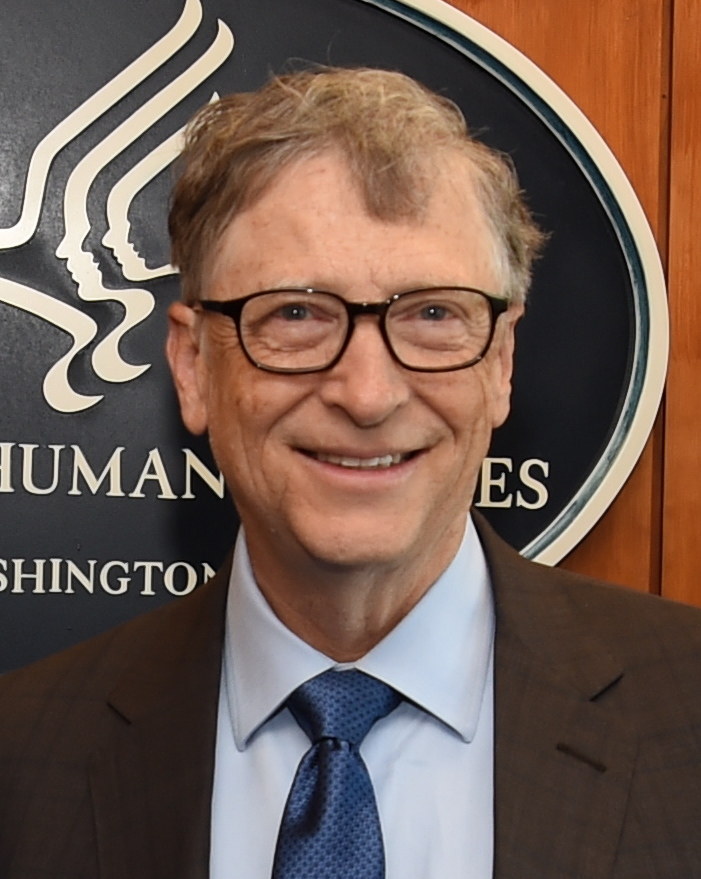
The idea starts somewhere personal. Gates's father died of Alzheimer's in 2020, and in the later stages of the illness he was cared for day and night by paid caregivers. He could not always tell them when he was hungry, Gates wrote, but they always knew. Of that team Gates wrote, "Something in the care they gave my dad was irreplaceably human. No robot could or should have done it."
Two kinds of reason support the line. One is economic. A role belongs in the reserve when letting machines take it over would displace a large number of people who cannot easily change jobs. His example is a 55-year-old who has worked in construction their whole career, and whom you cannot send to an elder care facility while expecting them to find it fulfilling. The other kind of reason has nothing to do with economics. Imagining a robot delivering the news that you have an incurable disease, he wrote, "There's no technical reason why it couldn't. Yet it shouldn't." In an interview with Axios he named child care and jury service as things humans are clearly better suited for, and put education and health care in a mixed category rather than a banned one. There, a profession stays protected while the workers inside it use AI to extend what they can do.
The second line runs through the tax code, and the argument is short. Hire someone and you pay payroll taxes on their earnings. Buy a robot and you can usually write it off right away as a business expense. In Gates's words, "The tax system nudges you toward replacing people with machines." So he proposes taxing AI tokens and robots to slow the rush away from human labor a little and to raise money for retraining and a stronger safety net. He attaches one condition: the tax would need to be targeted so that it does not slow down the purely beneficial uses of AI, like making medicine and education cheaper.
This is not the first time Gates has raised a robot tax. He proposed one years ago, and by his own account most of the reaction was that it was a strange idea. That version never made it into statutory language. Collecting a robot tax means first deciding what counts as a robot, and the line between an arm on a factory floor and software in an office has never been written into tax law. What is different this time is the unit. Tokens are already counted and priced inside the billing systems of AI companies.
Even Gates Couldn't Answer His Own Four Questions
The essay adds one more paragraph behind the proposal. Gates wrote that the idea of Human Reserved raises a host of questions he does not have answers to, and set four of them in italics. Who gets to decide what we reserve for humans? What criteria should we use? How do you keep companies from cheating and using robots anyway? What happens to international trade when one country lets robots make something and another country doesn't? His only addition was that these will need to be worked out in public as part of the transition plan.
He lowered his own ceiling on the scale of it, too. He has been trying to calculate how much employment could plausibly be preserved this way, and told Axios that "in a very extreme form of it" he could imagine 40% of jobs initially reserved for humans. Then he shut the door on it right away. "But that's as high as I can get." Even reaching that number, he added, proved harder than he thought it would. The majority of the labor market stays with the market.
The MIT Technology Review interview published the same day shows a little more of where the 40% comes from. It is actually hard to get above like 30% or 40%, he said. At 50% you could start talking about early retirement and a shorter workweek for lots of people; down in the 10% to 15% range you get an utterly different society. One notch on that dial changes the shape of a society, and the notch has not been set by evidence yet. Gates conceded as much: there are professions he did not write the formula for, and when he does the full memo on the subject he will try to.
On tax, one more number came out. Asked how a robot and token tax might work, Gates answered that "you can say 50% of your revenue from a token tax is paid to the government, and the government has that money to help people who lose their job because of AI." Then he questioned himself. Should some token uses not be subject to the tax? Is there really a separation between AIs that help with invention versus AIs that do job substitution? His sentence continues: "If somebody can tell me how to tell the AI 'no job substitution.'" Having left that unresolved, he opened a second route as well. The government already owns part of the profits through the corporate profit tax, so it could simply raise that rate back to where it was. A token tax, he explained, is a sales tax, vertically oriented like an alcohol, tobacco, or luxury tax. Taxes of that kind only work once someone has decided what they attach to.
For the last of the four questions he did sketch an answer in the interview. Where the line falls will vary from country to country, he thinks. Some countries might insist on humans caring for the elderly, while a country like Japan, with a shrinking workforce, may welcome a caregiving robot. So each country draws its own line and changes its import policy to match. As the EU prices goods from countries with looser carbon rules through its carbon border adjustment mechanism, imports made by robots would be tariffed. For that to work, though, a customs officer has to stand in front of a container and judge how much of it a human hand touched. Even the outline of an answer asks for another measurement.
These sound like ethical questions, and at the implementation stage every one of them turns into a measurement question. Who decides comes down to deciding on the basis of which data. What criteria comes down to which quantity gets measured. Stopping companies from cheating comes down to whether AI use can be observed at the level of a single job task. The invention-versus-substitution problem is the same. Without an observable marker separating the two uses, tax law cannot write the distinction into a statute.
What the Bill in Congress Counts
One document has already moved the same questions into statutory language. Three weeks before the essay, on August 6, 2026, Rep. Greg Casar (D-TX-35) introduced H.R. 10044, the AI Tax and Work Protection Act, with Reps. Valerie Foushee (D-NC-4) and Sara Jacobs (D-CA-51) as original cosponsors. On August 20, Rep. Ro Khanna (D-CA-17), whose district covers much of Silicon Valley, signed on as a third. The bill was referred to the Education and Workforce Committee and the Ways and Means Committee, and introduction is as far as it has gone. There is no Congressional Research Service summary and no Congressional Budget Office score yet, so the text itself is the only source.
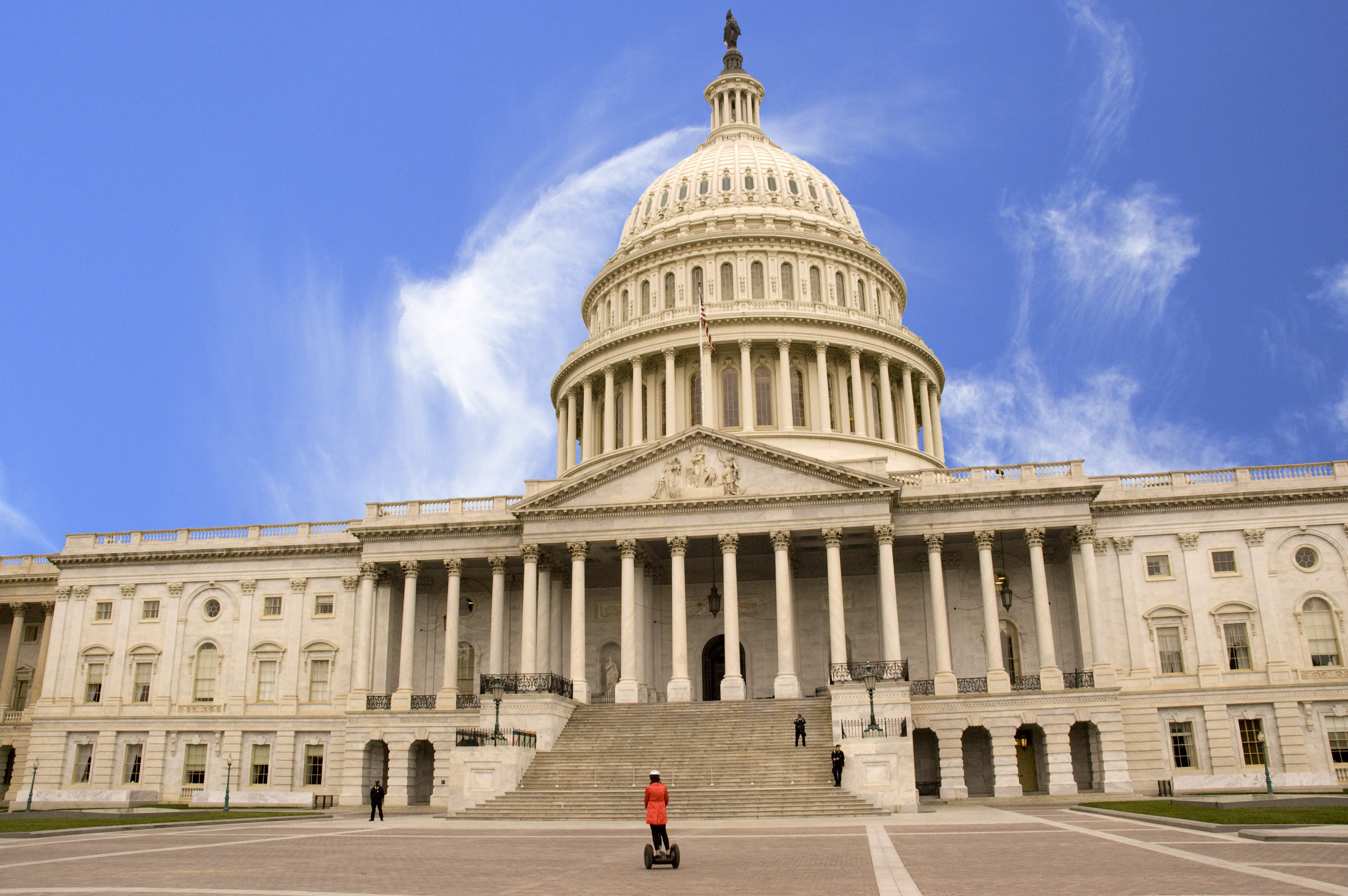
The bill adds a new §4491 to the Internal Revenue Code, imposing an excise tax on foundation models. The amount owed is the greater of two figures. One is the fair market value of the tokens the taxpayer processed in covered transactions during the year, multiplied by the applicable token percentage. The other is what the taxpayer received in exchange for AI services plus the fair market value of covered transactions with related parties, multiplied by the applicable transaction percentage. Neither percentage is fixed. When U-4 unemployment is 5% or below, the token rate is 2% and the transaction rate is 3%. Above 5%, each rises by the amount of the excess; above 7%, by twice the excess over 5%. The 50% Gates named in an interview and the 2% written into the bill are two settings of the same dial.
The judgment call sits in the trigger, not the rate. The text splits covered transactions into two kinds. Providing use of or access to a foundation model to an unrelated party in the course of business is taxable in itself. Using a foundation model in your own business, or passing that use to a related party, comes with a condition attached: it is taxable only if such use enables or results in a reduction in the workforce of the taxpayer or of the related party. The definition of who owes the tax carries the same split. A covered person develops a foundation model, sells access to one, or modifies an existing open-weight model, and either generates revenue from a covered transaction or uses the model to reduce its own workforce.
One of the questions Gates could not answer, the bill handles in its own way. That is the question of how to separate AI that helps with invention from AI that substitutes for a job. Instead of measuring the use, the text splits on the user. Research and development by a federal, state, or local government, an institution of higher education, a Federally Funded Research and Development Center, or a 501(c)(3) nonprofit is excluded. Who is using the model is easy to verify and what it is being used for is hard, so the drafters keyed the exclusion to the easy one. Tokens a corporate lab spends searching for a drug candidate are therefore not excluded. The use Gates said he wanted to protect is sorted by the institution that employs it rather than by the work it does.
Unfinished measurements sit throughout the text. The boundary of a taxable foundation model is one. The threshold is a model trained using at least 10²⁵ integer or floating-point operations, but the bill acknowledges that the compute needed for comparable capability shifts from year to year and lets the Secretary of the Treasury adjust the figure accordingly. The line separating what is taxable from what is not moves annually. The fair market value of a token is delegated to regulations the Secretary issues in consultation with the Secretary of Commerce. Even the unemployment rate that drives the rate has a condition on it. If the Secretary, in consultation with the Secretary of Labor, determines that unemployment above 5% occurred by reason of a war, pandemic, or any other massive economic shock unrelated to the use of artificial intelligence, the rate can be computed without that portion. Someone has to divide unemployment into the part AI caused and the part it did not, and the text says nothing about the basis for that judgment.
The bill has not forgotten measurement entirely. Section 405 directs the Bureau of Labor Statistics to collect, collate, and report on the impacts of AI on the workforce. The scope it writes is generous: impacts beyond job displacement caused by AI, and beyond the degradation of existing jobs, meaning employees receiving lower pay or fewer hours or jobs becoming temporary. What lies beyond those two is not written down. The appropriation is $20 million a year for fiscal years 2027 through 2031. The tax provisions apply to transactions occurring more than one year after enactment, while the statistic that would describe the phenomenon the tax targets has yet to be built.
Tokens Measure Effort, Not Displacement
That tokens are already counted and that tokens count the right thing are two different claims. Oren Etzioni, founding CEO of the Allen Institute for AI, wrote that Gates has the diagnosis right but the prescription mostly wrong, and this is where he pressed. In his words, taxing tokens is like taxing keystrokes: it measures effort, not displacement.

Two scenes he offers make the contrast. A high school class working through calculus with an AI tutor burns tokens continuously. A model that quietly retires a 40-person customer center might burn relatively few. The tax lands hardest on the uses Gates says he wants to protect, and passes lightly over the place where the substitution actually happened. The unit being taxed does not hold still either. On the Stanford AI Index numbers Etzioni cites, the cost of GPT-3.5-level performance fell from $20 per million tokens in November 2022 to seven cents by October 2024, a 280-fold drop. The safety net would be indexed to a number that falls every year.
Collection is a problem too. Inference runs on laptops and phones now, and on servers in whatever country declines to sign. A token tax then becomes a tax on whoever uses an American API, and every dollar it adds makes a Chinese model look cheaper. "We'd be slowing ourselves down and not China," Etzioni wrote. Gates's unanswered fourth question repeats itself on the tax side: what happens to trade when only one country regulates.
The unemployment rate the bill hangs its rates on is in worse shape. On the Stanford Digital Economy Lab observations updated in August, employment for 22-to-25-year-olds in the most AI-exposed occupations is running 19% below where it would be if it had kept pace with peers in less exposed work, up from 15% a year ago. Yet the same authors say they do not see widespread, economy-wide displacement, and U.S. unemployment held at 4.1% in July. Etzioni put it plainly: "The AI damage isn't arriving as layoffs. It's arriving as jobs that never get posted."
The trigger the bill chose is U-4, a broader measure that adds discouraged workers to the official unemployment rate, and it uses the highest value from the three preceding calendar years. It still moves only when someone is laid off and counted as unemployed. A young person who never got hired because the opening was never posted barely moves it at all. The way displacement is happening and the signal the tax rate responds to are looking at different places.
The Same Blank We Saw in July
In July, Pebblous covered the new U.S. labor rules turning AI layoffs into a disclosure field. California ordered a dashboard and Connecticut required mass layoff notices to state whether AI was involved. The conclusion was one line. The duty to report was settled, and no rule anywhere said how to determine that a layoff was caused by AI.
Here the blank sits in the same position under a different name. Then the thing to be determined was the reason for a layoff. Now it is whether a company's internal use of a model enabled a reduction in its workforce. One more item joins it. Deciding which job tasks to reserve for people requires knowing what AI has already taken from those tasks, and how much. That is probably part of why Gates said even reaching 40% was harder than he expected. Drawing up a list of what to protect requires a ledger of what has already crossed over.
The seed of that ledger is in the bill. It is the provision attaching $20 million a year for five years to the Bureau of Labor Statistics to measure AI's effect on the workforce. The order of operations is inverted, though. The rate keys immediately to an existing unemployment measure, while the statistic that would catch what that measure misses is only now getting started. The bill also defines the jobs its grants create as jobs for which the primary duties are to be carried out by a natural person. Human Reserved already exists in statutory language, and the data needed to decide what belongs there does not.
The grants point at sixteen named areas, with a seventeenth left to the Director for other public needs. Child care and public education are in, along with elder and disability care, public health, housing and public infrastructure, and local journalism. As Etzioni notes, saying a role is reserved for people assumes there are people available to fill it. Home health and personal care aides in the United States earn a median of $34,900 a year, and at that wage the Bureau of Labor Statistics projects roughly 765,000 openings in the occupation every year through 2034. The positions keep opening because people do not stay. Funding care and education jobs reads as an attempt to supply the premise.

There is one set of items the bill does count precisely. For jobs created with grant money, the Director reports to Congress annually on the number of grants, the number of jobs created per grant, and the average wage, the median wage, and the wage range. What was created is counted to the digit; what disappeared is left as a research assignment about how to count it. The people Gates wrote that assistance has to reach are exactly the second group: workers who lose their jobs to AI and robots, people whose hours or wages decline, and communities where the losses are concentrated. Today's unemployment statistics cannot pick out any of the three.
Editor's Note
Pebblous keeps following this subject not because we hold a view on which way the regulation should go. Robot tax or Human Reserved jobs, at the implementation stage both come down to recording AI use at the level of a job task and verifying those records. On top of data accumulated without settled label definitions and settled provenance, a tax and a protected-occupation list will both follow the wrong signal. The problem we work on when we talk about AI-Ready Data is sitting right here.
FAQ
What does Bill Gates mean by Human Reserved jobs?
A domain of work society chooses to leave to people even when AI or robots could perform it. Gates compares it to nature reserves, land we could build on but choose not to. He describes two forms: work that stays human permanently, and temporary protection for workers who realistically cannot pivot into a different career.
Why 40%?
It is not a legislative target but Gates's own estimate of a ceiling. He told Axios that in a very extreme form of it he could imagine 40% of jobs initially reserved for humans, and added that this is as high as he can get. The remaining majority of the labor market stays with the market.
How does a robot tax differ from a token tax?
They tax different things. A robot tax applies to physical automation equipment, a token tax to the units of input and output an AI model processes. Gates proposed both, and expects robots to draw some mix of banning and taxing. The difference is that earlier robot tax debates never got past defining a robot, while tokens are already metered inside vendor billing systems.
Is there an actual bill in Congress?
Yes. H.R. 10044, the AI Tax and Work Protection Act, introduced on August 6, 2026 by Rep. Greg Casar with Reps. Valerie Foushee and Sara Jacobs as original cosponsors. Rep. Ro Khanna joined on August 20, bringing the count to three. It was referred to the Education and Workforce and Ways and Means Committees and remains at the introduction stage. With no CRS summary and no CBO score yet, the text is the only source available.
How does the bill set its tax rate?
It indexes to U-4 unemployment. At 5% or below the token rate is 2% and the transaction rate is 3%. Above 5% each rises by the amount of the excess, and above 7% by twice the excess over 5%. The reference figure is the highest value among the three preceding calendar years. The amount owed is the greater of the token fair market value calculation and the revenue calculation.
What happens to trade if only one country reserves jobs for people?
This is one of the four questions Gates said he has no answer to. In the MIT Technology Review interview he sketched an outline: tariff imports made by robots, the way the EU prices carbon at its border. Doing that requires deciding at the border how much of an import a human hand touched. Oren Etzioni sees the same problem in the token tax, since inference runs on laptops and on overseas servers, leaving a tax that falls only on users of an American API.
Why is a company's internal use of a model hard to tax?
Because the text attaches a condition. Providing access to an unrelated party is taxable in itself, but a taxpayer's own use, or use passed to a related party, is taxable only if that use enables or results in a reduction in the workforce. The statute does not say what evidence establishes that, so the side that leaves an invoice is the side that gets collected automatically.
What is wrong with using tokens as the tax base?
Tokens measure volume of use rather than displacement. Oren Etzioni likens it to taxing keystrokes, pointing out that a classroom using an AI tutor consumes tokens continuously while a model that retires a 40-person customer center may consume few. The 280-fold fall in token prices between November 2022 and October 2024 also makes for an unstable base.
How does this connect to the AI layoff disclosure rules covered in July?
The structure of the gap is the same. The California and Connecticut rules settled the duty to report while leaving blank the test for what counts as an AI-caused layoff. This bill settles the taxable trigger while leaving blank the test for whether internal use enabled a workforce reduction. Only the object has moved, from the reason for a layoff to the tax base and the list of protected occupations.
References
R.1Primary sources
- 1.Bill Gates. (2026-08-26). "The turbulent AI era is here. The choices we make now are critical." Gates Notes.
- 2.Rep. Greg Casar. (2026-08-06). "H.R. 10044 — AI Tax and Work Protection Act." 119th Congress, Congress.gov.
R.2Interviews and reporting
- 3.Axios. (2026-08-26). "Bill Gates wants to keep some jobs off-limits to AI." Axios.
- 4.MIT Technology Review. (2026-08-26). "Bill Gates says we've passed AI's danger thresholds. Now what?."
- 5.Russell Brandom. (2026-08-26). "Bill Gates wants to see a robot tax and 'Human Reserved' jobs to mitigate harms from AI." TechCrunch.
- 6.Jeff Haden. (2026-08-26). "Why we need 'Human Reserved' jobs, says Bill Gates." CNBC Make It.
R.3Criticism and our earlier article
- 7.Oren Etzioni. (2026-08-26). "Etzioni on AI: Bill Gates has the right diagnosis but the wrong prescription." GeekWire. (Cited in §4 and §5 for the critique of token taxation, and as the source of the Stanford Canaries and AI Index figures and the BLS caregiving numbers.)
- 8.Pebblous Data Communication Team. (2026-07-24). "The New U.S. Labor Rules Turning AI Layoffs Into a Disclosure Field." Pebblous Blog.