Executive Summary
The U.S. Food and Drug Administration published a final order in the Federal Register on September 17 (91 FR 58817). It is the statutory form of a decision already made: a letter dated April 1 had turned down a petition asking that software which flags suspicious findings on X-rays and CT scans, and moves urgent patients up the queue, be allowed to market without premarket review. The petition came from a regulatory law firm acting for the imaging AI company Harrison.ai. This article looks at what FDA rested the refusal on, and whether that reasoning carries over to AI organizations outside medical devices.
What failed was not the willingness to monitor. The petition asked that a manufacturer be allowed to assess the risk of its own device and set a post-market plan proportionate to that risk, and what FDA pointed at was the absence of any mechanism, anywhere in the petition, for the agency to evaluate the plans that would come out of it. More than 45 comments were filed and a majority opposed. This remains a ruling on one company's petition rather than a door closed on the idea that monitoring can stand in for review, and the closing paragraph of the same order leaves that room open.
Sections 1 through 3 follow what the order and the April 1 response letter put on the page. The comparison in the back half of Section 4, which sets the ruling beside Korea's change control plan regime, is not in either document and is this article's own work.
Key Numbers
Sources: FDA final order (91 FR 58817), FDA CDRH response letter of April 1, 16 pages, and counts from FDA's AI-enabled device list.
180 days
Silence and the petition wins
The statute deems a petition granted if FDA does not respond inside that window. The denial letter went out on day 161
All of them
510(k)s put on hold under one code
Every submission cleared under that CAD product code over several years went on hold at least once, in each case for reasons that included performance testing gaps
255+
Radiology AI cleared during 2025
A floor, counted off FDA's AI-enabled device list. Had the exemption been granted, much of that volume could have reached the market without a new review
76%
Radiology's share of AI devices
1,230 of the 1,614 authorized through June 2026. Imaging is the default route onto the market for AI in medicine
A Petition Nobody Answers Is Granted by Default
There is a clause in U.S. device law that rarely gets quoted. When someone petitions to exempt a class II device from premarket notification, FDA has 180 days from receipt to respond, and if it does not respond in time the petition shall be deemed granted. Regulatory silence becomes approval. Put this case on that clock and the margin was not large. The petition arrived on October 22, 2025; the denial letter is dated April 1, 2026. Day 161.

A second procedure runs alongside it. FDA must publish notice of the petition in the Federal Register, take 60 days of public comment, and then issue its final determination as an order within 120 days of that notice. The notice ran on December 29, 2025 (90 FR 60730) and comments closed on February 27, 2026. That is why a September 17 order spends its pages restating a decision made in April. It is not a fresh judgment but the statutory close. Read the document type wrong and the order is easy to mistake for one that codified an exemption, yet the last sentence of its summary reads: "FDA denied the petition in a response issued to the petitioner on April 1, 2026."
Four device types were in scope. Diagnostic software that characterizes lesions suspicious for cancer (§ 892.2060), the medical image analyzer (§ 892.2070), triage and notification software that moves urgent cases up the worklist (§ 892.2080), and software that both detects and diagnoses (§ 892.2090). All four require a 510(k) today, and a finding from FDA that the device is substantially equivalent to one already legally marketed, before they can be sold. The petition proposed releasing all four from that obligation, on conditions.
The conditions ran like this. The manufacturer must already hold a 510(k) clearance: one under the same classification regulation for triage software, and for the other three, one under any of those three regulations. The manufacturer must also implement "a robust post-market plan, transparency, and training measures." Existing special controls, quality systems, establishment registration and device listing obligations would all stay in force. In short, one past clearance plus a plan the company writes for itself, traded against review of everything that comes next in the same family.
The transparency and training measures came with specifics attached. The manufacturer had to give users a way to export retrievable AI results, put a link to the current electronic instructions for use inside the device interface, and ship only to facilities that run a device-specific training program. The reason the petition gave was an innovation gap. Manufacturers clear narrow indications in the United States, tied to a particular modality and a tightly defined reading task, and end up marketing a fraction of what the product can do, while the same product covers a wider range of findings in Europe, the United Kingdom and Asia. The petition also framed the route as standing alongside the existing 510(k) rather than replacing it.
The territory at stake was not narrow. Counting off FDA's AI-enabled device list, more than 255 radiology AI devices cleared a 510(k) in 2025 alone, and of the 1,614 AI-enabled medical devices authorized through June 2026, 1,230 of them, or 76%, sit in radiology. Imaging is the default route onto the market for medical AI, and the petition proposed to redraw that route. This was never an argument about one company's product.
More than 45 comments arrived and a majority opposed. Those against cited product quality and patient safety, the rapidly evolving nature of AI, and the fact that post-market surveillance effectiveness for these products is not well established. Those in favor echoed the petition. The American College of Radiology took a third position and attached conditions instead of opposing outright. In a comment filed on February 26, 2026, the college asked FDA to narrow which manufacturers and devices could qualify, to confirm the clinical credentials of end users, to strengthen device transparency before and after market entry, to increase FDA's direct visibility into compliance by exempted devices and companies, to keep participation in third-party registries that monitor AI performance, and to review the exemption pathway itself on a regular schedule. Four of those six ask the same thing: let someone outside look in.
A Past Clearance Does Not Vouch for the Next Device
The test FDA applies to exemptions was settled back in 1998. The device must have no significant history of false or misleading claims or of risks tied to its inherent characteristics; the characteristics necessary for safe and effective performance must be well established; changes that could affect safety and effectiveness must either be readily detectable by users through visual examination or routine testing before causing harm, or not materially increase the risk of injury; and changes must not be likely to shift the device's classification. Four factors. What the September 17 order records is the verdict across all four: the information presented in the petition does not demonstrate that premarket notification is not necessary to assure safety and effectiveness.
The denial letter runs 16 pages, and it goes after the petition's opening premise. What does a past clearance actually vouch for?
"Holding a 510(k) clearance may not reflect that a manufacturer is proficient in, or even has experience with, the processes used in the development of the cleared device, let alone in processes that would necessarily be appropriate for all future devices of the subject types."
What a 510(k) judges is substantial equivalence, meaning whether the device under review is substantially the same as one already legally marketed. FDA's point was about how far that judgment reaches. Meeting the standard for one specific device against one specific predicate does not automatically yield the conclusion that the processes followed during its development will suit any future device under the same regulation. Nor that the manufacturer is proficient in those processes, nor that it would follow the same ones next time. The petitioner, FDA wrote, provided no evidence to support such a conclusion.
There is a second reason. Nothing guarantees that the company holding the clearance built the device. It may have purchased the product from the entity that ran the development, or leaned on third parties, and it might not use the same third parties next time. That is where the sentence quoted above appears. The name on the clearance and the process that made the device can come apart.
Because that could read as abstract, the letter opens its own file. Among all 510(k)s cleared under a particular CAD product code over a period of several years, all were placed on hold, and in each case for reasons that included deficiencies relating to performance testing methodology or performance results. In many of those cases the manufacturer already held a prior CAD authorization. Companies with a clearance behind them were still getting stopped on the evidence of performance. The very condition the petition proposed as the threshold for exemption is, in FDA's records, a condition that failed to screen out performance problems.
The second premise to fail was the bundling of device types. The petition wanted a single clearance under any of the three regulations to carry over to the rest, and FDA held that detection, diagnosis and triage cannot be treated interchangeably. The methods that evaluate a device performing a detection task are not the methods that evaluate a device assigning a diagnostic score to a finding the user has already picked out. The letter also spells out why experience developing AI for one indication does not travel easily to another: the interdisciplinary expertise needed to understand the clinical workflow, expected benefits and patient risks differs; the data collection protocols used to curate a dataset that is representative and appropriately sized for the indication differ; and the methods used to determine an appropriate reference standard differ. All three are about making data.
The second of the four factors caught on the same problem. The petition argued that CAD devices had been on the U.S. market for more than 20 years and that FDA's two 2012 guidance documents had not substantially changed since, so the characteristics necessary for safe and effective performance must be well established. FDA answered that both guidances cover detection devices only and put diagnosis and triage software outside their scope. It added that for this device type there are no vertical consensus or performance standards to support consistent testing and evaluation. Being sold for a long time is not the same as agreement on what to measure and how.
Where Screening Breaks the Premise That the Doctor Catches It
The third factor was where this petition was won or lost. It asks whether a change in the device surfaces in the field before harm reaches a patient. The petition claimed it already met that bar: changes in CAD devices that could affect safety and effectiveness "are readily detected by users, licensed radiologists, through visual examination of the images that accompany the use of CAD, or routine testing." A human sits in the reading chair, so a machine that drifts gets caught on the spot.
FDA quoted that sentence and disagreed with it. For an individual patient, agreement between a reader's interpretation, the CAD output and the "true" disease state may not be routinely available or known before the output leads to a misdiagnosis, which raises the risk of injury or ineffective treatment. The sharpest case the letter reaches for is breast screening. For screening mammograms, cancer is not routinely diagnosed from the imaging data alone and a biopsy is often necessary under the standard of care, so a physician cannot definitively distinguish a true positive from a false positive without putting that patient through a biopsy. FDA then looked ahead to devices not yet built. As indications widen toward findings that even trained readers could not be expected to confirm visually, or toward situations where there is no time to confirm, the room a user has to notice a change shrinks further.
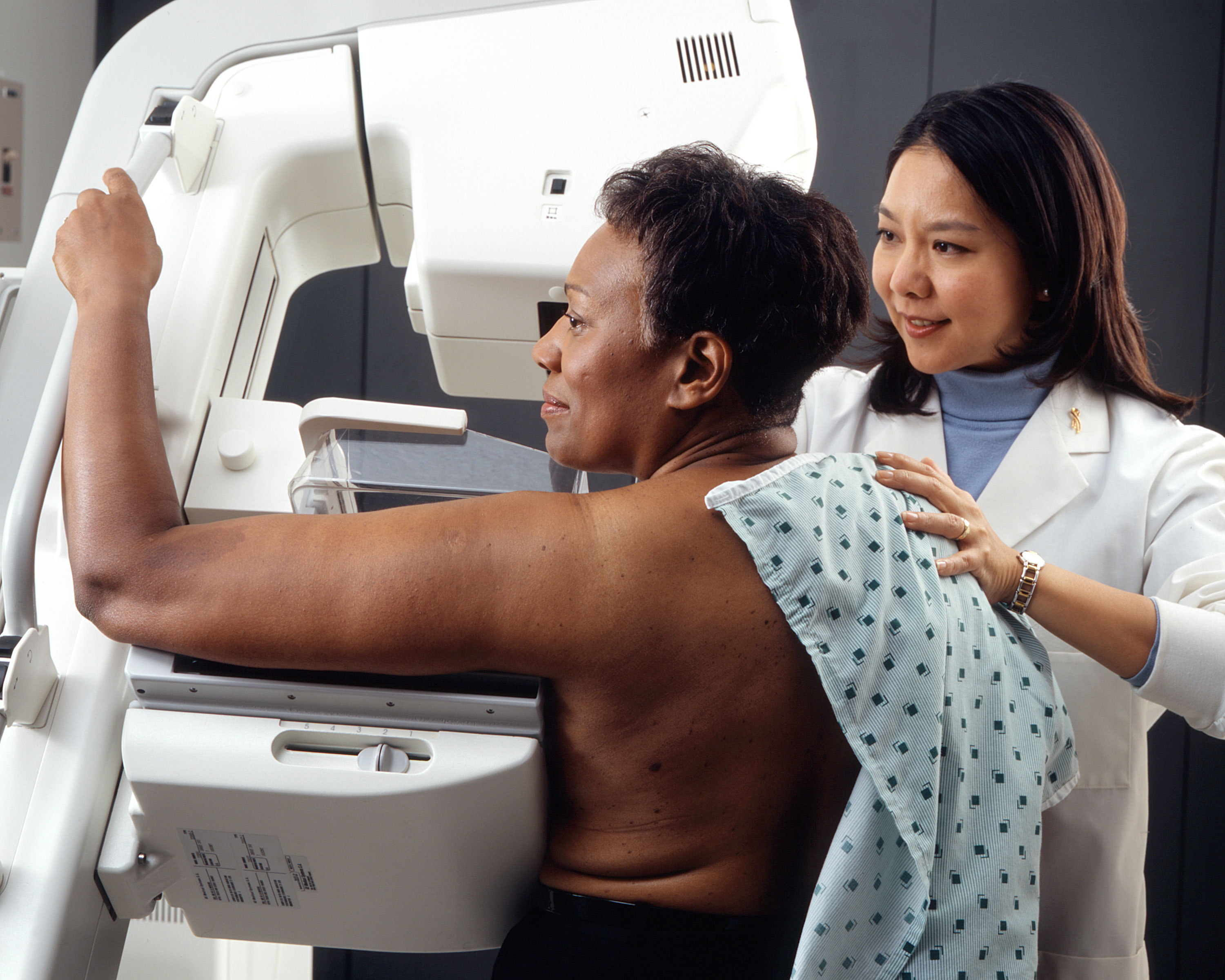
This matters because it separates having a human watching from being able to check the machine. The watcher is there and the answer key is not. The answer key arrives days later as a biopsy result, or never arrives at all. A deployed model can settle quietly downward and nothing in the room lights up. That is not this article's reading; the letter says it directly. Agreement between the device and the "true" disease state is not routinely captured by these devices, and there are no standard mechanisms for feedback that link a final diagnosis or ground truth determination back to the interpreting radiologist or the device output. Without a robust monitoring program in place, FDA wrote, users may be challenged to know whether device performance has changed, or in the word the letter puts in quotation marks, "drifted." The same shape shows up outside radiology: how performance shifts on patients a model never trained on is what revalidating a lung cancer AI on outside institutional data ran into as well.
Whether an absence of records counts as evidence of safety came up in the same letter. The petition argued that AI use and clearance counts had climbed sharply without a matching rise in reports to FDA's adverse event database, which supported a safe use profile. FDA replied that reported adverse event metrics may not serve as an adequate indicator of safety and effectiveness for these devices. A false positive or false negative output alone may not be an adverse event; the contribution of the device to a downstream adverse event may not be readily apparent when that event occurs; and the event might occur multiple steps downstream from the image interpretation. FDA added that its own premarket review, and its discussions with sponsors during that review, may play a role in holding the number of recalls and adverse events down.
Some of the public comments reported what users had seen. One flagged radiology AI products promoted overseas with hundreds of claimed indications across multiple organ systems, of which only a limited subset appeared to have undergone rigorous analytical and clinical validation in routine practice. The same comment listed inconsistent sensitivity and specificity across patient populations, performance degradation on scans acquired using protocols different from those used during development, and a lack of transparent, indication-specific validation documentation available to end users. The broad indications the petition said U.S. rules kept off the market were, where they are in broad use, being reported back in that shape.
That left post-market monitoring as the petition's last line of defense. Under it, the manufacturer would assess the risk of a given device and set a post-market plan proportionate to that risk. The purpose written into that plan was not vague: regular assessment of generalizability and device performance in the intended patient population in real-world use. What it replaced was FDA review and clearance, with the manufacturer deciding what action was necessary to mitigate the device's risks. Such an approach, FDA wrote, would flip the standard under section 510(m)(2) on its head. And the observation attached to that is the center of this case. The proposal included no mechanism for FDA to evaluate individualized plans. What was missing was not what to measure but who reads the plan and rules it sufficient.
[Fact] FDA did not object that the plan was thin. It objected that the structure in the petition left no place for FDA to judge whether the plan was robust. [Interpretation] Self-governance and outside verification are not competing options. A verification point has to be pinned somewhere before self-governance means anything inside a regulatory system.
Drawn out as a sequence, the two proposals separate cleanly. They call for the same work and disagree on when the regulator looks.
The Other Path FDA Pointed To: Filing the Plan First
FDA shut one door and pointed at another. Manufacturers may consider a predetermined change control plan to achieve some of the aims proposed in the petition, the letter said, and it encouraged sponsors to take the discussion further with the agency through the Q-Submission Program. The order itself records a longstanding commitment to develop and apply innovative approaches to the regulation of medical device software, and states support for the continued consideration of innovative and least burdensome approaches that may accelerate the availability of safe and effective devices. The petition lost; the problem it named did not.
A change control plan sounds, by name, like the post-market plan the petition described. The order of operations is different. With the first marketing submission, the manufacturer files a plan covering which model updates it expects to make, what data it will train and validate on, and how labeling and deployment will change. FDA reviews that plan together with the device and clears it. Updates that fall inside the cleared scope can ship without a new submission; changes that fall outside go back on the review desk. Autonomous updating is allowed, and the boundary of that autonomy is read and drawn by the regulator in advance.
Compressed to one line, the difference is who reads the plan and when. Under the petition the plan lives inside the company; under a change control plan it becomes part of the marketing file. The same sentence about managing things ourselves carries different weight depending on which of the two it sits in. Device regulation did not invent this distinction either. Asking high-impact systems for data provenance and governance records, as Korea's AI Framework Act does, drives a verification point into that same slot.
The petition had pointed to what it read as a precedent already inside FDA. A genetic health risk assessment test clears a 510(k) once and may then expand its indications within certain limits without a new one. FDA pulled the two structures apart. That exemption applies when the very device already reviewed is modified later, whereas the exemption the petition sought would follow clearance of a different device, possibly of a different type. The genetic regulation also requires accuracy point estimates of 99 percent or higher for all variants, while accuracy for CAD devices varies greatly by indication and is generally much lower. The precedent did not cross over.
From here on this is outside both documents. The same sequence settled into Korean regulation this year. On June 26, 2026, the Ministry of Food and Drug Safety issued a guideline for reviewing and approving change control plans for digital medical devices. A manufacturer or importer documents in advance the changes it anticipates, the methods by which it will validate them, and its plan for assessing what those changes do to safety and effectiveness; the ministry approves that document, and changes inside the approved scope reach the product without a separate authorization. The ministry described the starting point as a practical one: AI-based devices improve algorithms and refresh data often, and requiring a fresh review for each change slows those improvements down. The guideline covers which cases change control applies to and which it does not, the change items and validation methods, benefit-risk analysis, and what to consider after a change ships.
The two countries did not coordinate. They arrived at the same place. Both allow AI to update itself as a way of regulating software that keeps moving, and both tie the range of that autonomy to a document a regulator reads and approves beforehand. Which is why this article does not treat an American denial as somebody else's regulatory news. A team building digital medical devices in Korea is already filling in the same form, and what can be written on it becomes the room available to move without asking again.
Why Pebblous Is Watching This Denial
Strip the phrase medical device out of the test in this case and it reads like this. An organization that intends to keep modifying a model after deployment: has it written down, in a form someone outside can check, that those modifications are safe? If it has not, the promise to monitor has not earned the right to stand in for review. It also explains why FDA's examples cluster on the data side. The hold reasons were performance testing methodology and performance results, and the things named as not carrying across indications were data collection protocols and reference standards.
Outside regulated industry the structure is identical. When a model shipped to a customer starts performing worse in the field, who notices, how soon, and on what record is often written down in neither the contract nor the dashboard. As with the biopsy in screening, the longer the answer key takes to arrive, or the more often it never does, the wider that gap opens. In those jobs the bigger problem is not that performance fell but that nobody knew it had.
The work we call data lineage and an AI bill of materials comes down to closing that gap with a single document. Which data trained it, what was taken as ground truth, under what conditions performance was measured, and how far those conditions sit from the field. Keep those four lines current with every release of the product and you have a plan a regulator, a customer or an internal auditor can read. Something to read is exactly what FDA said the petition lacked.
The questions below move the test in this decision over to a product team's desk. They are not a checklist from any document.
- Is there a record of your model's field performance being measured last quarter, and does that record say who measured it and on what cycle?
- For the jobs where the answer key comes late or never comes, has a proxy signal been fixed that tells you performance has slipped?
- When you update the model, is there a written basis for deciding, before the update ships, what still falls inside the existing validation and what falls outside it?
- Could you hand that record and that basis to a customer or an auditor as they stand today? If not, what you have is internal practice rather than a monitoring plan.
FDA's conclusion is about one company's petition and not about post-market monitoring as an idea. Some questions were left unjudged. Whether the conditions the petition proposed could be established as special controls was not taken up, the letter said, once it had concluded that a 510(k) would still be necessary even with them. The order closes on a sentence about continuing to weigh least burdensome approaches. What a future petition would have to fill in to land differently is already written between those sentences. A plan in a form the regulator can read and rule on.
References
Primary Regulatory Documents
- 1.U.S. Food and Drug Administration. (2026-09-17). Medical Devices; Exemption From Premarket Notification: Radiology Computer-Aided Detection and/or Diagnostic Software Devices (Final Order). 91 FR 58817. federalregister.gov
- 2.U.S. Food and Drug Administration. (2025-12-29). Medical Devices; Petition for Exemption From Premarket Notification (Notice of Petition). 90 FR 60730.
- 3.FDA Center for Devices and Radiological Health. (2026-04-01). Response to Petition FDA-2025-P-5560 (Decision Letter). regulations.gov
- 4.U.S. Food and Drug Administration. (2024-12-04). Marketing Submission Recommendations for a Predetermined Change Control Plan for Artificial Intelligence-Enabled Device Software Functions. fda.gov
Industry & Trade Coverage
- 5.AuntMinnie. (2026). FDA strikes down radiology AI 510(k) exemption arguments. auntminnie.com
- 6.AuntMinnie. (2025). Petition to U.S. FDA proposes alternative pathway for radiology AI. auntminnie.com
- 7.American College of Radiology. (2026-02-26). ACR Asks FDA to Prioritize Safety in AI CAD Petition Review. acr.org
- 8.ASCO AI in Oncology. (2026-04). FDA Rejects Bid for Review Exemption on Company's Radiology AI Devices, Citing Safety Gaps. ascoai.org
- 9.The Imaging Wire. (2026-09-13). Radiology Maintained Its Lead in FDA Approvals. theimagingwire.com
Korean Regulatory Context
- 10.EBN. (2026-06-26). MFDS establishes approval and review guideline for digital medical device change control plans. ebn.co.kr