Executive Summary
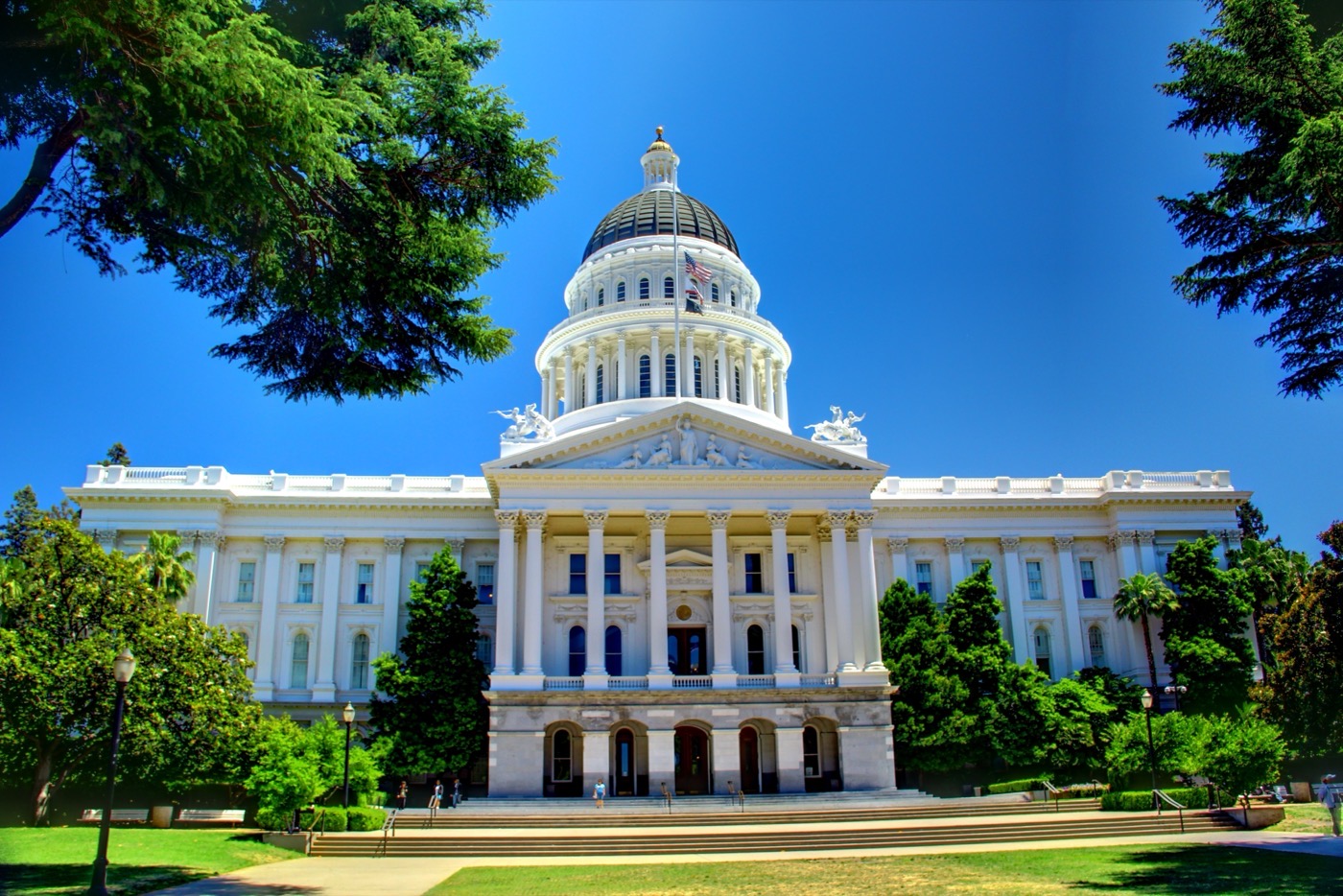
AB 1883, which the California legislature cleared on August 30, forbids an employer to put artificial intelligence on a workplace surveillance tool in order to work out an employee's emotional state or to collect neural data. The bill was presented to the governor at 3 p.m. on September 10, and as this article is written on September 29 the official legislative record shows neither a signature nor a veto. The status still reads Enrolled, and the deadline the state constitution sets falls on September 30. This article opens the text of the bill and looks at what the prohibition aims at and what it leaves empty.
The first thing the text makes clear is that the prohibition does not attach to equipment. The workplace surveillance tool it defines covers nearly every means of collection except watching with your own eyes. Video and audio, location tracking, even a tool that slices working time into small intervals all sit inside the one definition. So the line falls not on what a company bought but on what that purchase was pointed at. And while the bill defines neural data in a single tightly worded sentence, it attaches no definition at all to emotional state, which is the other half of what it prohibits.
Enforcement carries a gap of the same shape. Section 1582 names the Labor Commissioner and a public prosecutor as the ones who may enforce the part, and sets a penalty of up to $500 per violation. Yet subdivision (d), paragraph (2) of that same section lists an employee among those who may recover that penalty. No clause anywhere says an employee may bring the action, and an employee is nonetheless named among those who collect on it. That is why the American law firm notes introducing this bill read the question of a private right of action in different ways.
Sections 1 through 3 report what the text of the bill says. Section 4 is the reading drawn from it.
Key Numbers
Source: compiled directly from the enrolled text of AB 1883 and the bill history published by the California Legislature.
September 30
Deadline for the governor to sign or veto
As of September 29 the last line of the history still reads "Enrolled and presented to the Governor at 3 p.m." on September 10
$500
Maximum penalty per violation
The statutory maximum, and the text never says whether a violation is counted per person or per period
1 sentence
Length of the safety exception
Section 1581(b) is the whole of it. Nothing defines what ensuring safety means, and no evidence requirement attaches
0
Clauses giving an employee a right to sue
The text says a penalty is paid to the employee, and no clause says an employee may file the action
Two Lines of Prohibition, Nearly Every Tool
AB 1883 adds a new Part 5.8 to Division 2 of the Labor Code and puts four sections inside it, numbered 1580 through 1583. The whole thing runs to a few pages, and the prohibition itself is two lines of Section 1581(a).
"(a) An employer shall not use a workplace surveillance tool that uses artificial intelligence on employees for either of the following: (1) Recognizing, or making inferences or predictions about, an individual's emotional state. (2) Collecting neural data."
California Labor Code Section 1581(a), enrolled text of AB 1883
The wording of the first prong does more work than it looks. It does not stop at recognizing an emotional state; it reaches inferences and predictions about one. A tool that never claims to read feelings, and only scores them under another name, is still inside. The second prong is shorter and names no purpose at all. Collecting neural data is enough on its own, whatever the company meant to do with it afterwards.
How wide those two lines actually reach only becomes visible in the definitions that precede them. Section 1580(g) defines a workplace surveillance tool as any system, application, instrument or device that collects, or assists in collecting, an employee's data, activities, communications, actions, biometric information or behavior by a means other than direct observation by a person. The examples it names are video and audio surveillance, tools that measure work time in small consecutive intervals, geolocation, electromagnetic tracking, photoelectronic tracking and optical systems. The list opens with "including, but not limited to," so the examples are not a fence.
With the definition drawn that wide, the defense that says our product is not a surveillance tool barely stands up. Badge records are inside it. So are call recordings and screen activity logs. What falls out is the case where a person looks with their own two eyes. A manager walking once around the floor is outside this law, and a camera pointed at the same scene is inside it.
The line this law draws, then, does not run along the kind of hardware a company owns. The tools are almost all inside the definition already, and the one variable left is where the signal was put to work. The same camera, the same microphone and the same wearable can be lawful or unlawful depending on the purpose behind them.
The exception is one sentence, Section 1581(b). It provides that the section does not prohibit an employer from using a workplace surveillance tool to ensure safety, or otherwise in a manner that does not meet the requirements of subdivision (a). A use that can be presented as safety, drowsiness detection for instance, leaves through that door. The law does not define what ensuring safety means, and it attaches no requirement to hold material that would back the claim up.
One Half Defined Tightly, the Other Left Blank
Section 1580 defines seven terms: artificial intelligence, employ, employee, employer, neural data, public prosecutor and workplace surveillance tool. Of the words the prohibition itself uses, one is missing from that list. Emotional state.
2.1Neural Data Is Defined Twice Over
The definition of neural data reads as information generated by measuring the activity of an employee's central or peripheral nervous system, and that is not inferred from nonneural information. Two conditions sit inside the one sentence. The first fixes the source, and the second takes back things that appear to share that source.
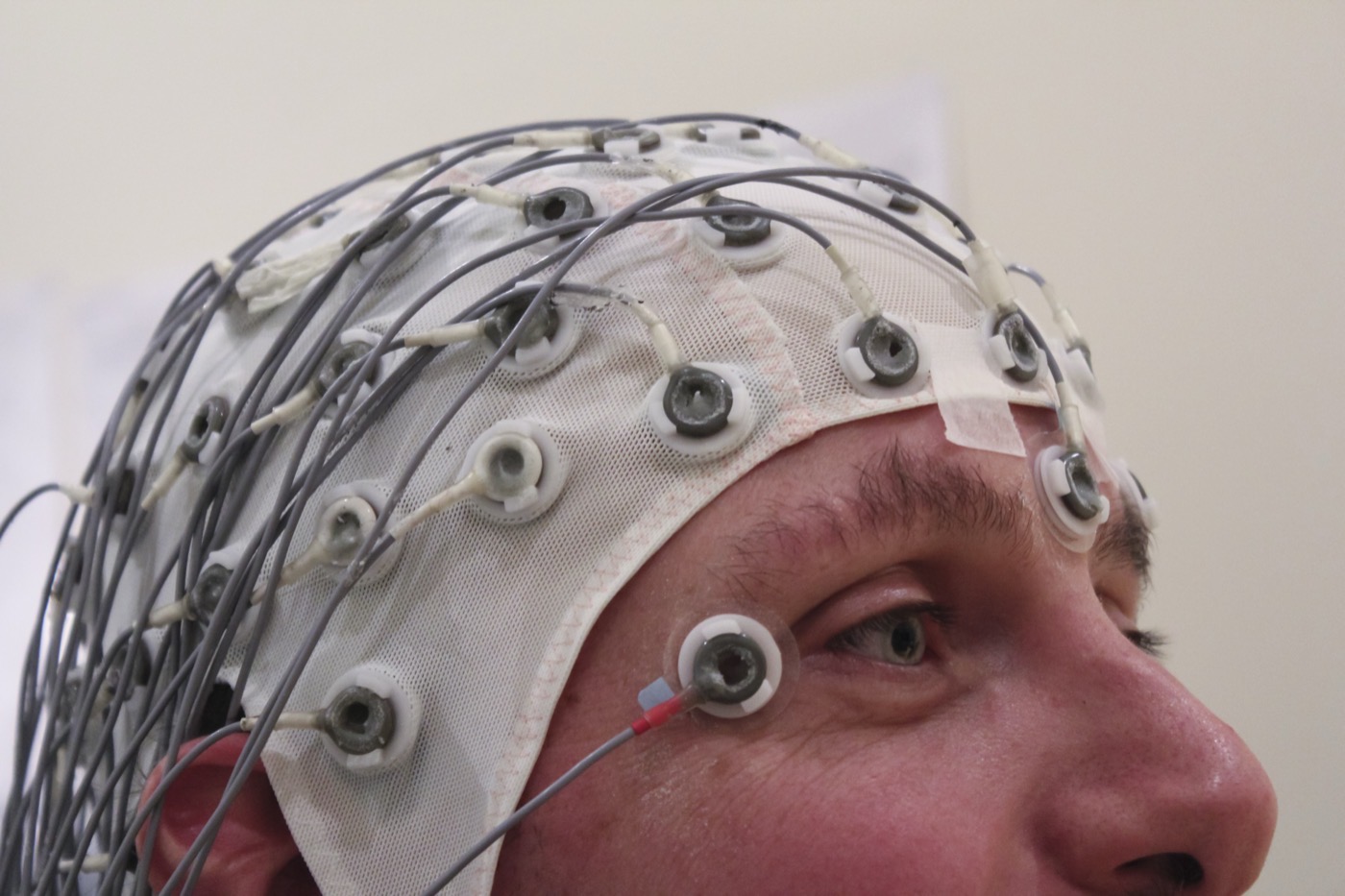
Why the second condition was needed becomes clear from where this definition came from. The same sentence entered California law first through SB 1223, signed on September 28, 2024, which added neural data to the list of sensitive personal information under the state's consumer privacy law and took effect on January 1, 2025. The committee analysis of that bill explained the carve-out plainly. All human behavior is ultimately the result of nervous system activity, so without the qualifier the downstream physical effects of that activity, "pupil dilation, motor activity, and breathing rate" in the analysis's own examples, would all become neural data, and any measurement made of a human could potentially count.
California was not the first state to put the word into statute either. Colorado came first with HB 24-1058, signed on April 17, 2024, Montana followed in 2025 by amending its Genetic Information Privacy Act, and Connecticut joined with SB 1295, signed on June 24 that year. Four states drew the same word four different ways. Connecticut measures only the central nervous system and leaves the peripheral out. Colorado holds both but narrows the gate, so the protection engages only when the information is used to identify an individual. Montana excluded the downstream effects by writing pupil dilation, motor activity and breathing rate directly into the statute. A peripheral signal such as skin conductance read at the wrist therefore sits inside the definition in one state and outside it from the start in another.
All four, though, are laws that protect consumers. A consumer under the Colorado Privacy Act is a resident acting in an individual or household context, and the definition goes on to say it "does not include an individual acting in a commercial or employment context, as a job applicant, or as a beneficiary of someone acting in an employment context." Connecticut's consumer privacy act carries a provision to the same effect in the same place. Raising neural data onto a sensitive-information list does not, through these definitions, reach the scene where an employer gathers it from its own staff. California stands a little better off, because the personnel-data exemption in its consumer privacy law lapsed at the end of 2022 and employee data came within scope. Even there, what attaches to neural data is notice and a right to limit its use rather than a prohibition.
AB 1883 carries that same sentence out of consumer privacy law and into the Labor Code unchanged. In the move its character changed. Under consumer law neural data was sensitive information to be handled with consent, and once it crossed into labor law it became something an employer may not collect at work whether or not consent is given. The design rests on a judgment that consent from a worker is hard to treat as freely given, and in that respect it belongs to the same family as the EU AI Act, whose Article 5(1)(f) bans emotion inference in workplaces and educational institutions except for medical or safety purposes.
2.2The Signals Carved Out Land in the Next Clause
This is where the two prohibitions interlock. The nonneural information that the neural data definition pushes out, which is to say facial expression, voice, heart rate and breathing, is exactly what the emotion recognition products on the market actually run on. Companies that measure brain waves are rare, and companies that extract tone of voice from call center audio are not. Using those signals to work out how someone feels lands on subdivision (a)(1) rather than (a)(2). The two prongs were built so that the prohibition closes only when both are present.
The trouble is that the clause doing the closing has no definition. The law never says what an emotional state is. Is fatigue an emotion? Is an intention to resign one? Where does a feature that pulls frustration out of the agent's voice rather than the customer's belong? If a monitoring tool assigns a friendliness score, has it inferred an emotional state or counted what was said?
That last question is not hypothetical. The headset AI Burger King brought into its drive-thrus in February 2026 began by coaching staff on service through counting whether phrases such as a welcome or a thank you were used. The company has since said it is extending the feature toward picking up tone of voice and emotional signals, and has also stated that it is not meant to evaluate individual employees. This law's line sits somewhere between counting words and reading tone, and exactly where it sits cannot be told from the text alone.
The half that is tightly defined is the easy half for a company to answer. The fact that you run no brain-wave equipment shows up on a single page of the purchasing ledger. The half left blank works the other way. That your tool does not infer an emotional state cannot be shown by an equipment list, and shows only in the record of what that tool takes in and what it puts out.
An Employee Is Named Only Where the Penalty Is Paid
Section 1582 governs enforcement. Subdivision (a) gives the Labor Commissioner power to investigate, to order a violation stopped, to issue a citation and to bring a civil action. Subdivision (b) provides that a public prosecutor may also enforce the part. Subdivision (c) says that "in a civil action brought pursuant to subdivision (a) or (b)" the petitioner may seek a temporary or preliminary injunction, exemplary damages and reasonable attorney's fees. Subdivision (d), paragraph (1) sets the penalty: an employer who violates the part may be liable for a fine of up to $500 per violation.
Up to that point the structure is public enforcement, and the Legislative Counsel's Digest summarizes it the same way. Its account of the bill names the Labor Commissioner and a public prosecutor as the ones authorized to enforce the provisions, and names no one else. A private right of action appears nowhere in the digest.
The very next paragraph then reads differently.
"(2) An employee, the Labor Commissioner, or a public prosecutor may recover a penalty under this part as a statutory penalty paid to the employee or a civil penalty, but not both, for the same violation."
California Labor Code Section 1582(d)(2), enrolled text of AB 1883
An employee, the Labor Commissioner and a public prosecutor may each recover the penalty, and for the same violation a statutory penalty paid to the employee and a civil penalty may not both be taken. In the order the clause names the three, the employee comes first. Yet nothing in subdivisions (a) and (b) says an employee may bring the action, and subdivision (c) confines a civil action to one brought under those two subdivisions.
That mismatch has already split the readings. Proskauer, in an analysis published in September, read the bill as adding a private right of action on top of public enforcement, and listed injunctive relief, exemplary damages and attorney's fees among the remedies an individual could seek. The Legislative Counsel's digest, looking at the same text, named only two enforcers. On the face of the text an employee appears where the money is collected and not where the door is opened. Even if the bill is signed, that question stays open until a court answers it for the first time.
The penalty clause writes down an amount and leaves out how to count. The $500 is a ceiling rather than a flat amount, and what counts as one violation is not in the text. Whether a single monitored employee is one violation, or a day the tool ran, or whether it accrues afresh with each pay period, changes the order of magnitude of the total. That is why the figure is hard to read as small on its own.
3.1Who It Covers, and What Is Left on the Calendar
The coverage is broad. Section 1580(d) folds into employer every department of state government along with the University of California, the California State University, and public bodies such as cities, counties, special districts and school districts, and it pulls in labor contractors, farm labor contractors and foreign labor contractors, together with the client employers that contract with them. Section 1582(f) states that the part does not displace a local ordinance that affords greater protection. The exemption in Section 1583 is confined to the development of aircraft for the national airspace system and to the development of products and services for national security, military, space and defense purposes, and even there only to the extent reasonably necessary to comply with federal law, federal regulation or a binding federal contract.
There is no urgency clause. A statute enacted in a regular session normally takes effect on January 1 of the following year, so a signature inside the deadline puts the law into force on January 1, 2027. A veto ends the bill unless the legislature overrides it by two thirds. The floor votes were 52 to 12 in the Assembly, 28 to 9 in the Senate, and 56 to 8 on the Assembly's concurrence in the Senate amendments.
Why Pebblous Is Watching This Bill
From here on this is not what the text establishes but the reading this article draws from it.
When a rule points at a device, a company can answer by removing the device. When it points at a purpose, that answer stops working. If the camera stays where it was and only the job the camera does has changed, nothing visible from outside is different. The same screen, the same logs, the same vendor contract. What changed is the signal that goes into the model and the judgment that comes back out, and that change is not written down in the equipment ledger.
So what this law actually asks of a company does not end at refraining from measuring emotion. The company has to stay in a condition where it can show it did not. Proving an absence is hard by nature. Erasing the traces proves nothing; what proves it is traces that join up. Only when the signals a tool received, the reason it received them, what the model produced and who that output reached as which decision can be laid out in a single line does the sentence saying our tool only observes stop being an assertion and become a finding.
Connecticut's layoff notice clause stopped at the same point too. That one asks for an answer to be written down and never asks what it rests on, and this one says do not do it and never says where the evidence of not having done it should be kept. Once regulation starts being written around kinds of data and purposes of inference, the quality of a company's answer is decided less by its skill at reading the rules than by the state of its data lineage.
4.1In Korea the Paperwork Duty Arrived First
Korea has no law yet that treats neural data on its own. That does not make the question somebody else's. The Framework Act on the Development of Artificial Intelligence and the Establishment of a Foundation of Trust, in force since January 22, 2026, names hiring and biometric recognition as domains of high-impact artificial intelligence, and a business operating in one of those domains, where there is a risk of significant effect on life, physical safety or fundamental rights, takes on duties such as risk management, an explanation plan and human oversight. The enforcement decree requires the basis for those measures to be put in documents and kept for five years.
The order runs opposite to California's. California wrote the prohibition first and left the evidence requirement empty, and Korea set up the duty to keep documents without a list of prohibitions. Either way there is one thing a company has to produce. A document stating which signals go into the tool, what it infers and where that judgment travels. Since the sensitive-information provisions of Korea's Personal Information Protection Act already cover biometric information, the moment call center audio or wearable readings are put to emotion analysis, more than one provision is in play.
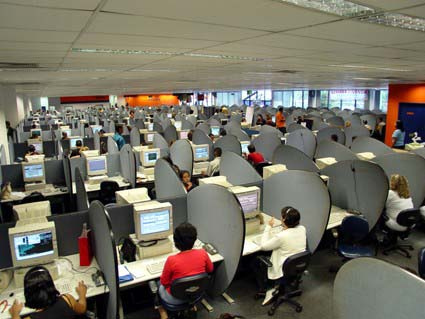
Putting call centers and wearables side by side has already happened in Korea. A paper published in September 2024 by researchers at KAIST, Chung-Ang University and the University of Akron brought 31 emotional laborers, all of them currently working at six companies that operate call centers, into a laboratory. While professional actors played angry customers, each participant wore four devices: a call headset, a chest strap reading an electrocardiogram, a wristband measuring skin conductance and temperature, and a headband reading brain waves 256 times a second from two points on the forehead and two behind the ears. After every call the participant rated on a scale of one to twenty the effort it had taken to hide their real feelings, and a model dividing those ratings into two or three classes reached accuracy of up to 87 percent. What that fourth device read is, under the definition in AB 1883, neural data without argument.
This study ran with institutional review board approval and participant consent, and its purpose lay on the side of the agents' mental health. The worry the paper set down in its own ethics section nonetheless overlaps with what this bill is aimed at. After noting that the same technology may be perceived as surveillance by workers and may become one more metric in performance evaluation, the authors wrote that "laws should be enacted to restrict access to low-level raw data that enables additional analysis or interpretation of a worker's state" when managers intend to use emotional workload data. The shape of the request differs from California's. The researchers asked that the data be collected while managers are kept away from the raw signal, and California said do not collect it at all. The answers diverge, and both treat the moment a manager reaches that raw data as the problem.
Checking is not something to wait on a law for. Pick one monitoring-capable tool already inside your company and ask the vendor. What is the full list of outputs this product produces, whether any of them score a person's state or attitude, and from which signals that score is calculated. If the answer is not in the contract or the product documentation, what is missing is not the feature but the evidence that the feature is absent.
Thank you for reading this far. Every provision quoted here can be read as it stands in the enrolled text of AB 1883. If a vendor has actually handed you that list, tell us what was written there and what was not.
References
Statutes and Official Documents
- 1.California Legislature. (2026). AB-1883 Workplace surveillance tools — enrolled bill text. leginfo.legislature.ca.gov
- 2.California Legislature. (2026). AB-1883 Bill History. leginfo.legislature.ca.gov
- 3.California Legislature. (2024). SB-1223 Consumer privacy: sensitive personal information: neural data. leginfo.legislature.ca.gov
- 4.Colorado General Assembly. (2024). HB 24-1058 Protect Privacy of Biological Data. content.leg.colorado.gov
- 5.Colorado Revised Statutes §6-1-1303 (Colorado Privacy Act, Definitions). law.justia.com
- 6.Connecticut General Assembly. (2025). Substitute Senate Bill No. 1295 — Public Act No. 25-113. cga.ct.gov
- 7.Montana Legislature. (2025). SB 163 (Genetic Information Privacy Act amendment). archive.legmt.gov
- 8.California Assembly Committee on Privacy and Consumer Protection. (2024-07-02). SB 1223 (Becker) Bill Analysis. apcp.assembly.ca.gov
- 9.European Union. Artificial Intelligence Act, Article 5(1)(f). artificialintelligenceact.eu
- 10.Ministry of Science and ICT, Republic of Korea. Framework Act on the Development of Artificial Intelligence and the Establishment of Trust and its Enforcement Decree (effective 2026-01-22). law.go.kr
Academic Paper
- 11.Park, E., Lee, D., Han, Y., Diefendorff, J., & Lee, U. (2024). Hide-and-Seek: Detecting Workers' Emotional Workload in Emotional Labor Contexts Using Multimodal Sensing. Proc. ACM IMWUT 8(3), Article 119. doi.org/10.1145/3678593
Industry, News, and Analysis
- 12.HR Dive. (2026). California ban on workplace AI emotion surveillance heads to Newsom. hrdive.com
- 13.Proskauer, California Employment Law Update. (2026-09). California Legislature Takes Aim at AI-Powered Mind Reading, But Questions Remain. calemploymentlawupdate.proskauer.com
- 14.Future of Privacy Forum. (2025-08-12). The "Neural Data" Goldilocks Problem: Defining "Neural Data" in U.S. State Privacy Laws. fpf.org