Executive Summary
On June 21, 2026, the American magazine The Atlantic released something through its "AI Watchdog" project: a searchable database of roughly 21 million songs that circulated through the training of AI music-generation models. Anyone can look up a track by artist name or song title. The AI companies that actually used this data never disclosed what their models learned from. So the provenance of that training data was reconstructed after the fact and turned into a public ledger — not by the firms that used it, but by a newsroom acting as a third party.
The single largest dataset, LAION-DISCO-12M, holds roughly 12.3 million songs scraped from YouTube alone — about 91 years of continuous music. It mixes major names like Taylor Swift and The Beatles with unknown indie musicians, and one Nashville artist used the tool to confirm that 71% of his own discography was inside it. This piece is less about the event itself than about the structure beneath it: that the source had to be rebuilt from the outside.
For anyone who works with data, this leaves a single question. Who is responsible for proving that data is clean? The lineage of training data cannot be recovered later if it isn't recorded at the moment of collection. The Atlantic's ledger shows exactly what happens when provenance is not built into the design from the start.
Key Figures
Four numbers capture the scale and weight of this event at a glance: the total volume of music in the released datasets, the size of the single largest dataset, the share one musician found of his own catalog, and the revenue loss this trend is projected to leave on artists. Together they make clear that provenance isn't an abstraction — it is a matter of people and money.
21.2M songs
Training music revealed
Combined tracks across four public datasets circulating in AI music training
12.3M songs
LAION-DISCO-12M
The single largest dataset, auto-scraped from YouTube — about 91 years of music
71%
One musician's discography
Share a Nashville artist found of his own catalog inside the dataset
$4.6B
Projected 2028 revenue loss
Annual artist revenue decline projected from AI-generated music (CISAC)
21 Million Songs Became Searchable
The Atlantic's Alex Reisner tracked down four public datasets floating around the AI music-generation field. Together they hold about 21 million songs. Rather than write the list up only as an article, he published it as a tool called "AI Watchdog," where anyone can search by artist name, song title, or ISRC code. No account required. The point is simple: see for yourself whether your music is in there.
What makes the tool remarkable is the gap it fills. The companies that built AI music models have never disclosed what they trained on. So artists, courts, and regulators alike had no way to answer the question "was my music used?" The Atlantic analyzed datasets that had been posted to academic repositories and brought that answer back in searchable form. Because the provenance documents weren't where they should have been, someone rebuilt them from the outside.
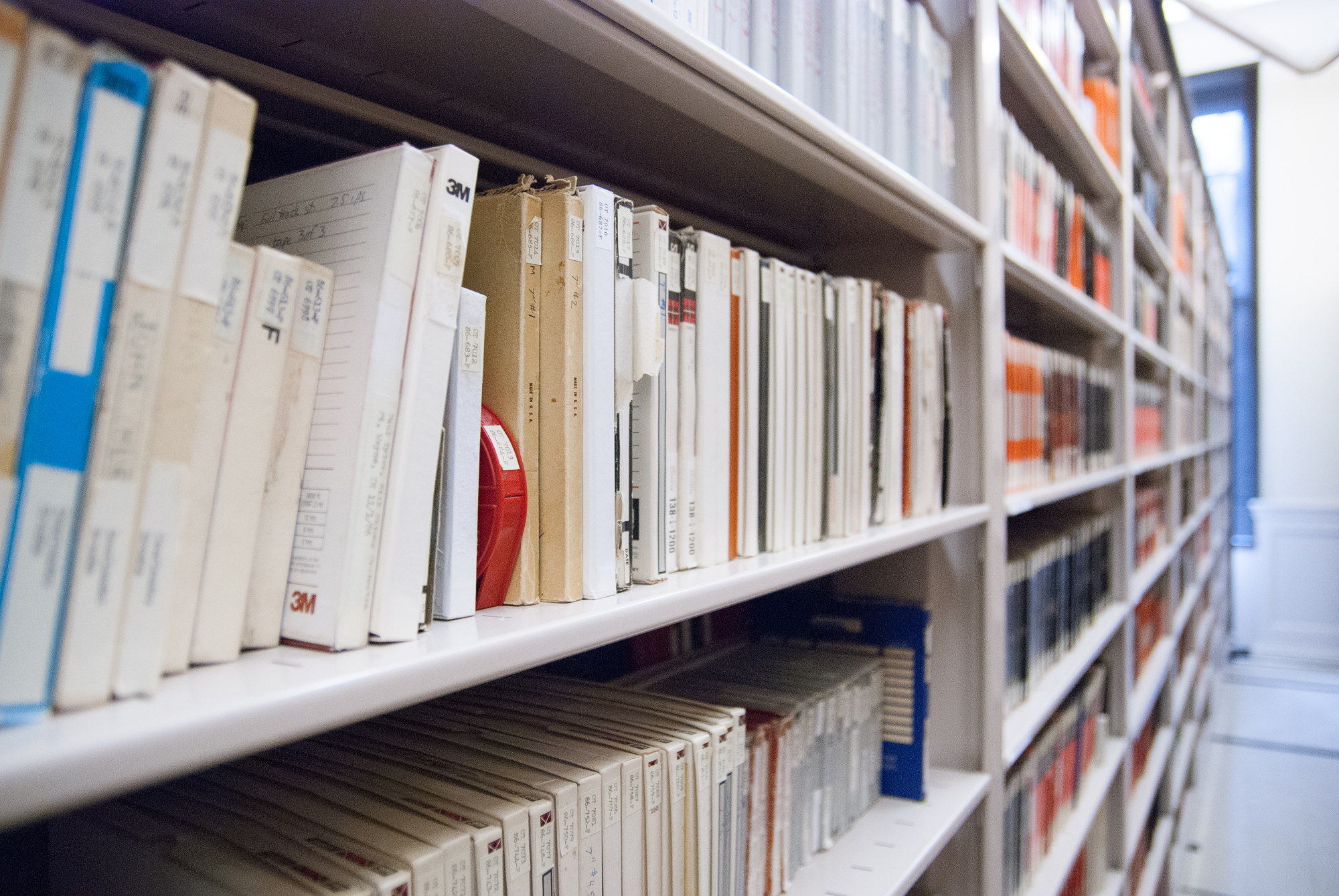
The point: the training-data ledger that AI firms should have kept was built after the fact by a third party that never used the data. Making it searchable means a coordinate now exists for assigning responsibility.
Whose Music Is Inside the Dataset
The largest of the four is LAION-DISCO-12M, holding roughly 12.3 million songs. Next is SLEEPING-DISCO-9M with about 9 million, followed by smaller datasets including a Free Music Archive–based archive. Most entries are not audio files but YouTube links and metadata, used by automated tools that download the music from those links. LAION, a German non-profit, distributed the datasets for academic purposes and warned against commercial use — but the data, once posted to academic repositories, had already been downloaded thousands of times.
The names on the list cut across the entire music industry. Taylor Swift, Bad Bunny, Billie Eilish, Nirvana, The Beatles, Radiohead, and Wu-Tang Clan sit on the major side. On the other side are names almost no one knows. The Berlin musician Hainbach found 151 of his own tracks; one producer found every one of the 138 songs he had released between 2017 and 2024. A Nashville musician confirmed that 71% of his discography was included. In other words, this is not only a problem for large artists.
Some uses are confirmed. Google and Stability AI were found to have used Free Music Archive data; Google's position is that this falls "within YouTube's terms of service." The music-generation services Suno and Udio are in the middle of separate lawsuits. Either way, the situation is the same: you can only learn what a model trained on by cross-referencing it against external datasets.
Why it matters: the datasets scrape famous and unknown artists without distinction. Without provenance records, you can't even tell who is inside them without an external comparison.
Why the AI Firms Never Spoke First
There is a reason the AI companies stayed silent. The path that pulls public academic datasets into commercial model training runs through a gray zone. Datasets like LAION are distributed with an academic-purpose caveat, but the moment that data is used to train a commercial model, the caveat blurs. Disclosing the source becomes, in effect, writing down that you entered that gray zone. So many firms held up "fair use" as a shield and declined to say what they trained on.
But the cost of silence is now being billed through litigation. The fight began in June 2024, when the Recording Industry Association of America (RIAA), representing UMG, Sony, and Warner, sued Suno and Udio — and the disputes have run in a single thread since. Suno is fighting Sony: a November 2025 copyright-fingerprint analysis found millions of UMG- and Sony-owned songs in the training data, and Suno holds up fair use as its shield. The key trial is set for July 2026.
Udio took a different road, reaching sequential settlements with UMG, Warner, Merlin, and Kobalt and adopting content filtering and fingerprint-recognition systems. On top of that, Hagens Berman, the firm that led the $260 billion tobacco settlement, has joined an independent-artist class action. It is a signal that the front of this fight is widening from the major labels toward unknown artists.
The structure: the reason sources went undisclosed is that disclosing them amounted to confessing the risk. But that silence invites outside reconstruction, and the rebuilt ledger then becomes evidence in court.
When a Third Party Must Rebuild Provenance
The real picture of this event lies in its sequence. The AI firms left no record of their training-data provenance; a newsroom analyzed public datasets and reconstructed it after the fact; and artists, courts, and regulators began using that rebuilt ledger to demand accountability. The side that should have created the provenance and the side that actually did are misaligned. It was a third party — standing with the people whose music was taken, not with the companies that used it — that redrew the lineage.
This is not a simple copyright dispute. It is a structural problem: when data lineage isn't built into the design, the empty space gets filled, by force, from the outside. And now that filling is becoming an obligation rather than a choice. The EU AI Act enters substantive force in August 2026, requiring general-purpose and high-risk models to publish a summary of their training data's sources and composition. The silence that was a gray zone yesterday becomes a violation tomorrow.
What has changed is that the set of parties asking about provenance has widened. Artists asked first; now courts ask; and soon regulators will demand the paperwork. The Atlantic's database, in effect, laid down the coordinates those questions will point to. A model that cannot explain its sources is exposed, by the same weakness, to all three of these demands.
What changed: provenance reconstruction is shifting from good-faith investigation to legal obligation. A model that kept no lineage of its own has nothing to say when it stands before a ledger rebuilt by others.
Lineage Cannot Be Made Retroactively
The lesson this event leaves for anyone who works with data is simple but heavy: the lineage of training data cannot be made after the fact. Which data came from where, under what rights, when it was obtained, and how it was processed — all of this can be recorded accurately only at the moment of collection. Miss that moment, and the only option left is to cross-reference and infer from the outside, the way The Atlantic did. A reconstructed lineage is never as clean as the original.
That is why responsibility for proving data is clean rests in the hands that use it. Training-data lineage is like a model's ingredient label. A product that never recorded what went into it is left facing outside inspection — or unable to answer for itself. Recording source, license, and consent together at the point of collection is where AI-Ready Data begins. The next era's credentials belong not to the most capable model, but to the one that can explain the provenance of its own data.
The Atlantic's ledger shows the landscape when that credential is missing. The very fact that the provenance of 21 million songs had to be rebuilt by a newsroom rather than by the firms that used the data is evidence that today's AI data ecosystem is still unfinished. The first document opened at the next model evaluation is likely to be not the weights file, but a lineage record: where this data came from, and how you can prove it.
The takeaway: building provenance into the design from the start is not regulatory paperwork — it is the infrastructure that makes a model trustworthy. Because lineage cannot be made retroactively, the record must always begin at the moment of collection.
References
Industry & Press
- 1.Reisner, Alex. (2026). "The Atlantic AI Watchdog." The Atlantic. — The primary project that made the 21 million songs used in AI training searchable.
- 2.Engadget. (2026). "Investigation by The Atlantic reveals many millions of songs used for AI music training." Engadget. — Reporting on dataset scale, the four datasets, and the artist list.
- 3.gearnews. (2026). "AI Training Data 2026: The Atlantic Reveals Whose Music Ended Up in Suno and Udio." gearnews. — Musician's-eye view, the Hainbach and Nashville cases, LAION-DISCO-12M details.
- 4.Music Business Worldwide. (2026). "Four music datasets holding millions of tracks are being shared among AI developers." MBW. — Dataset distribution structure and copyright/settlement trends.
- 5.EDM.com. (2026). "Over 21 Million Copyrighted Songs Are Circulating Among AI Developers." EDM.com. — Circulation of the 21 million songs and confirmed use by Google and Stability AI.
- 6.TechTimes. (2026). "AI Copyright Lawsuit Escalates: Firm Behind $260B Tobacco Deal Joins Suno and Udio Fight." TechTimes. — Hagens Berman joining the independent-artist class action; Sony v. Suno trial in July 2026.
Analysis & Research
- 7.Atlan. (2026). "LLM Training Data Lineage: Provenance, Tracking & Compliance." Atlan. — Analysis of how training-data lineage and provenance become the precondition for compliance.
- 8.CISAC & PMP Strategy. (2026). "Economic Impact of AI on the Music and Audiovisual Sectors." CISAC. — Projection of $4.6 billion in annual artist revenue decline by 2028 from AI-generated music.