Executive Summary
Drug candidates designed by generative AI usually look good inside a computer and then fall apart in the lab. This time they didn't. ApexGO, built by César de la Fuente and Jacob Gardner's team at the University of Pennsylvania, started from antimicrobial peptides mined from extinct animals and edited them into new candidates — candidates that moved past the test tube and worked like medicine in living mice. This article looks less at the result itself and more at why the model's optimism was not betrayed in the lab this time, through the lens of data design.
One number captures how unusual this is. 85% of the peptides the AI edited stopped bacterial growth in a test tube. When you optimize a generative model against the scores of another model, you usually get candidates that only look convincing inside a simulation — yet here most of them reproduced in real wet-lab experiments. Beyond that, in a mouse model infected with a multidrug-resistant pathogen, two of the optimized peptides matched or exceeded polymyxin B, an antibiotic often called the drug of last resort.
What made the difference was not a bigger model but data design: verifiable activity data, the constraint of repeatedly editing a template, and selection that narrows what gets tested using uncertainty estimates. These three things pulled the generate-and-predict loop out of the computer. Set the result beside the opposite case we covered last month — a drug-discovery AI that overestimated activity because it learned only from successes — and the contrast comes into focus.
Key Figures
The core of the study compresses into four numbers: the share that stopped bacterial growth in a test tube, the share that beat their original templates, the benchmark the peptides reached in an infected-mouse model, and the number of template peptides that served as the starting point for editing.
Source: Nature Machine Intelligence (2026), NIH Research Matters
85%
Halted growth
Share of AI-edited peptides that inhibited bacteria in a test tube
72%
Beat the original
Share more potent than the template they started from
Polymyxin B
Mouse-model efficacy
Two peptides matched or exceeded the last-resort drug's bacterial reduction
10
Template peptides
Editing starting points from extinct animals such as mammoth and ground sloth
An AI Antibiotic That Worked in Mice
Antimicrobial resistance is a threat that grows quietly. Peptide antibiotics like polymyxin B and colistin remain the effective last card against multidrug-resistant Gram-negative bacteria. New candidates are needed fast, but synthesizing and testing them one by one in the lab is slow and expensive. ApexGO, built by César de la Fuente and Jacob Gardner's team at the University of Pennsylvania, is an attempt to break that bottleneck with AI.
The starting point is unusual in itself. In earlier work, this team mined the ancient proteomes of extinct creatures such as the mammoth and the ground sloth as a quarry for antibiotic candidates. ApexGO takes ten of those recovered antimicrobial peptides as templates and lets the AI edit their amino-acid sequences little by little to produce better candidates. The results showed up on two levels. In the test tube, 85% of the AI-designed peptides stopped bacterial growth, and 72% were more potent than the original templates.

The real gate came after the test tube. The researchers tested the optimized peptides in a mouse model infected with multidrug-resistant Acinetobacter baumannii, and two of them matched or exceeded the last-resort antibiotic polymyxin B in reducing bacterial counts. There is a wide gap between a molecule that works in a culture dish and one that behaves like a drug in the complex environment of a living body. That an AI-designed candidate crossed that gap is the heart of this study.
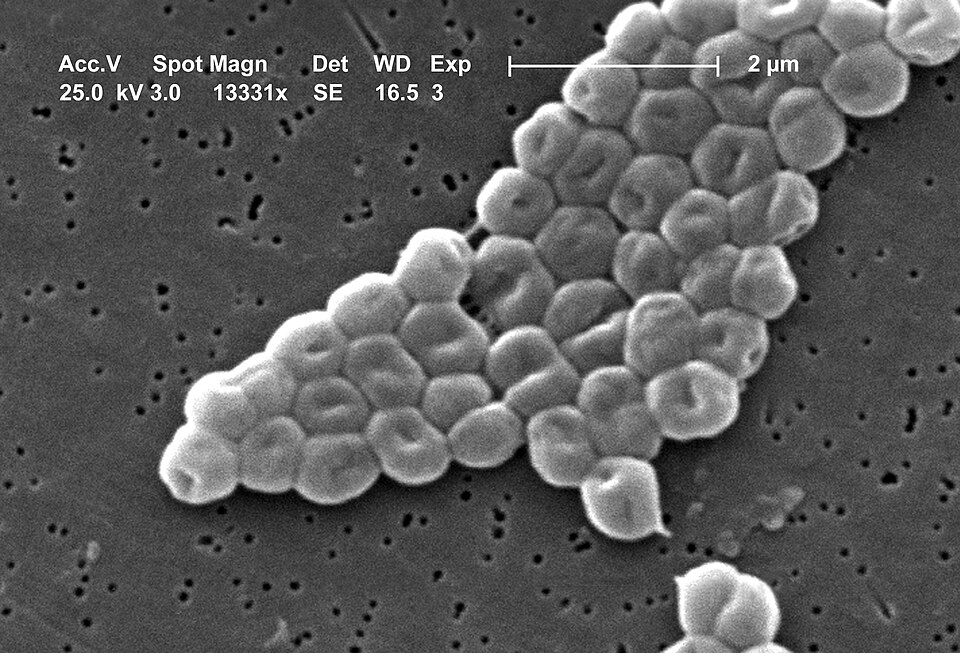
A concern from Jacob Gardner, who co-led the work, captures the meaning of the result. "Because ApexGO optimized against another computer model, I worried it would find molecules that look good to the model but fail in the lab. Instead, most of the molecules it designed actually worked." The very fact that a widely expected failure did not happen this time is the finding the authors put front and center.
When a Model Grades a Model
ApexGO's name carries its architecture. Two years ago this team first built APEX, a classifier that predicts whether a peptide will be antimicrobial; they then added generation and optimization to it to create ApexGO. In other words, a generative model proposes candidates, and how good each one is gets scored by another AI model, APEX. Instead of validating human-designed candidates through experiment, a model chases another model's scores and improves itself — a closed loop.
This design has a well-known trap. When optimization exploits the weaknesses of the scoring model, you get candidates that ace the scoreboard and mean nothing in reality. In reinforcement learning it's called reward hacking; in drug discovery it shows up as the gap between a score inside a computer and actual efficacy. The drug-discovery AI that learned only from successes, which this blog covered last month, was exactly the opposite case. A model trained only on published successful experiments came to believe that working candidates are more common than they are, and that optimism hid behind a number called accuracy.
The two stories are two sides of one coin. One was a failure in which biased data made the model overconfident; the other is a case where a model grading a model still reproduced in the lab. So the question narrows to one thing: what has to be different for a closed loop not to stay trapped inside the computer?
The crux is how trustworthy you made the scoring model, and how far you validated its judgments against real experiments. APEX was trained on activity data that measured not only the peptides that bound but also the cases that did not. Because the scoring criterion was built on a verifiable signal, optimization that chased that criterion did not stray far from reality.
Why It Wasn't Betrayed This Time
That the model's optimism was not betrayed in the lab came from design, not luck. César de la Fuente, who led the work, describes the tool this way: it starts from peptides that are promising but not perfect, proposes precise edits, predicts whether those edits will raise antimicrobial potency, and keeps moving toward versions more likely to work when actually made and tested. The design philosophy itself aims at wet-lab reproduction rather than a score inside a computer. The data design that held up ApexGO's reproducibility comes down to three things.
3.1Constrained editing, not unbounded search
ApexGO does not rummage through chemical space at random. A transformer-based VAE embeds peptide sequences in a continuous latent space, and on top of that Bayesian optimization proposes the next candidate by making small edits to an already-validated template. Because the starting point is a molecule with confirmed antimicrobial activity, editing moves toward making something good better rather than inventing something entirely new. When the search space narrows, so does the room for the model to stumble badly.
3.2Selective validation, not exhaustive testing
A generative model can stamp out candidates almost without limit, but chemical synthesis and experiments are slow and expensive. ApexGO uses the uncertainty estimates built into the model to pass only the candidates it is confident about, and that have high room for improvement, on to real synthesis and testing. Rather than validating every candidate, this selection puts only a confident few into wet-lab experiments — saving experimental resources while raising the reproduction rate.
3.3Wet-lab reproduction, not generation, as the evidence
The weight of 85% and 72% lies in the fact that these are not the share of candidates generated but the share reproduced in wet-lab experiments. Not what the model scored as good, but the share that stopped growth when actually made and exposed to bacteria. Three layers of design meshed together — a scoring criterion built on verifiable activity data, constrained editing that narrows the search, and uncertainty-based selection of what to test — and moved a score inside a computer into a lab result.
What changed was not the size of the model but the design of the floor it learns and scores on. This argument is the same one this blog already made in de novo protein design: what created production-grade engineering was not a bigger model but a wet-lab data loop. ApexGO is a case where that principle repeats in antibiotic peptides.
The Mouse Model Is a Starting Point, Not a Finish Line
A mouse model is only the first step on a long road to the clinic. Toxicity, stability, manufacturing, and regulation remain as gate after gate before human trials, and candidates that work in animals fail in humans often enough. So this result should not be read as the endpoint of antibiotic development. It is worth reading, though, as an event that redefined the starting point — a shift from the stage where AI floods us with plausible candidates to the stage where it narrows toward candidates that reproduce in the lab.
This is why Pebblous puts verifiability first when it talks about data quality. Structures in which a generative model grades itself are becoming more common, but whether that score connects to reality is decided by the data used to build the scoring criterion. Score with data that records only the cases that bound, and the model turns optimistic; score with data that also measured the cases that did not bind, and the model learns the boundary. The question to ask when checking AI-Ready data runs the same way: did this data record only successes, or does it also include failures so the model learns the boundaries of reality?
Editor's Note. This blog has recently covered drug-discovery AI from two directions. If the overestimation of a model that learned only from successes was a failure of data design, ApexGO is a success created by verifiable data and constrained optimization. Placed side by side, the two cases converge on one conclusion: what decides the reproducibility of drug-discovery AI is not the size of the model but how honestly the data it learns and scores on captures reality.
The next time some generative AI points confidently at a promising drug candidate, whether that confidence holds up in the lab can be gauged by looking at the data used to build its scoring criterion. In the end, the lesson ApexGO leaves is a matter of data design. Thank you for reading to the end.
Pebblous Data Communication Team
July 15, 2026
References
R.1Academic Papers
- 1.Torres, M. D. T., Zeng, Y., Wan, F., Maus, N., Gardner, J., de la Fuente-Nunez, C. (2026). "A generative artificial intelligence approach for peptide antibiotic optimization." Nature Machine Intelligence 8(5):841-856. DOI:10.1038/s42256-026-01237-5.
- 2.Torres, M. D. T., de la Fuente-Nunez, C. (2024). "Mining the extinct proteome for antimicrobial peptides (APEX / molecular de-extinction)." bioRxiv 2024.11.27.625757 [preprint].
R.2Industry & Press
- 3.Penn Engineering. (2026). "Penn Engineers Create AI Tool to Speed Antibiotic Discovery." University of Pennsylvania.
- 4.EurekAlert! (2026). "AI tool boosts imperfect antibiotic candidates into powerful treatments." AAAS.
- 5.GEN. (2026). "ApexGO: AI-Driven Approach to Faster Antibiotic Discovery." Genetic Engineering & Biotechnology News.
- 6.Drug Target Review. (2026). "AI system transforms weak antibiotics into powerful treatments."
R.3Official Documents
- 7.NIH Research Matters. (2026). "AI tool could speed antibiotic development." National Institutes of Health.