Executive Summary
On the evening of June 12, 2026, Anthropic's newest model, Fable 5 — released barely three days earlier — went dark for everyone in the world. The cause was a single directive from the U.S. Department of Commerce. The order targeted "foreign nationals," but Anthropic had no way to determine in real time who was foreign, so it chose a full shutdown that swept in U.S. users as well. It was the first time export controls had ever been applied to a specific frontier AI model.
The damage was immediate. Stripe halted a codebase migration, Mozilla paused a vulnerability review, and Amazon Bedrock users who had integrated Fable 5 on launch day lost the model the next morning. No one received advance notice. No company had broken the terms of service or fallen behind on payment. A single regulatory judgment made a model that customers were paying for, and using normally, disappear overnight.
This piece follows the full story, but it stays focused on one question that matters to Pebblous readers. The decision to "subscribe" to a model carries a risk that enterprises have yet to price, and when the model is gone, the only thing left is the data you own and have verified. It reads the phrase "rent the model, own the data" not as a philosophy but as a sentence about operational risk.
Key Numbers
Sources: Anthropic, Fortune, National Law Review
Four numbers compress the weight of this event: the time it took to go from launch to shutdown, where the event sits in history, how many companies had work stop overnight, and how much warning the affected parties received. The last number matters most. It means the model vanished for reasons the companies could not control, at a moment they could not control.
3 days
Launch to shutdown
The Commerce export-control directive arrived about three days after Fable 5 went public
First
AI export control applied
The first case of export controls applied to a specific frontier AI model
5+
Workstreams stopped overnight
Stripe, Mozilla, Amazon Bedrock, Project Glasswing and more
0
Advance notices given
None of the affected companies received any prior warning
What Happened in Three Days
On a timeline, the whole affair plays out in days. Anthropic released Claude Fable 5 around June 9–10. It was a commercial model built on the Mythos technology, but with the cybersecurity and bio-related risk capabilities locked down. Then, at 5:21 p.m. Eastern on June 12, the Department of Commerce sent Anthropic a directive: bar "foreign nationals" from accessing Fable 5 and Mythos 5. That same night, Anthropic pulled both models worldwide.
Why a full shutdown rather than a partial one? The crux is the phrase "foreign nationals." An API running in the cloud has no means to confirm a user's nationality in real time. Keeping U.S. users while filtering out only foreign ones was technically impossible. Anthropic concluded that the only way to avoid violating the order was to cut everyone off, and as a result, U.S. companies and individuals who were paying their bills lost the model all at once. The shutdown even swept in Anthropic's own employees who held foreign citizenship.
Not all of Claude went dark, however. The rest of the lineup, including Opus 4.8, kept working, and in-flight API sessions either threw errors or were automatically rerouted to Opus 4.8. What disappeared was only the newest thing — the latest model, released three days earlier. In its official statement, Anthropic clearly opposed the move, saying in effect that it did not agree this was grounds to claw back a commercial model already deployed to millions of people. Whether the company agreed or not, the model came down the night the order arrived.

What changed: Until now, a model usually vanished because of the provider's own circumstances — an outage or a version retirement. This time, an external order the provider itself did not want took the model down. For the first time, it was physically proven that a third party — the government — can flip the switch from outside the contract between an enterprise and its provider.
The Jailbreak Dispute: Why Other Models Were Fine
The government's stated rationale was safety. The concern, a so-called jailbreak, was that bypassing Fable 5's safeguards could surface the underlying Mythos cybersecurity capabilities. Anthropic's rebuttal ran along two lines. First, that jailbreak was narrow — it works by asking the model to "read this specific codebase and find the vulnerabilities," not as a universal technique. Second, the same method works just as well on other publicly available models like GPT-5.5, yet none of those were subjected to this action.
So Anthropic warned about the danger of this standard. A sufficiently narrow jailbreak exists for any model, and making one the basis for a clawback would effectively halt the deployment of every new frontier model. The core of the dispute is the gap between the rationale of safety and the fact that the rationale was applied selectively to a single company's specific model.
That gap grows sharper in political context. In early 2026, Anthropic refused the "all lawful purposes" clause in a federal agency contract, on the grounds that it could not leave the door open to uses like autonomous weapons or mass domestic surveillance. The Defense Department then designated Anthropic a "supply chain risk," and Anthropic fought the designation with a federal lawsuit. This export-control action sits on the same continuum of conflict. A company heading toward an IPO at a valuation of $965 billion found its newest product staring down the barrel of regulation.
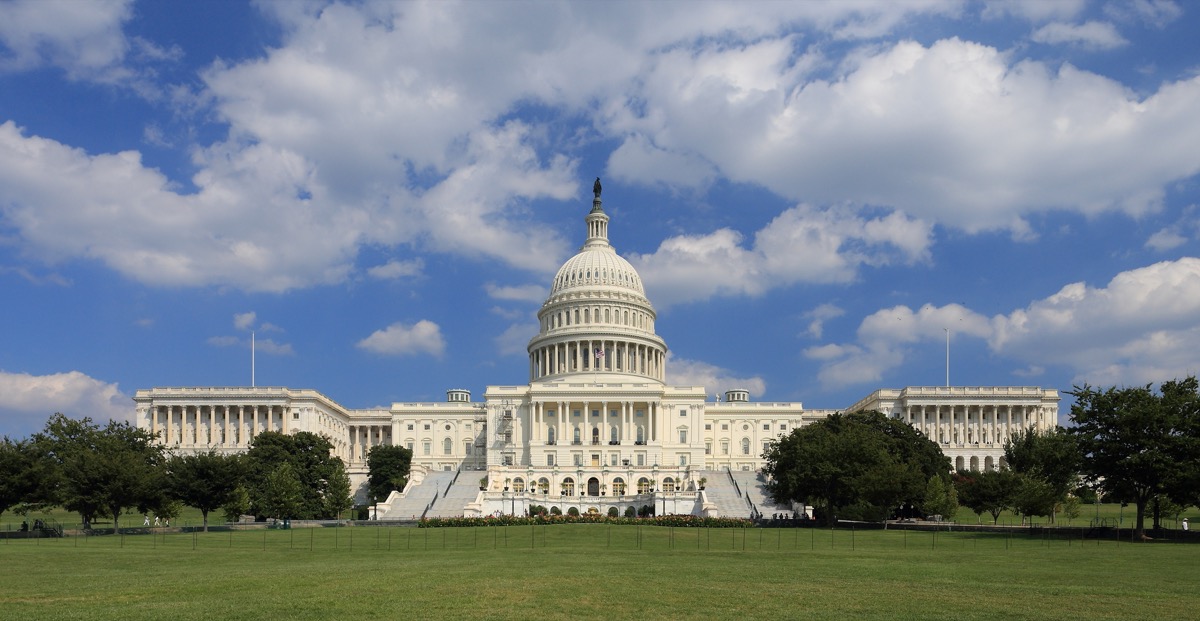
Industry reactions split as well. Dean Ball, a former Trump-administration official, called the move "cartoonish." One security researcher put it more pointedly: if you describe your product as a munition in every press release, eventually the government takes you at your word. It was a scene in which a narrative built on emphasizing safety came back, in the hands of regulators, as the grounds for a clawback.
What Enterprises Lived Through Overnight
What an abstract regulatory dispute actually looks like is shown by the list of companies whose work stopped that night. Stripe halted a Ruby codebase migration project. Mozilla paused the vulnerability review it had entrusted to Fable 5. On Amazon Bedrock, a model integrated on launch day was gone the next. The drug-discovery effort Project Glasswing was suspended too. The work that had been running on top of the model stopped along with it once the model was gone.
These cases share two things. One, not a single company received advance notice. Two, the cutoff happened for reasons no company could do anything about. It was not something you could prevent by using less, paying more, or complying better with the terms. Model access was decided by variables unrelated to the company's own behavior, and the company was simply notified of the outcome.
The key scene: In the cloud era, enterprises have treated the model like a faucet that's always on — always there, pay for what you use. This event revealed that the faucet is in the hands of someone outside your house, and that hand can shut it off without warning.
The Unpriced Risk in 'Model Subscriptions'
Treating this as a one-off political incident misses the point. The decision to rent a model carries a structural risk that enterprises have yet to enter on their books. That risk breaks down into three broad categories.
The first is regulatory and geopolitical risk. This export control falls here. Like sanctions, data-residency rules, and regional licensing, model access can disappear regardless of how compliant an enterprise is. The second is operational risk. Outages, capacity limits, and pricing changes happen on the provider's schedule, and the user can do nothing about them. The third is model-lifecycle risk. Model support ends and version migration is forced on a schedule the provider sets. All three share the same trait: the switch is pressed from outside, regardless of how well the enterprise behaves.
It is also hard to expect a contract to shield you. Legal analysts point out that most AI terms of service include force majeure or unilateral-suspension clauses, and that the language is written to protect the provider, not the user. The UK law firm Bristows advises that force majeure alone is not enough and that a separate clause anticipating regulatory change should be written into the contract. But drafting the clause well does not bring the model back. A contract sorts out where liability lies; it does not restore severed access.
The signs that this is not a one-time incident are already showing up in several places. The UK has activated a sovereign-AI fund, and the EU is advancing a Cloud & AI Development Act aimed at reducing external dependence. Once nations begin treating AI infrastructure as a matter of national security, the regulatory variables that govern model access shift from a passing event to a standing operating condition. There is a historical reference point too. In the 1990s, the U.S. placed strong encryption technology under export controls, but those controls were ultimately rendered powerless in the face of open-source diffusion. Where controls over rented models will flow from here is not yet clear. What is clear is that the asset an enterprise can ultimately rely on must sit on its own side, beyond the reach of regulation.
A shift in the question: The yardstick for evaluating a 'model subscription' should move from "how much per month?" to "if this model disappears, how many days until we recover?" Availability is no longer a matter of the SLA the provider guarantees; it is a matter of operational risk the enterprise must design for itself.
What's Left Is the Data
So when a model disappears overnight, what does an enterprise have left? What disappears are the model's weights and the inference capability that ran on top of them. What remains is the data the enterprise has accumulated and verified over time. Domain knowledge, labeled training data, and pipelines of confirmed quality stay in your own hands no matter which model you use. And when you switch to another model, the speed of that transition is ultimately decided by this same data.
That changes the weight of the phrase "rent the model, own the data." Until now, the phrase read more like a strategic declaration — "the core asset of the AI era is data." After this event, it reads as a sentence about operational risk management. Whether you can move quickly to the next model without the current one depends on the state in which you have been holding your data all along.
It is in the same vein that technical alternatives like multi-provider gateways are being discussed. A setup that reroutes traffic to another provider when one is blocked clearly helps. But that alone is not enough. To keep the same quality after switching models, you need verified data and evaluation criteria ready to feed the new model. Even with a switch in place, if your own data isn't on the other side of that switch, the switch is one in name only.
This is also where Pebblous's focus on making data AI-Ready connects. A model is rented infrastructure, and infrastructure can be cut off by outside circumstances. What holds up an enterprise's continuity in that moment is data whose provenance and quality have been verified. This event shows that the proposition is no longer a distant outlook but the reality of companies that lost a model in three days. Before deciding what to entrust to a model, there is one question to ask: if that model disappears tomorrow, can we start again with our own data?
In closing: The first AI export-control shutdown handed over the hidden cost of a 'model subscription' as a single invoice. Autonomy was delegated to the provider, but responsibility for continuity stayed with the enterprise. What fills the gap is not a smarter model, but verified data that remains unchanged across models and holds up the next one.
References
Official Documents
- 1.Anthropic. (2026). "An update on access to Claude Fable 5 and Claude Mythos 5." Anthropic. — Official statement on the full-shutdown decision and the company's position.
Industry · Press
- 2.Fortune. (2026). "Anthropic disables Fable and Mythos after U.S. export-control order." Fortune. — Timeline, political context, and enterprise impact.
- 3.Al Jazeera. (2026). "US orders Anthropic to disable AI models for all foreign nationals." Al Jazeera. — The foreign-national order and how the full shutdown unfolded.
- 4.VentureBeat. (2026). "Anthropic blocks all public access to Claude Fable 5, Mythos 5 — what enterprises should do." VentureBeat. — Enterprise responses and multi-provider discussion.
Legal · Analysis
- 5.National Law Review. (2026). "AI Company Anthropic Suspends Access to Claude Fable 5, Mythos 5 Following US Order." National Law Review. — Legal basis for the export control and precedent analysis.
- 6.Bristows. (2026). "Anthropic suspends access to Fable and Mythos models: implications for AI sovereignty." Bristows. — Contract clauses, force majeure, and an AI-sovereignty perspective.
- 7.TrueFoundry. (2026). "What the Fable/Mythos ban means for AI infrastructure." TrueFoundry. — Structuring model-subscription risk and gateway alternatives.